
Paintless Dent Repair: The Cost-Effective Solution for Minor Vehicle Damage

Paintless Dent Repair — A Smart, Cost‑Effective Fix for Minor Vehicle Damage
Door dings, minor collisions and hail can make a car look older and hurt resale value — but many owners avoid repairs because they worry about repainting or long shop times. Paintless Dent Repair (PDR) restores the metal back to factory shape without removing or repainting the panel, keeping the original finish while removing visible damage. This guide explains what PDR is, how the process works, the benefits versus traditional repair, realistic cost ranges for common dents, and how PDR handles hail and door dings. It also covers when conventional repair is required, what insurers look at, and typical timelines for multiple-dent jobs. Throughout, terms like paintless dent repair, PDR, dent removal, and hail damage repair are used to help you compare options and choose the most cost-effective path for your vehicle. At the end, you’ll find concise, local information about Prime Time Collision Center’s approach to PDR and how we support insurance claims and factory-quality results.
What is Paintless Dent Repair and How Does It Work?
Paintless Dent Repair (PDR) is a way to fix dents by gently shaping the vehicle’s metal back to its original form without removing or repainting the panel. Modern paints and panel metals allow controlled metal movement, so technicians access the back of the damaged area and use precision tools to massage the metal until the surface reads true under specialty lighting. PDR is best for small to medium dents where the paint is intact and the metal hasn’t been severely stretched or cracked. Knowing the basic steps — assessment, access, controlled manipulation, and final inspection — helps you decide if PDR is the right first step before scheduling an estimate. Below is a concise, step-by-step look at the paintless dent removal process.
What is Paintless Dent Repair?
Paintless Dent Repair restores a vehicle’s metal panel by reshaping it from behind instead of replacing or repainting it, preserving the original factory finish. The method began in the 1960s for hail and minor dents and has evolved with specialized rods, tap-downs, glue-pulls and precision lighting to reveal and correct small imperfections. Because PDR avoids fillers and repainting, it preserves factory coatings and often maintains vehicle value better than conventional repair. That makes PDR a strong choice for door dings, small creases and many hail dents when the paint is intact and the metal hasn’t been overly stretched.
How Does the Paintless Dent Repair Process Restore Vehicle Dents?
The PDR process starts with a detailed assessment of dent size, depth and access points, then the technician chooses the tools needed to reach the damage through interior panels or access holes. Using metal rods and careful leverage, they push the dent outward, and when needed they use tap-down tools or glue pulls for surface leveling. LED light boards or reflection screens guide the work so contours match factory geometry. Once the shape is restored, the tech performs a finish check — polishing, viewing under different light angles and a final inspection to confirm OEM-level appearance. The staged approach — assess, access, manipulate, inspect — delivers durable, nearly invisible repairs when PDR is appropriate, and it sets up a clear comparison with traditional methods.
This careful, tool-driven approach to metal shaping mirrors what research and industry standards identify as the key skills and equipment needed for effective spot repair work.
Automotive Spot Repair: Competencies, Equipment, and Materials
This study examined spot-repair work in automotive body shops to identify needed competencies and the equipment and materials used for those jobs. Researchers surveyed mechanics, foremen and service advisors at official Honda, Toyota and Nissan workshops. The results identified 16 competency points essential for spot repairs (with three suggested additions) and listed 45 items of equipment plus 19 materials commonly required to complete all stages of spot repair on automotive body panels.
The analysis of spot repair job in automotive body repair industries, A Yudantoko, 2019
At Prime Time Collision Center we perform PDR using OEM-quality processes and I-CAR Platinum–level techniques to protect factory finishes and restore panel geometry to manufacturer standards. Our local PDR work focuses on door dings, hail damage and other minor mishaps. Technicians document repair plans before work begins to support insurance estimates and quality checks. That local capability helps owners in Glendale and nearby communities quickly weigh PDR against conventional repair with clear before-and-after expectations and an on-site assessment. With that context, the next section lays out the concrete benefits that make PDR a cost-effective option for many vehicles.
What Are the Key Benefits of Paintless Dent Repair?
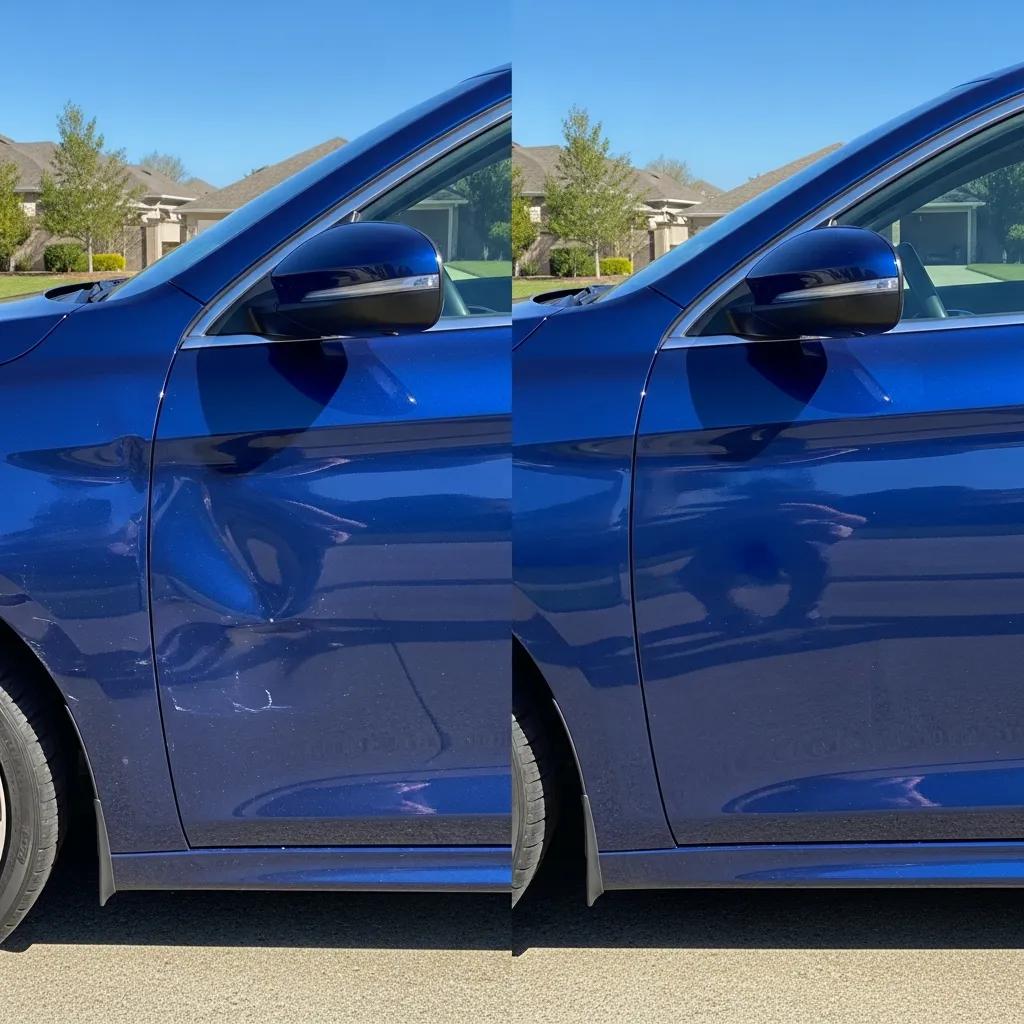
Paintless Dent Repair offers practical advantages that affect time, cost, environmental impact and resale value. Because PDR avoids paint and filler, it usually requires fewer labor hours and materials, which shortens turnaround and reduces expense while keeping the original factory finish. The method is also more sustainable: no solvent-based paints or primers means fewer VOC emissions and less waste from replaced panels and sanding dust. There are limits — PDR isn’t suitable for large holes, heavily creased panels with paint cracks, or situations where panels must be replaced for structural reasons — so it’s important to weigh trade-offs and choose the right repair method.
Paintless dent repair delivers four core owner-facing benefits:
- Time savings: Many repairs finish in hours or a few days instead of the multi-day timelines of panel replacement and repainting.
- Cost savings: Fewer materials and less labor usually mean a lower bill for small dents versus conventional bodywork.
- Value preservation: Keeping the original paint reduces color-mismatch risk and helps retain resale value.
- Environmental benefits: No fillers, primers or solvent-based paints means fewer emissions and less hazardous waste.
Those benefits are tangible when you choose a PDR-capable shop. The table below contrasts PDR and conventional repair by time, cost and paint outcomes to make the differences easy to see.
| Repair Approach | Typical Mechanism | Owner Impact |
|---|---|---|
| Paintless Dent Repair (PDR) | Metal manipulation without repainting | Faster turnaround, lower cost, original paint preserved |
| Conventional Repair | Panel replacement, body filler, sanding, repaint | Longer time, higher material/labor cost, potential color mismatch |
| Hybrid (PDR + Paint) | PDR where possible, localized paint where needed | Balance of speed and appearance when minor paint work is required |
This comparison explains why PDR is often the first recommendation for minor dents with intact paint, and it leads into how PDR reduces costs in practice.
How Does PDR Save Money Compared to Traditional Dent Repair?
PDR cuts costs by removing material-heavy steps like sanding, filler application and panel repainting, lowering parts and paint expenses. Labor efficiency also helps: experienced PDR technicians with the right tools repair small dents faster than a multi-stage paint-and-body workflow, and shops avoid paint-booth scheduling that adds time and overhead. For single small dents, expect meaningful savings; for many dents (like hail), the per-dent cost often drops because technicians handle several dents in one session. Preserving OEM finishes also reduces resale penalties tied to repainted panels, which provides indirect savings when you sell or trade the vehicle. Knowing these factors helps when you review estimates.
Why is Paintless Dent Repair Environmentally Friendly and Value-Preserving?
PDR’s environmental benefit comes from avoiding solvent-based paints, primers and chemical fillers that produce VOC emissions and hazardous waste in conventional repairs. Without repainting there’s no sanding dust, fewer discarded panels and less energy used in paint booths, making PDR a lower-impact option for small damage. Preserving factory paint also protects warranty-related coatings and avoids resale hits from mismatched repaints. For owners of higher-value or luxury vehicles, this can noticeably improve resale outcomes compared with visible repaint zones. This eco- and value-conscious perspective leads naturally into the cost factors that influence PDR pricing.
How Much Does Paintless Dent Repair Cost?
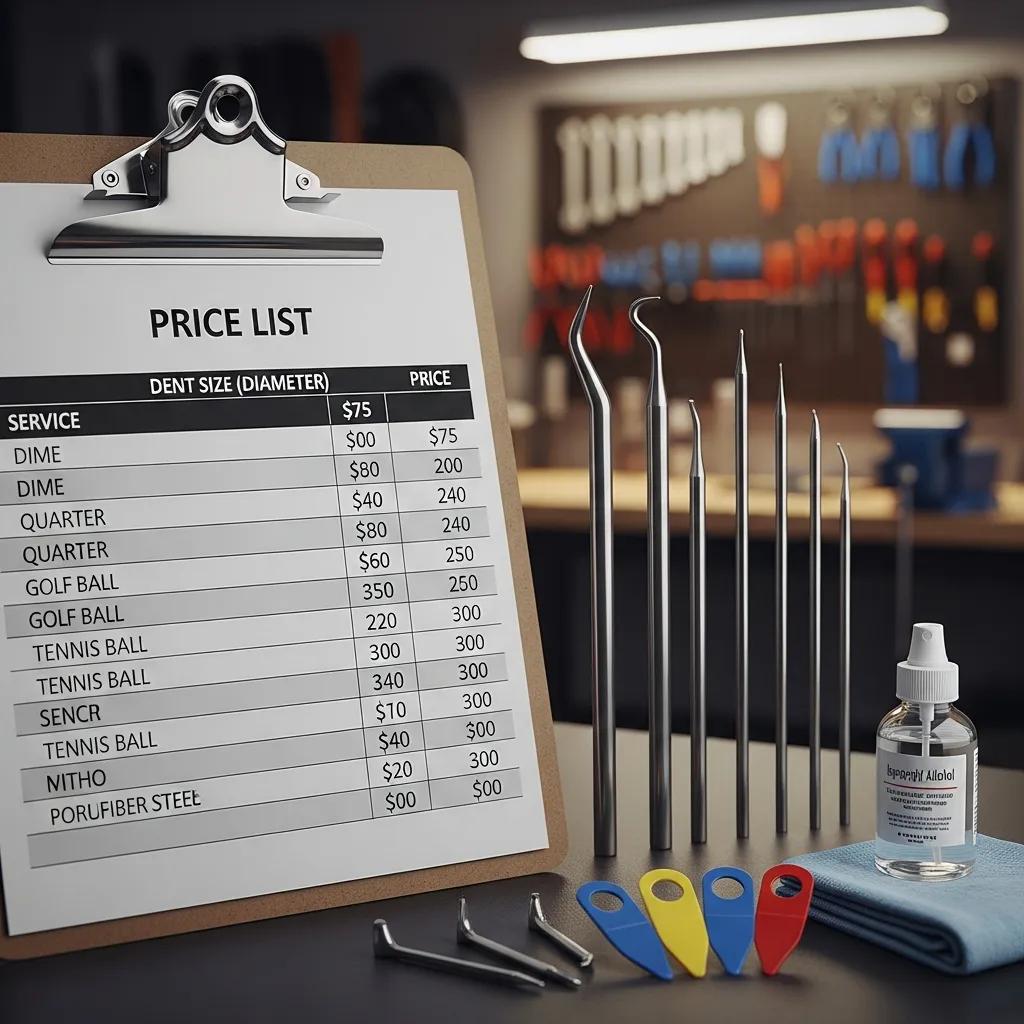
Estimating PDR cost means separating the main price drivers from general averages: dent size and severity, accessibility, number of dents, panel material and paint condition determine labor time and technique. Local price ranges depend on whether a dent is a small door ding, a medium crease, or widespread hail damage; insurers also look at total dent counts when reviewing claims. For a transparent decision, get an in-person estimate that documents dent counts and recommended methods — Prime Time Collision Center provides photo-supported estimates and works with insurers to clarify coverage and out-of-pocket responsibilities. Below are the primary cost drivers to help interpret estimates.
- Size and severity of the dent: larger or sharper creases take longer to reshape.
- Accessibility: dents behind trim or in reinforced areas increase labor complexity.
- Panel material: aluminum and specialty alloys take more finesse than standard steel.
- Number of dents: many small dents from hail are priced per-dent or per-area, changing the total.
These factors interact — a small dent on an aluminum panel with limited access can cost more than a larger dent on an easy-to-reach steel door. That’s why a full evaluation matters. The table below summarizes common cost drivers and conservative local price guidance for minor dents.
| Dent Characteristic | Influence on Price | Estimated Local Range |
|---|---|---|
| Small door ding (single) | Low labor, easy access | $75–$200 |
| Medium crease (single panel) | Moderate time, careful reshaping | $200–$450 |
| Multiple small hail dents (per-panel) | Efficient per-dent pricing, higher total | $300–$1,200 per panel depending on density |
| Difficult access or aluminum panels | Higher labor and specialized tools | Add 20–50% to base estimate |
Use these ranges to set expectations; actual prices vary and a hands-on evaluation will give a precise number. For an appointment-based figure, Prime Time Collision Center offers free estimates and coordinates with insurers to document damage and recommend the most cost-effective path.
What Factors Influence the Cost of Paintless Dent Repair?
Several variables affect final PDR pricing. Dent size and depth are directly tied to manipulation time: shallow, round dents are straightforward, while long creases need incremental reshaping. Accessibility matters because some panels require interior disassembly or removal of trim and liners to reach the damage, which increases labor. Panel material affects technique — aluminum panels are lighter and springier, requiring different tools and more finesse than steel. The number of dents is also important — many small dents from a hail event can be bundled into a per-panel price, which changes per-dent economics. These drivers explain why two similar-looking dents can receive different estimates.
What is the Average Price Range for Minor Dent Repairs Using PDR?
For single minor door dings and small dents with intact paint, expect local price ranges roughly between $75 and $450 depending on complexity and panel type. A basic single door ding typically falls near the lower end; medium creases or dents on difficult panels approach the higher end. When multiple dents are present — for example after hail — pricing often moves to per-panel or per-area models, ranging from several hundred to over a thousand dollars per affected panel depending on dent density. Always request an on-site, documented estimate; Prime Time Collision Center provides free estimates and helps coordinate with insurers to determine coverage and deductible options.
How Does Paintless Dent Repair Address Hail Damage and Minor Car Dents?
PDR is especially effective for many hail scenarios because technicians can quickly address large numbers of small dents using specialized lighting and mass-repair techniques that target multiple dents in sequence. Technicians stage repairs by dent severity and panel, using glue-pull methods where backside access is limited and rod manipulation where access exists. For widespread damage, shops often organize work panel-by-panel and finish with a global inspection to ensure consistent surface texture and reflectivity. That workflow makes PDR attractive after storms, though deep dents or paint cracks may still require conventional bodyshop methods. The table below compares hail scenarios to help you judge suitability and expected timelines.
| Scenario | PDR Suitability | Typical Process/Timeframe |
|---|---|---|
| Dozens of small dime-to-quarter dents | High | PDR per-panel, several hours to a few days depending on dent quantity |
| Mixed shallow and deep dents | Moderate | Combination of PDR and selective repainting, longer timeline |
| Paint cracking or panel stretching | Low | Conventional repair or panel replacement required |
This comparison shows when PDR provides an efficient, high-quality restore and when conventional methods are necessary — which is why technicians often choose PDR first for door dings and many hail events.
Why is PDR Ideal for Hail Damage and Door Ding Repairs?
PDR works well for many small, shallow dents because it corrects surface deformation without disturbing the paint, letting technicians address many dents efficiently with consistent tools and lighting. Mass-dent workflows cut per-dent labor time compared with individual bodywork and repaint cycles, producing faster turnaround after storms. Preserving the factory finish across panels avoids patchy repaints that hurt appearance and resale value — important if you plan to sell or trade the vehicle. Those efficiency and quality benefits make PDR the preferred first-line repair for many small-dent clusters.
Is Paintless Dent Repair Covered by Insurance for Hail Damage?
Yes — in most cases, comprehensive auto insurance covers hail damage, and PDR is an accepted repair method if the paint is intact and the insurer approves. Coverage details like deductibles and preferred vendors vary by policy. When filing a hail claim, photo-backed estimates and dent counts speed up adjuster review, and many insurers favor PDR because it restores the vehicle while reducing claim costs. Prime Time Collision Center works with all major carriers to coordinate estimates, provide the necessary documentation and manage the repair workflow to minimize your out-of-pocket time. Understanding your insurer’s process and deductible will help you decide whether to file a claim or pay out-of-pocket for minor repairs.
Why Choose Prime Time Collision Center for Your Paintless Dent Repair Needs?
Prime Time Collision Center is a local, OEM-focused collision and auto body shop that emphasizes factory-quality repairs, clear estimates and customer trust. Our technicians are I-CAR Platinum certified, and we offer free 24/7 towing and free estimates to simplify the repair process after an incident. Serving Glendale, Burbank, Pasadena and Los Angeles, we handle PDR for hail, door dings and other minor mishaps while coordinating with major insurers to streamline claims. If you’re weighing cost and quality, our documented PDR assessments, certified technicians and customer-first services give a straightforward path to restoring appearance and protecting vehicle value.
What Does I-CAR Platinum Certification Mean for PDR Quality?
I-CAR Platinum certification shows that a facility and its technicians have completed advanced industry training aligned with OEM repair procedures, increasing the chance of repairs that meet manufacturer tolerances. For PDR, this means our team is trained to evaluate when paintless methods are appropriate, understands vehicle-specific access and structural considerations, and follows quality-control checks that preserve original finishes. That credential reassures owners — especially those with higher-end or warranty-sensitive vehicles — that repairs follow documented processes and recognized training standards, prioritizing safety, appearance and long-term value.
How Does Prime Time Collision Center Support Customers with Insurance and Local Service?
We support customers by offering free estimates that document dent counts and proposed PDR workflows, and by coordinating directly with insurance adjusters to present photo-backed repair recommendations. We provide free 24/7 towing when needed and accept claims from all major carriers, reducing the administrative load on vehicle owners. Serving Glendale, Burbank, Pasadena and Los Angeles, we combine accessible service with OEM-level repair standards and I-CAR Platinum–trained technicians. If you need an estimate or help with a claim, Prime Time Collision Center can evaluate PDR suitability and outline the most efficient path to restore your vehicle.
- Request an estimate: We document dents and give a photo-supported recommendation.
- Coordinate with insurer: We submit documentation and work with adjusters on your behalf.
- Approve repair plan: You get a clear scope before work begins and benefit from documented quality checks.
Those steps explain how Prime Time Collision Center streamlines repairs and complete the practical guidance in this article about choosing and understanding paintless dent repair.
Frequently Asked Questions
What types of dents are best suited for Paintless Dent Repair?
PDR works best on small to medium dents where the paint is undamaged. Ideal cases include door dings, shallow creases and minor hail dents. Sharp, deep dents or areas with paint cracking usually aren’t good candidates and may need traditional repair. The key is that the metal hasn’t been excessively stretched, so a trained technician can return it to its original shape without harming the paint.
How long does the Paintless Dent Repair process typically take?
Timing depends on the number and severity of dents. A single minor dent is often fixed within a few hours. Multiple dents — for example after a hailstorm — can take several hours to a few days, depending on the extent of damage and shop workload. Technicians will give a more accurate timeframe during the initial evaluation.
Can Paintless Dent Repair be performed on all vehicle types?
PDR is possible on most vehicles, but some factors limit its applicability. Aluminum panels or specialty materials require different techniques and may affect pricing and timing. If the vehicle has extensive damage or paint cracking, PDR may not be suitable. A certified technician can assess your specific vehicle and damage to determine the best approach.
Is Paintless Dent Repair a permanent solution?
Yes — when done correctly by a qualified technician, PDR is considered a permanent repair for minor dents and dings. Because PDR reshapes the metal back to form without fillers or paint, it restores the surface integrity. That said, further damage to the same area or a poor-quality repair can cause issues, so choosing a trained technician and following basic care recommendations helps preserve the result.
What should I do if my insurance does not cover Paintless Dent Repair?
If your insurance doesn’t cover PDR, you can pay out-of-pocket, which is often less expensive than conventional repair methods. Many shops, including Prime Time Collision Center, offer financing or payment-plan options to help manage costs. It’s also worth talking with your insurer about alternatives or partial coverage options.
How can I find a qualified technician for Paintless Dent Repair?
Look for shops with industry certifications like I-CAR Platinum, which indicates advanced training in repair techniques. Read customer reviews, ask for recommendations and confirm the shop provides documented estimates with photos. Ensure the technician has experience with your vehicle type and the specific damage to get a quality, lasting repair.
Conclusion
Paintless Dent Repair is a cost-effective way to fix minor vehicle damage while preserving the original finish, saving time and often money. Choosing PDR means faster turnaround, lower costs and better protection of resale value when the paint is intact. If you want a professional evaluation, contact Prime Time Collision Center today to see how our PDR services can restore your vehicle’s appearance.