Pasadena Hail Repair Pros — Trusted Paintless Dent Repair & OEM Auto Body Solutions
Hail can arrive suddenly and leave dozens — sometimes hundreds — of small dents, dimples, or even cracked glass. Knowing the extent of that damage is the first step toward a safe, cost-effective repair. Below we explain what hail damage looks like, how it can affect vehicle safety and value, and how modern repair methods — especially paintless dent repair (PDR) and OEM‑aligned bodywork — bring cars back to factory standards. You’ll learn how to spot common hail damage on different panels, when PDR is the right choice, and how to work with insurance in Pasadena to get proper authorization. Practical checklists, repair-step breakdowns, and clear explanations of cost drivers and warranty options will help you document damage, speak confidently with adjusters, and choose the right repair path while protecting safety and resale value.
What Is Hail Damage and How Does It Affect Your Vehicle in Pasadena?
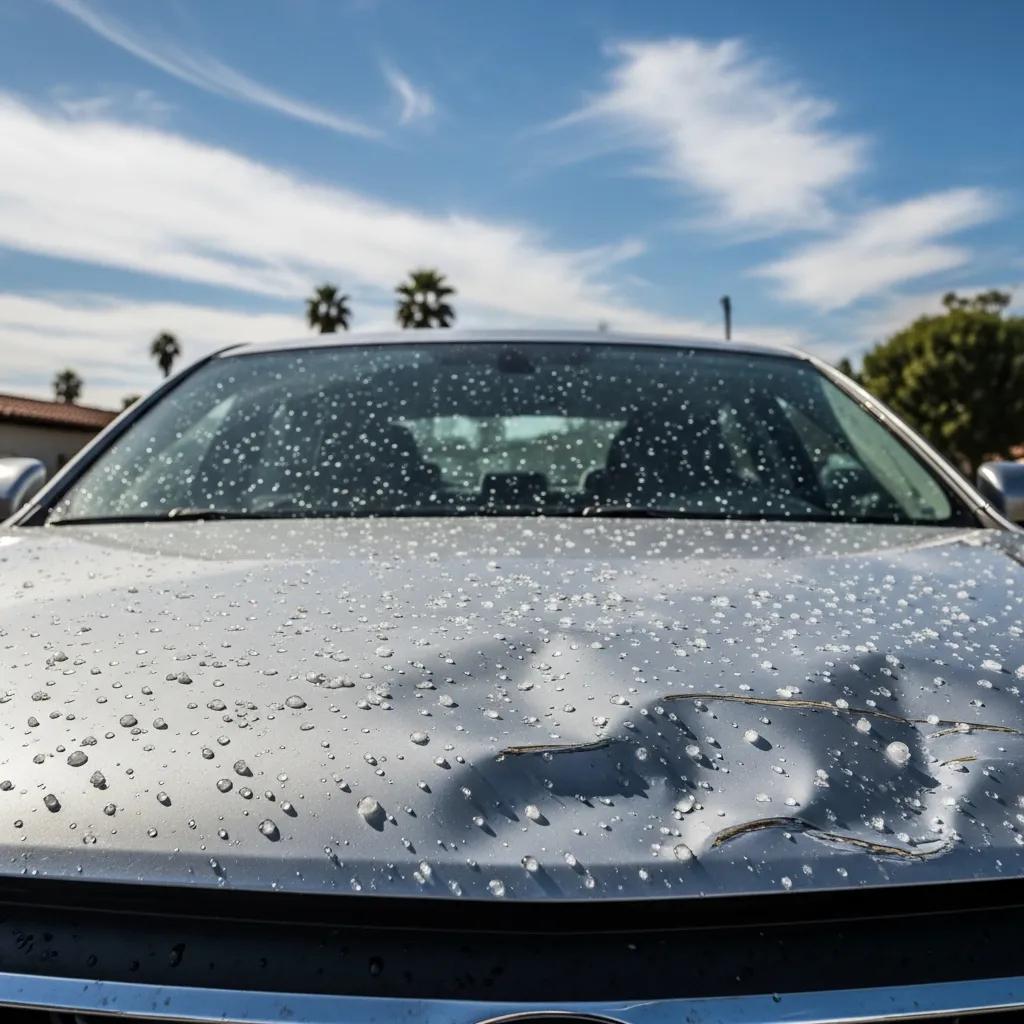
Hail damage happens when frozen precipitation hits a vehicle’s exterior, denting metal panels or cracking glass. Those impacts transfer blunt-force energy into the sheet metal and paint, which can create dents, creases, and paint fractures — and, in some cases, expose bare metal that may corrode over time. Short-term results are mostly cosmetic dents and possible glass damage; long-term issues can include paint failure, rust, and lowered resale value if repairs aren’t done to OEM standards. Knowing how hail affects your car helps prioritize inspections, document the loss for insurance, and choose repair options that protect factory finishes and safety systems.
Quick overview of common hail-related problems and why they matter for Pasadena drivers:
- Clusters of small to large dents on roofs, hoods, and trunks that change panel shape and how light reflects.
- Paint cracks or chips that leave metal exposed and raise corrosion risk if untreated.
- Cracked or shattered glass that reduces visibility and compromises the cabin seal.
These issues often occur together. A professional assessment will determine whether PDR or traditional panel repair is the right route to restore safety and value.
How to Identify Different Types of Hail Damage on Your Car
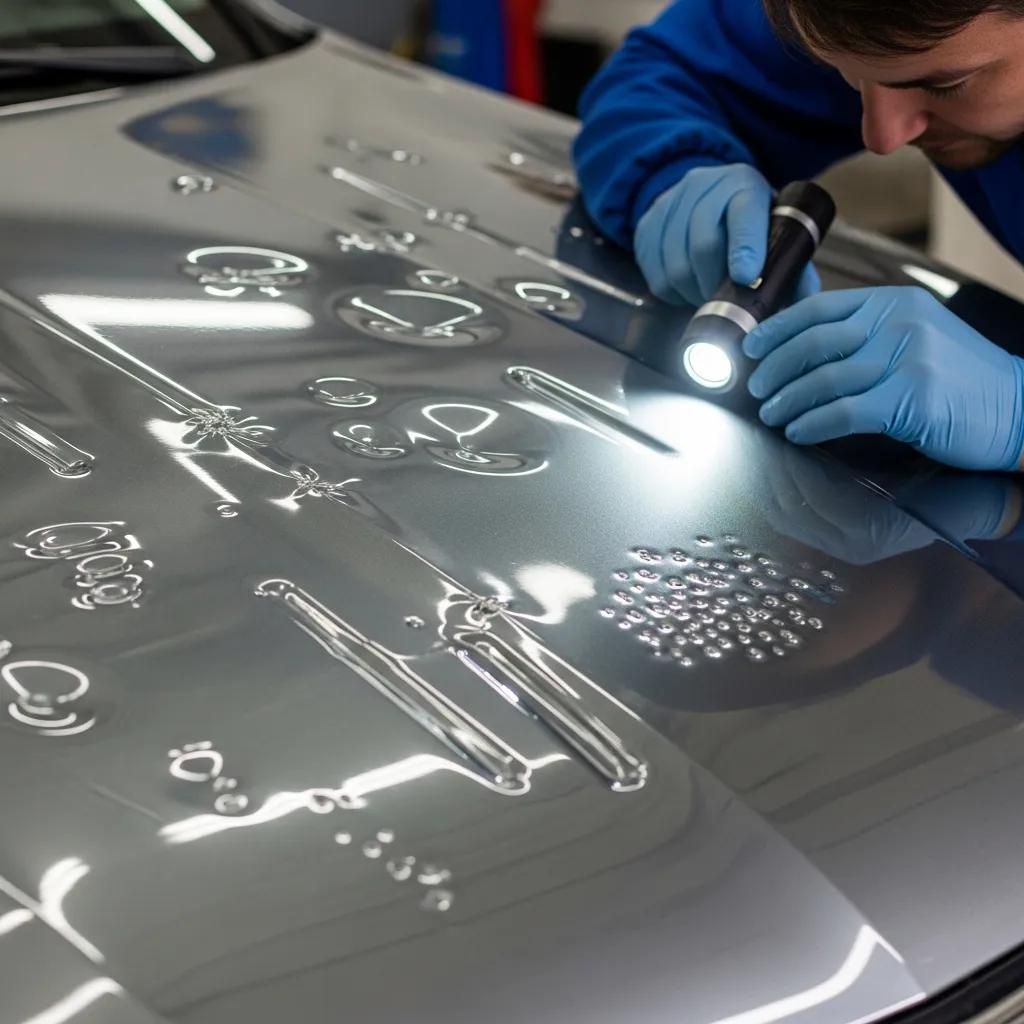
Start your inspection with the areas most exposed to the sky: roof, hood, trunk and fender tops. Look for clusters of round dents, sharp creases, and subtle changes in how light plays across a panel. Shallow, rounded dents usually mean PDR is possible; creases, paint breaks, or tears in the metal usually require traditional bodywork. Photograph each panel with both close-ups and wider shots, note the VIN and the storm date, and keep those files for your insurance claim. Clear documentation helps ensure estimates reflect OEM repair needs.
Those simple steps make it easier to decide what to do next: document, call your insurer, and get a professional estimate.
What Are the Common Signs of Auto Hail Damage in Pasadena
Some hail damage is obvious; other signs are subtle and need good lighting to spot. Watch for tiny perimeter dimples that change panel reflection, paint sheen irregularities that suggest micro‑cracking, and water getting into seals — which can point to unseen glass or panel issues. Interior leaks or pooled water after a storm may indicate a compromised seal or cracked glass; left unchecked, those can lead to mold or electrical problems. If you’re unsure, a certified estimator can tell whether cosmetic PDR will suffice or if OEM panel repair and sensor recalibration are necessary.
Spotting these signs early helps you choose the repair method — PDR or conventional collision work — that best preserves the factory finish and vehicle safety systems.
Why Choose Prime Time Collision Center for Hail Damage Repair in Pasadena?
Bringing your car to a shop that follows OEM procedures and employs certified technicians lowers the risk of improper repairs that can affect safety systems and resale value. Our technicians train to OEM and I‑CAR standards, restore structural geometry, protect ADAS calibrations, and preserve factory finishes by following manufacturer-recommended steps. For hail damage, the right shop also handles insurance communications, provides clear estimates, and offers conveniences that reduce downtime and uncertainty. Those service standards matter when you want reliable, documented repairs.
The table below summarizes our key certifications and customer services, and how each benefit helps you after hail damage.
| Certification / Service | Benefit | How It Helps the Customer |
|---|---|---|
| I-CAR Platinum certification | Advanced technician training | Technicians follow current repair methods that protect safety systems and finishes |
| OEM repair practices | Manufacturer-aligned procedures | Preserves factory tolerances and supports warranty and resale value |
| Insurance coordination | Direct adjuster communication | Speeds approvals and reduces back-and-forth for customers |
| Free estimates and 24/7 towing | Convenience and fast access to service | Makes it easier to start repairs and document damage promptly |
This comparison shows why credentials and practical services matter, and it leads into how our trained technicians apply that knowledge to deliver consistent results.
How Do I-CAR Platinum Certified Technicians Ensure Quality Repairs?
I‑CAR Platinum means our technicians complete ongoing, advanced training across collision-repair topics and stay current with evolving manufacturer procedures. That training focuses on safe structural repairs, using correct manufacturer parts, and proper calibration of ADAS systems so occupant safety is preserved. Our techs follow structured diagnostic workflows tied to OEM procedures, which reduces guesswork and the risk of improper fixes. When repairs follow that disciplined approach, vehicle integrity and resale value are far better protected than with ad‑hoc methods.
Knowing technicians meet these standards gives owners confidence that both visible damage and hidden safety-related requirements will be addressed. Next: how we support your insurance claim.
What Insurance Claim Support Does Prime Time Collision Provide?
Good insurance support starts with a clear, itemized estimate and continues through adjuster coordination and repair authorization so delays are minimized. We prepare detailed appraisals that align with OEM procedures, provide documentation to adjusters, and schedule inspections and follow-ups to keep the claim moving. This hands-on support reduces the administrative burden for you and helps ensure insurers authorize OEM‑compliant repairs. Clear shop-to-insurer communication usually speeds approval and reduces the chances of under-authorized work.
That practical support leads into explaining the most common non-invasive repair option for hail: paintless dent repair.
How Does Paintless Dent Repair Work for Hail Damage?
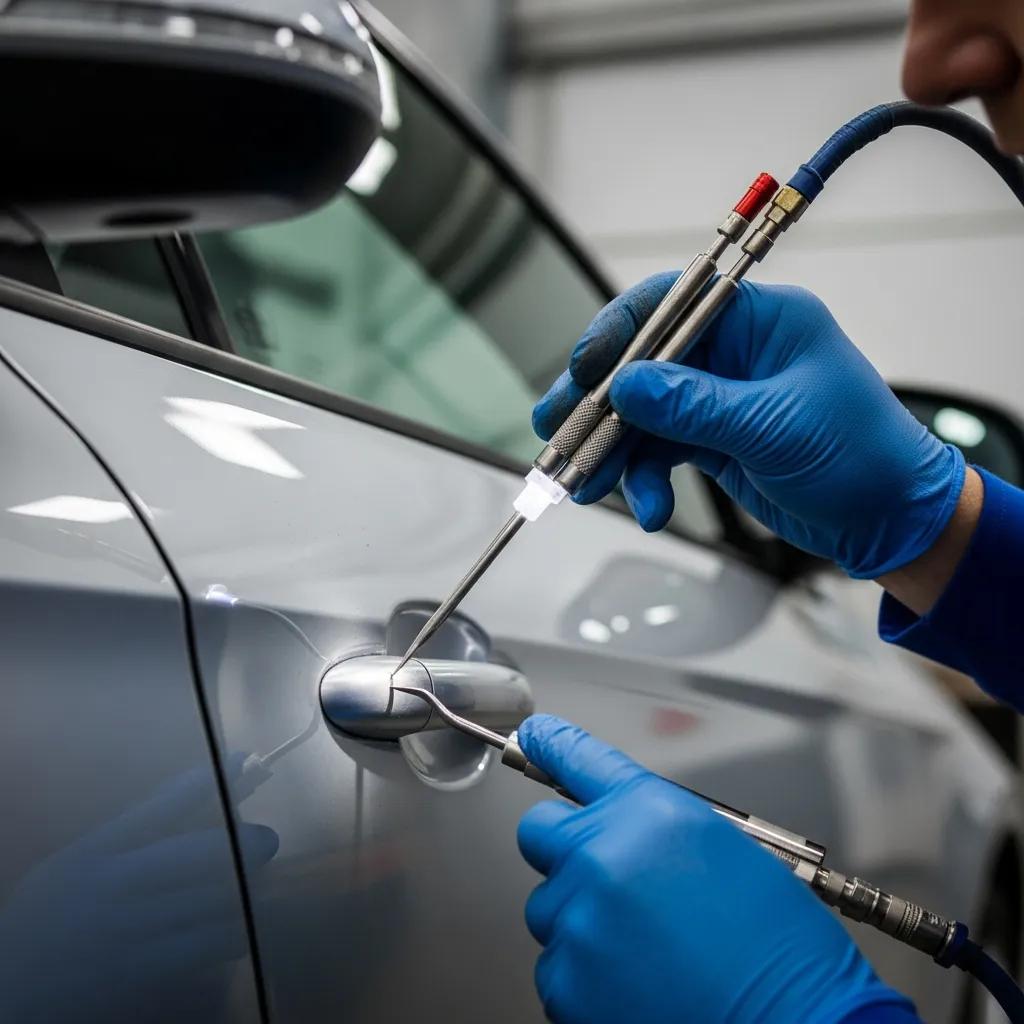
Paintless dent repair (PDR) restores metal panels by reshaping the dent from behind the panel or by using adhesive pull techniques on the exterior — all without sanding or repainting. Technicians use specialized rods, glue tabs, and targeted lighting to find highs and lows, then slowly massage the metal back into shape. Because PDR keeps the original paint and coatings, it helps maintain vehicle value and avoids color‑match challenges that come with repainting. PDR works best for shallow, rounded dents where the paint hasn’t cracked or the metal hasn’t been creased.
Below is a practical breakdown of common PDR steps and tools, showing how each contributes to a predictable repair outcome.
| PDR Step / Tool | Purpose | Result / Benefit |
|---|---|---|
| Assessment and lighting | Map dent topology and access points | Informs correct tool choice and technique |
| Interior access using rods | Push and shape metal from behind | Restores contour without removing paint |
| Glue pull and tap-down | Pull hard‑to‑reach dents and refine highs | Protects trim and preserves original finish |
| Finishing and polish | Smooth minor imperfections and restore sheen | Returns original reflection and surface uniformity |
This breakdown shows how each step contributes to a reliable, non‑invasive repair path and introduces the benefits and suitability of PDR.
What Are the Benefits of Paintless Dent Repair for Hail Damage?
When PDR applies, it preserves the factory paint finish, usually costs less than panel replacement, and restores appearance faster. Because it avoids sanding, filler and repainting, PDR uses fewer materials and generates less waste. It also eliminates color‑match issues and keeps original factory coatings intact — an important factor for resale value.
For many hail patterns, these advantages make PDR the preferred first option, provided the paint is unbroken and panel access is adequate.
When Is PDR the Right Choice for Your Vehicle’s Hail Damage?
PDR is the right choice for shallow, rounded dents where the paint surface remains intact, because the metal can be reshaped without breaking paint bonds. It’s not ideal for sharp creases, punctures, or areas with cracked paint or torn metal — those typically need replacement or repainting. Panel material matters too: aluminum and different steels respond differently and require experienced hands. For luxury vehicles or panels with sensors and multilayer structures, technicians will confirm whether PDR will preserve ADAS alignment before recommending it.
Clear decision criteria make sure the repair path preserves both appearance and functional safety, and knowing how claims work helps secure authorization for the correct repairs.
How to Navigate Your Hail Damage Insurance Claim in Pasadena?
Filing a hail damage claim smoothly starts with organized documentation, prompt notice to your insurer, and a professional estimate that outlines OEM‑aligned repairs. The basic process is simple: document the loss, notify your insurer with evidence, get a certified estimate, and coordinate any adjuster inspections. Acting quickly lowers the chance of delayed authorizations and helps the insurer see the OEM‑compliant work needed to protect safety systems. The checklist below is a practical sequence Pasadena drivers can follow right away.
- Document the damage: Photograph each damaged panel, record the VIN, and note the storm date for your claim.
- File a claim promptly: Contact your insurer with photos and basic policy details to open the claim.
- Obtain a professional estimate: Bring the vehicle to a certified shop for an OEM‑aligned appraisal and submit it to the insurer.
Those steps are the backbone of a successful claim; detailed shop assistance can smooth adjuster interactions and speed authorization.
What Steps Should You Take to File a Hail Damage Insurance Claim?
Start by collecting evidence: time‑stamped photos, a list of affected areas, and any witness or storm reports that support the event. Insurers rely on clear documentation to verify cause and extent of loss. Next, open a claim with your insurer and ask what additional forms or evidence they need. Then get a professional, itemized estimate showing required OEM procedures and parts. Keep copies of all communications and note adjuster names and inspection dates to prevent misunderstandings. Organized records reduce administrative friction and improve the chance of approvals that match true repair needs.
A well‑documented claim sets the stage for shop‑to‑insurer coordination; the section below explains how we handle adjuster interactions.
How Does Prime Time Collision Assist with Insurance Adjusters?
We work directly with insurance adjusters by preparing detailed, OEM‑aligned estimates and supplying documentation that explains necessary repair steps and safety‑critical tasks. Our technicians clarify why specific OEM procedures, parts, or calibrations are required so adjusters can approve work that preserves safety systems and factory tolerances. We also schedule adjuster inspections and follow up to resolve discrepancies, lowering the burden on owners and getting repairs started sooner. That hands‑on support increases the likelihood insurers authorize repairs that restore the vehicle fully and safely.
With adjuster coordination handled, owners can compare repair costs and warranty options with confidence.
Why Are OEM Certified Repairs Important for Hail Damage in Pasadena?
OEM‑certified repairs follow manufacturer procedures and parts specifications, which is essential for maintaining safety system integrity, structural repairs, and factory fit-and-finish. Manufacturer instructions spell out how to restore structural components, recalibrate ADAS sensors, and reinstall parts to factory tolerances — all of which preserve designed safety performance. Skipping OEM alignment can affect airbag timing, sensor accuracy, or corrosion protection, potentially impacting occupant safety and resale value. Choosing a shop that follows these standards reduces those risks and helps maintain long‑term vehicle performance.
The table below shows how OEM certifications and practices translate into measurable benefits for owners focused on safety and value.
| Repair Standard | Characteristic | Customer Impact |
|---|---|---|
| OEM-aligned repair procedures | Manufacturer-prescribed steps and parts | Ensures correct fit, function, and safety system performance |
| Use of specified parts | Manufacturer-identified replacement components | Maintains structural integrity and keeps warranty relevance |
| Certified technician training | Approved repair training programs | Reduces risk of improper repairs that affect resale value |
These points clarify why OEM compliance matters and lead into how certifications affect safety and value.
How Do OEM Certifications Affect Vehicle Safety and Value?
OEM certifications matter because they ensure repairs follow documented procedures for structural and electronic systems that preserve airbag function, sensor calibration, and overall crashworthiness. For example, poorly aligned panels or missed ADAS recalibration can create safety risks even if the car looks fixed. From a resale view, documented OEM repairs support trade‑in value by showing the vehicle was restored to manufacturer standards rather than patched. Buyers and insurers both prefer documented, certified work because it reduces uncertainty about long‑term reliability.
Knowing these impacts helps you choose the right shop and ask the right questions about certifications and repair documentation.
Which OEM Certifications Does Prime Time Collision Hold for Hail Repair?
Prime Time Collision Center employs I‑CAR Platinum certified technicians and follows OEM repair practices. That commitment shows we invest in training and adhere to manufacturer standards when restoring vehicles. These credentials mean our technicians are trained in modern topics — structural repair, refinishing, and ADAS calibration — so repairs align with current manufacturer expectations. For customers, that translates to work that prioritizes safety systems and factory finishes, not shortcuts that could hurt long‑term value. When comparing shops after hail damage, technician training and documented repair procedures are key differentiators.
This commitment to certified repairs leads into practical considerations about cost and warranty coverage after hail work.
What Are the Costs and Warranty Options for Hail Damage Repair in Pasadena?
Repair costs vary widely depending on severity, vehicle construction, number of panels affected, and whether PDR or traditional bodywork is required. Typical cost drivers include dent density and depth, aluminum versus steel panels, repainting or panel replacement needs, and ADAS recalibration if sensors are disturbed. Insurance factors — deductibles and whether you file a claim — also affect out‑of‑pocket expense. Many shops provide free estimates so owners can compare scopes before authorizing work; that step is essential to make an informed financial decision.
The table below compares repair types, common cost drivers, and typical warranty coverage so you can see how choices affect price and protection.
| Repair Type | Cost Drivers | Typical Range / Warranty |
|---|---|---|
| Paintless Dent Repair (PDR) | Number of dents, access, panel material | Cost varies by dent count; free estimates available; warranty depends on shop policy |
| Traditional panel repair/repaint | Panel replacement, paint blending, labor | Higher cost due to parts and paint; warranty typically covers workmanship |
| Glass replacement | Severity of crack, sensor-integrated glass | Cost depends on OEM glass and calibration; warranty covers installation quality |
This comparison shows why free estimates and clear warranty terms matter. The sections below offer more cost guidance and specific warranty details.
How Much Does Paintless Dent Repair Cost for Hail Damage?
PDR pricing depends mainly on the number of dents, their size, and how accessible the backside of the panels is. Small, localized jobs cost far less than full‑roof or multi‑panel damage; aluminum panels and difficult access increase labor time and price. Insurance handling — deductibles and claims processing — affects your out‑of‑pocket cost as well. For accurate pricing tailored to your vehicle, get a free estimate from a certified shop so the quote reflects the actual repair needs.
Having realistic price ranges helps you plan and decide whether to file a claim; warranty details clarify what protection you’ll have after the repair.
What Warranty Coverage Does Prime Time Collision Offer on Repairs?
Prime Time Collision Center stands behind its repairs with a lifetime warranty, reflecting confidence in workmanship and materials when repairs follow OEM procedures and certified processes. A lifetime warranty typically covers workmanship and finish defects related to the original repair scope; customers should confirm exact terms and any exclusions with the shop.
To use warranty coverage, bring your repair documentation and schedule a reinspection — we’ll address covered issues promptly. Confirming warranty registration and terms at the time of repair makes future claims clear and easy to handle.
Ready to start? Contact Prime Time Collision Center for a free estimate and to arrange an inspection at our Glendale facility.
Prime Time Collision Center offers free estimates and 24/7 towing to help with rapid assessment after hail events. We work with all major insurance companies to coordinate adjusters and approvals. Our shop is located at 6010 San Fernando Rd, Glendale, CA 91202, and our phone number is (818) 396-4997 to schedule an evaluation or request towing. Customers who document damage promptly and bring vehicle photos to the estimate typically get a clearer, faster appraisal that helps speed insurance authorization and repair scheduling. Choosing a certified shop that provides detailed OEM‑aligned estimates and standing warranties reduces uncertainty and helps ensure a full, safe restoration of hail‑damaged vehicles.
Frequently Asked Questions
What should I do immediately after discovering hail damage on my vehicle?
First, document everything: take clear photos of all affected areas (wide and close‑up), note the storm date, and record the VIN. Next, contact your insurance company to report the damage and open a claim. Finally, get a professional assessment from a certified repair shop to obtain an accurate estimate. That documentation will be essential for your claim and the repair process.
How can I tell if my vehicle is a candidate for paintless dent repair?
PDR is a good option when dents are shallow, rounded, and the paint surface is intact. It’s not suitable for sharp creases, punctures, or areas where paint has cracked or metal has torn. A certified technician can inspect the vehicle and advise whether PDR will preserve the original finish and structural integrity.
What factors influence the cost of hail damage repair?
Costs depend on the number and severity of dents, panel material (aluminum vs. steel), and whether PDR or traditional bodywork is needed. Additional expenses can come from repainting, panel replacement, or ADAS recalibration. Insurance deductibles and whether you file a claim also affect your final out‑of‑pocket cost. A detailed estimate from a certified shop is the best way to get accurate pricing.
How long does hail damage repair typically take?
Repair time varies by damage extent and method. PDR is usually fastest — from a few hours to a couple of days for minor damage. Traditional repairs involving repainting or panel replacement can take several days to weeks, depending on parts and shop schedule. A certified shop will give a more precise timeline after inspection.
What should I look for in a repair shop for hail damage?
Look for I‑CAR Platinum certification or similar training credentials and a shop that follows OEM repair practices. Check reputation and reviews, and confirm they offer services like insurance coordination and free estimates. Clear communication and detailed repair documentation are signs you’ll get a smooth process and reliable results.
Will my insurance cover hail damage repairs?
Most comprehensive auto policies cover hail damage, but coverage and deductibles vary by policy. Review your policy and contact your insurer to confirm limits and any out‑of‑pocket costs. Providing thorough documentation and a professional estimate will help the claims process and increase the chance insurers authorize necessary repairs.
Conclusion
Knowing how hail affects your vehicle and choosing certified, OEM‑aligned repairs makes a big difference for safety and resale value. Prime Time Collision Center restores vehicles to manufacturer standards, offers free estimates and 24/7 towing, and backs repairs with a lifetime warranty. If you’ve been hit by hail, reach out for a free estimate and expert help navigating your insurance claim — we’ll get you back on the road with confidence.