
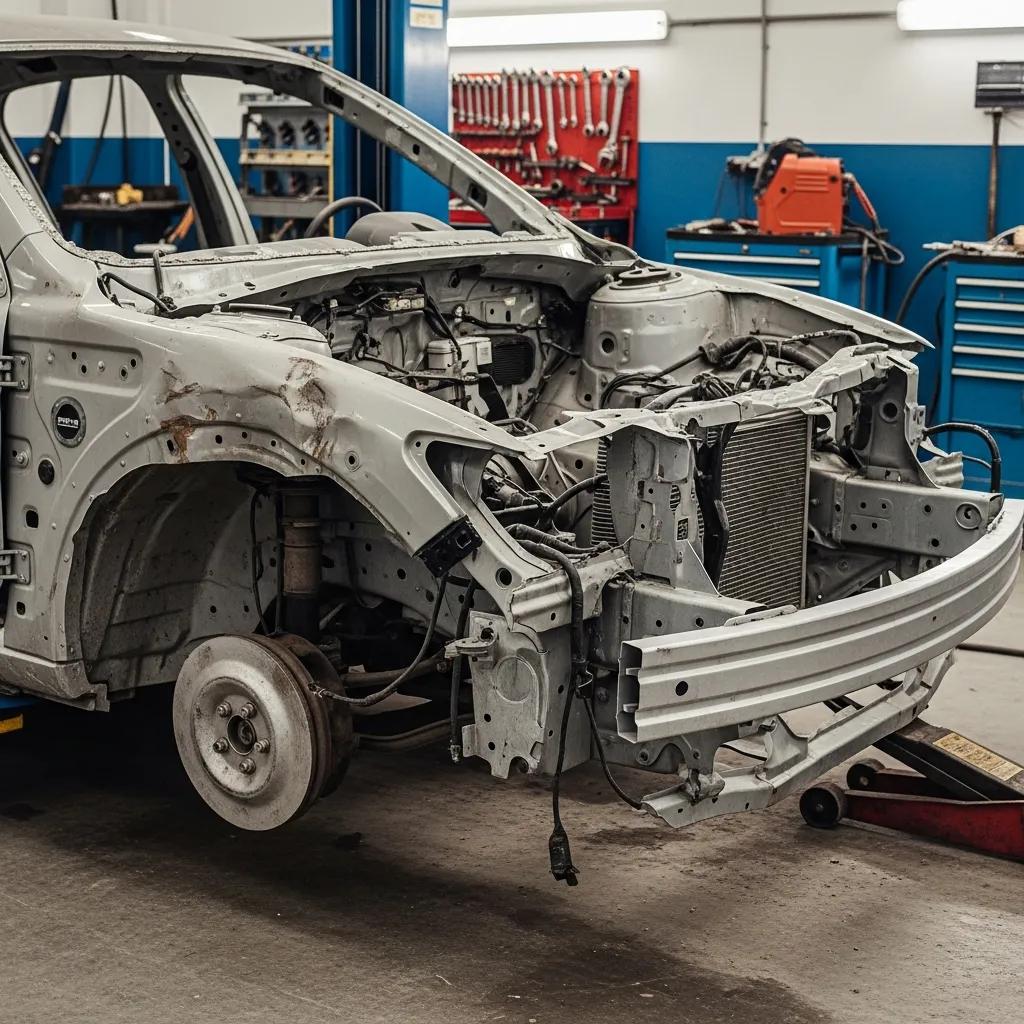
Signs Your Car’s Frame May Be Damaged After an Accident — How to Spot Problems and What to Do Next
Frame damage means the vehicle’s structural parts — rails, mounts or seams — have been bent, cracked or shifted in a collision. That kind of damage affects safety, handling and resale value. The earlier you spot signs — from obvious panel misalignment to subtle steering pull or odd tire wear — the sooner you can avoid driving an unsafe car and make clearer insurance and repair choices. This guide walks through common visible clues, hidden chassis symptoms, why a professional inspection matters, how OEM-level repairs protect safety and value, and the immediate steps to take if you suspect structural damage. You’ll also find quick DIY checks, the diagnostic tools shops use (laser/3D measurement, alignment systems), and when to bring in certified techs. Read on to match symptoms with likely causes and follow a priority plan that protects you and your vehicle after a crash.
Visible Signs of Frame Damage After a Collision
Visible signs are the exterior clues that structural parts or body mounts moved in an impact. They’re important because they can mean the chassis or unibody is out of factory specs — which affects crash performance and handling. A few quick visual checks help you decide whether it’s safe to drive or time to get a professional measurement. Look for misaligned panels, doors that won’t close, visible kinks in rails, or uneven gaps from side to side. Spotting these tells you it’s time for a documented inspection by a qualified shop.
If you see several of these cues together, arrange a professional check right away.
How to Notice Misaligned Panels and Uneven Gaps

When hood, doors or trunk gaps aren’t even, or a panel sits higher or lower than its match, that asymmetry often points to rail distortion or a shifted hinge point. A simple way to check: step back and compare left-to-right symmetry, use a straight edge if you have one, then open and close doors — binding or resistance is a red flag. If gaps differ by more than a few millimeters or doors won’t latch properly, stop driving and schedule a frame measurement so a technician can quantify the issue and plan repairs.
Checking gaps after a repair or after a minor collision prevents hidden problems from getting worse and leads into the next step: assessing stance and suspension relation.
What Vehicle Leaning or Sagging Tells You About the Frame
If your car leans to one side or droops in the front or rear, that can mean damage beyond simple suspension wear — think bent rails, crushed subframe points, or distorted suspension mounts. Look for mismatched ride height between sides, uneven bumper lines, or a nose-up/nose-down stance compared with how the car sat before. Measure corner heights on level ground and inspect mounting points for visible deformation. Keep in mind: some sagging comes from worn springs or mounts, so a professional scan or imaging will separate suspension failure from structural misalignment. Catching leaning early avoids unpredictable handling and points toward the proper straightening methods.
Distinguishing suspension-only faults from structural bends ensures the repair restores both comfort and crashworthiness.
Below is a quick comparison of common visible signs and the next steps to take.
| Visible Sign | What It Indicates | Recommended Next Step |
|---|---|---|
| Misaligned door/hood gaps | Possible bent unibody rails or shifted pillar | Schedule a professional frame measurement and documented inspection |
| Doors that won’t latch or bind | Hinge points moved or door pillar deformation | Avoid driving; arrange inspection and temporary securing |
| Visible bends or creases in rails | Localized structural crush or rail deformation | Photograph damage and request a structural assessment by certified techs |
| Uneven bumper or bumper-to-fender relationship | Subframe or rail offset | Request laser measurement and a full alignment check |
Hidden Symptoms That Point to a Bent Chassis
Hidden symptoms show up in how the car drives or wears, and they often reveal distortion you can’t see from the outside. These signs matter because they can indicate altered alignment geometry, shifted suspension mounts or changed load paths — all of which affect safety. Watch for steering pull, wandering, vibrations at speed, premature or irregular tire wear, and strange noises when braking or turning. Mapping these driving cues to likely structural causes explains why a professional inspection and precise measurement are needed to diagnose and repair correctly.
Finding hidden symptoms early reduces follow-on damage and strengthens your insurance documentation for structural claims.
How Steering and Handling Problems Point to Frame Issues
Steering that pulls, a crooked steering wheel, or unstable handling can mean alignment settings (toe, camber, caster) are out because frame rails or suspension mounts moved. Try this quick check: on a straight, level road hold the wheel centered — does the car drift? Does the steering return to center? Persistent pull or an off-center wheel often matches chassis misalignment. Shops use digital alignment racks and laser measuring systems to match steering symptoms to frame geometry deviations and identify which mounts need attention. Ignoring handling oddities accelerates tire and suspension wear and reduces predictability in emergencies.
Turning steering complaints into objective measurements ties driving safety directly to structural repair needs.
Can Uneven Tire Wear Reveal Frame Damage?
Tire wear patterns — inner-edge scalloping, one-side feathering, or sudden uneven wear after a crash — often point to persistent toe or camber offsets from bent control-arm mounts or moved suspension attachment points. If wear shows up quickly after an impact, suspect structural misalignment. A technician will combine a wear-pattern check, a road test and laser-based frame measurement to decide whether alignment alone will fix it or if frame straightening is required. Fix the root cause to avoid repeated tire replacements and restore manufacturer spec geometry for safe handling.
Recent, asymmetric tire wear directs technicians to inspect specific subframe or rail mount areas for distortion.
| Driving Symptom | Possible Structural Cause | Diagnostic Tool |
|---|---|---|
| Steering pull to one side | Bent control-arm mount or skewed subframe | Digital alignment rack; laser frame measurement |
| Vibration at highway speed | Torsional distortion or bent wheel hubs | Wheel/tire balance + 3D chassis measuring system |
| Rapid inner tire wear | Excess negative camber from mislocated mounts | Tire wear mapping + alignment scan |
| Off-center steering wheel | Asymmetric rail displacement | Laser measurement and steering center calibration |
Why You Need a Professional Inspection After an Accident

Visual checks are useful, but they can’t tell you if rails, unibody seams or subframe mounts are still within factory tolerances. Invisible distortions can change how crash energy is managed. Certified technicians use calibrated tools to document deviations, create repair plans that follow factory procedures, and provide inspection reports insurers and future buyers trust. A documented inspection improves safety, supports claims, and reduces the risk of improper repairs that compromise long-term performance. In the greater Los Angeles area, choose a shop with proven measurement tools and certified staff to make sure hidden damage gets found and fixed to spec.
Knowing the inspection steps helps you understand which diagnostic technologies and credentials matter most.
What Diagnostic Tools Find Frame Damage?
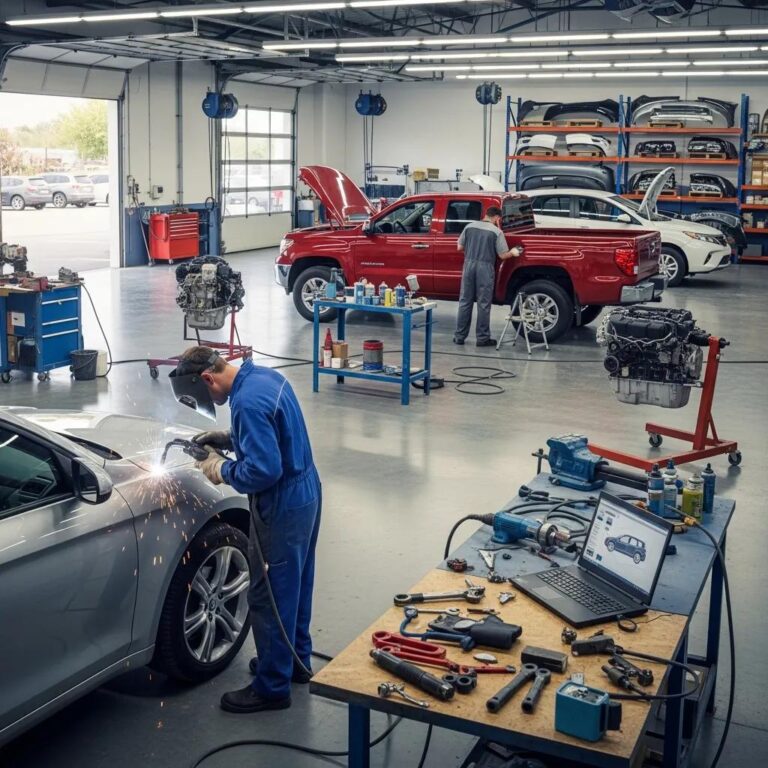
Key tools include laser frame measurement systems, 3D measuring rigs, computerized alignment racks and frame-straightening benches. Laser and 3D systems capture exact point-to-point measurements across frame rails and reference points, producing deviation reports against factory specs; alignment racks then confirm wheel angles and steering geometry. These tools reveal torsional twists, offset subframes and shifted mounting points that you can’t see by eye, allowing technicians to plan targeted straightening or parts replacement. Accurate measurement cuts guesswork and speeds repairs that restore original safety and handling.
Equipment-driven measurement also creates the evidence you need for insurance and for peace of mind.
| Process Step | Tool / Technician Role | Outcome / Benefit |
|---|---|---|
| Initial damage documentation | Technician documents visible damage and photos | Clear record for claims and repair planning |
| Laser/3D chassis measurement | Precision measuring system operated by trained tech | Accurate deviation report vs factory specs |
| Frame straightening or rail repair | Frame bench and pull systems used by certified tech | Restored geometry and load-path integrity |
Why I-CAR Platinum Technicians Matter for Factory-Quality Repairs
I-CAR Platinum means technicians completed advanced training focused on modern collision repair and manufacturer procedures. Platinum techs understand OEM repair sequences, proper attachment methods, and when replacement is safer than repair — all of which affect how the vehicle performs in a future crash. Using certified techs lowers the chance of shortcuts and gives insurers and owners confidence that repairs follow industry standards. Combine that training with advanced measurement tools and you get a repair workflow built to restore factory-level safety with documented results.
Certified techs are the human bridge between diagnostic data and the correct execution of repairs.
How OEM-Aligned Repairs Protect Safety and Value
OEM-aligned repair means restoring structural components and safety systems to the manufacturer’s tolerances and procedures instead of relying on makeshift fixes or mismatched parts. Following OEM standards preserves crash behavior, ensures restraint systems work as designed, and keeps alignment correct for handling and tire life. For owners, OEM-level structural repair supports long-term safety, lowers the chance of recurring problems, and helps protect resale value through documented, factory-style restoration. Understanding OEM principles explains why accurate measurement, correct part selection and proper attachment sequences matter.
Focusing on OEM procedures ties technical repair choices back to what owners care about most: safety and resale value.
What You Gain from OEM Standards in Frame Repair
OEM standards deliver predictable crash performance, correct fit and finish, and repair documentation that insurers and buyers accept. Safety benefits include restored load-path integrity and correct airbag/seat-belt calibration points — both critical in a future collision. Fit-and-finish benefits mean panels line up, doors seal properly and you avoid wind noise or premature wear. From a resale angle, documented OEM-aligned repairs reassure buyers and help maintain vehicle value better than informal or undocumented fixes.
Those benefits show why precision and clear documentation in structural repair are investments in safety and the vehicle’s long-term worth.
How Prime Time Collision Center Handles OEM-Level Structural Repairs
At Prime Time Collision Center we focus on full-service collision repair using trained technicians and measurement-driven processes to reach factory-quality outcomes. Our team includes I-CAR Platinum technicians and we use precise measurement and straightening equipment to restore geometry to manufacturer tolerances. Practically, that means documented inspections, OEM-aligned repair plans, and working with insurance adjusters so the scope reflects structural needs — not just cosmetic fixes. If you want transparent, measurement-backed repairs that protect safety and value, we make that process straightforward.
This explains how certified shops turn OEM principles into reliable repair results.
Immediate Steps If You Think Your Frame Is Damaged
If you suspect frame damage after an accident, put safety first, document everything and get a professional inspection. Immediate steps: stop driving if the car feels unsafe, photograph damage from multiple angles, check for visible issues (gaps, leaning), and call your insurance company to report the crash and request a structural assessment. Keep organized records — photos, notes on how the car drove, and witness info — to help with claims and scheduling inspections. These actions protect evidence, keep you safe, and speed the repair process.
Use a short checklist to move from uncertainty to a documented diagnosis and a clear repair plan.
- Stop driving if the vehicle feels unsafe: Move to a safe spot off the road and assess visible damage.
- Document the damage: Take clear photos of all sides, close-ups of gaps or creases, and any interior signs like shifted trim or buckled seat mounts.
- Record driving symptoms: Note steering pull, vibrations, or an off-center steering wheel and when they occur.
- Contact your insurer and arrange a structural inspection: Ask for an adjuster visit or authorize a certified shop inspection with documented measurements.
Working with Your Insurer on Structural Damage Claims
When you talk to your insurer about possible frame damage, share clear documentation: the accident date/time, photos, notes on driving symptoms, and a professional inspection report when it’s available. Ask them to authorize a structural inspection that includes laser measurements and deviation reports — that objective evidence supports the proper repair scope and parts. If needed, have your chosen certified shop communicate findings directly with the adjuster so repair procedures match the documented measurements. Clear, measurement-based evidence speeds approvals and reduces disputes over the extent of damage.
Showing objective measurement data helps get necessary repairs approved without unnecessary delay.
Free Services Prime Time Collision Center Offers After an Accident
Prime Time Collision Center offers free estimates and 24/7 towing assistance to drivers after a collision, so you can get a documented inspection without up-front cost concerns. We handle transport to the shop, perform an initial inspection, and prepare a measurement-based estimate you can share with your insurer. Our free estimates, towing support and insurance-claim help are meant to reduce friction during a stressful time and make sure structural issues are identified and documented quickly. Scheduling these complimentary services moves the process forward and gets your vehicle on the path to a safe, OEM-quality repair.
This highlights how our services support the immediate steps you should take after a crash.
- Collect evidence: Photos, video and notes about how the vehicle handled after the crash.
- Request measurement-based inspection: Insist on laser/3D measurement documentation to support structural findings.
- Share reports with the adjuster: Provide the shop’s estimate and measurement report to avoid gaps in repair scope.
Signs of frame damage after an accident range from obvious panel misalignment and sagging to subtle steering pull and uneven tire wear. Detecting and documenting these issues early, then choosing measurement-driven inspection and OEM-aligned repair, preserves safety and value. For drivers who want certified technicians, precise diagnostics, free estimates and 24/7 towing, a trusted collision center can simplify the process and improve repair outcomes.
Frequently Asked Questions
What should I do if I suspect my car has frame damage?
If you suspect frame damage, stop driving if it feels unsafe, take photos from multiple angles, note any driving symptoms, and contact your insurer to request a structural inspection. Getting a documented inspection from a certified shop preserves evidence and ensures a thorough evaluation of the vehicle’s condition.
How can I tell if my vehicle’s suspension is affected by frame damage?
Suspension issues tied to frame damage can show as uneven tire wear, leaning to one side, or unusual noises when turning. Measure ride height on a level surface and compare corner heights. If you see discrepancies, have a professional inspect whether suspension parts or the frame are the root cause, since both affect handling and safety.
What are the long-term risks of driving with frame damage?
Driving with frame damage can lower crash protection, cause unpredictable handling, and speed up tire and suspension wear. It also reduces resale value and can lead to more structural deterioration. Have any suspected frame damage inspected and repaired by certified professionals to keep the car safe and reliable.
How does frame damage affect my insurance claim?
Frame damage often requires detailed documentation for insurance. Provide photos, notes on symptoms and a professional inspection report to speed the process. Insurers may request a structural assessment to set the correct repair scope. Being proactive and sharing measurement-based reports helps ensure accurate coverage decisions.
What repairs are usually needed for frame damage?
Repairs depend on severity but commonly include frame straightening using specialized equipment and replacing damaged structural components. Realigning suspension parts may also be necessary. Certified technicians will inspect thoroughly and recommend repair methods that meet safety standards and manufacturer specs.
What warning signs should prompt a professional inspection for frame damage?
Warning signs include misaligned body panels, doors that won’t close properly, uneven tire wear, vehicle leaning or sagging, steering pull, vibrations at speed, or an off-center steering wheel. If you notice any of these, get a professional evaluation promptly.
Why are certified technicians important for frame repairs?
Certified technicians bring specialized training and access to advanced diagnostic tools that accurately assess and restore structural integrity. They follow OEM repair standards so repairs meet safety and performance specs. Their expertise identifies hidden damage, recommends the right repair approach, and restores the vehicle to a safe condition.
Conclusion
Recognizing signs of frame damage after an accident is essential to protect safety and vehicle value. Spot visible and hidden indicators early, document everything, and choose a measurement-driven inspection and OEM-level repair. Working with a certified collision repair center that offers advanced diagnostics, transparent estimates and towing support will help restore your vehicle correctly. Schedule a professional inspection today to keep your car safe and preserve its value.