

Smart Ways to Lower Your Car Insurance Premium — Practical Strategies for Drivers
Your car insurance premium is what you pay for protection against vehicle damage, liability, and theft. Premiums rise when insurers see higher risk — from past claims or unsafe driving — and fall when risk looks lower. Knowing how insurers calculate rates — by looking at your driving record, vehicle safety features, coverage choices, and repair quality — helps you take targeted steps to keep costs down. This article walks through practical ways to save: which discounts to claim, how a clean driving record helps, the trade-offs of different deductibles and coverages, why OEM-certified repairs and ADAS calibration matter for long-term costs, and how handling claims efficiently can limit rate increases. You’ll find clear checklists, comparison tables, and immediate actions you can take. Recommendations reflect insurer practices and research through 12/2024, so you can lower your auto insurance with proven behavioral and technical choices.
What Are the Most Impactful Car Insurance Discounts to Maximize Savings?

Discounts lower your premium by showing insurers you’re less likely to file claims or by bundling multiple policies. Insurers map behaviors, relationships, and vehicle traits — like multi-policy coverage or telematics-monitored driving — to lower expected losses, and pass some of that savings to you. The discounts that often move the needle most are multi-policy bundles, safe-driver credits, telematics or usage-based programs, good-student discounts for younger drivers, and low-mileage or garaging discounts. Below is a clear breakdown of common discounts, how to qualify, and typical savings so you can prioritize which ones to pursue.
Common discounts and how they reduce premiums:
- Multi-policy discount: Insuring your auto and home or renters policy together lowers total premiums by rewarding consolidated coverage and admin efficiency.
- Safe driver discount: A clean driving record or no at-fault accidents usually yields noticeable savings.
- Usage-based/telematics discount: Opting into an insurer’s telematics program and showing safe driving can earn immediate reductions.
- Good student / young driver discount: Students who meet grade or program criteria get lower rates.
- Low-mileage / garaging discount: Driving fewer miles or keeping your car in a garage reduces exposure and often lowers premiums.
| Discount Type | Eligibility / Typical Requirement | Typical Savings |
|---|---|---|
| Multi-policy | Insure auto plus home/renters with same insurer | 10–25% on auto premium |
| Safe driver | No at-fault accidents or recent violations | 5–30% depending on insurer |
| Telematics / Usage-based | Enroll in monitoring program and meet safe-driving thresholds | 5–20% after evaluation |
| Good student | Maintain qualifying GPA or school enrollment | 5–15% for young drivers |
| Low-mileage | Annual mileage below insurer’s threshold | 5–15% for eligible drivers |
Which Common Discounts Can Drivers Qualify For?
Most drivers can claim at least one discount if they check their policy and provide the right documents. Insurers typically ask for proof — grade reports, telematics enrollment, or odometer readings — to verify eligibility. Safe-driver and multi-policy discounts are among the easiest: share your driving record and combine policies and you may see immediate savings. Usage-based programs require signing up (app or device) and demonstrating consistently safe driving; insurers track acceleration, braking, speed, and time-of-day driving. Young drivers should ask about good-student and driver-training discounts. Low-mileage savings usually need annual mileage reporting or telematics verification. Talk to your agent and gather documentation to lock in the discounts you qualify for quickly.
How Does Bundling Insurance Policies Reduce Premiums?
Bundling cuts administrative costs and spreads insurer exposure across multiple lines — which is why carriers offer multi-policy discounts. Bundling home and auto usually gives the biggest single discount, but actual savings vary by company and region. Always request both separate and bundled quotes so you can compare true savings; sometimes a standalone policy with a different company can be cheaper even after a bundle discount. Bundling also simplifies claims coordination and paperwork, which is a real convenience beyond the dollar savings.
- Request separate and bundled quotes to compare real savings.
- Check cancellation or loyalty clauses that might affect long-term costs.
- Evaluate coverage parity to make sure bundling doesn’t cut protections you need.
Bundling often delivers quick savings and easier paperwork, but confirm coverage details before you commit.
How Can Maintaining a Clean Driving Record Help Lower Auto Insurance Rates?
A clean driving record tells insurers you’re less likely to file future claims. Insurers use violation and claim history as major inputs in their pricing models, so drivers with no at-fault accidents and few moving violations typically earn lower renewal rates over time. How long a violation affects your premium depends on state rules and insurer policies: major events (DUI, at-fault collisions) often influence rates for three to five years, while minor violations may carry a shorter penalty. Staying safe behind the wheel — defensive driving, avoiding distractions, and correcting risky habits — reduces premium pressure and helps you qualify for safe-driver discounts.
Primary behaviors insurers track and how they affect premiums:
- Speeding and reckless driving: Quickly raises perceived risk and premiums.
- At-fault collisions: A major driver of premium increases because they indicate higher claim likelihood.
- DUI and major violations: Cause steep and persistent rate spikes due to extreme risk.
- Distracted driving: Becoming more important as telematics and reports capture evidence of distraction.
What Driving Behaviors Influence Insurance Premiums?
Insurers translate unsafe behaviors into higher rates. The most influential actions are speeding, at-fault crashes, DUIs, and repeated risky patterns recorded by telematics. Speeding and collisions raise both the expected frequency and severity of claims; DUIs signal extreme risk and often lead to major premium increases or coverage restrictions. Usage-based programs also flag harsh braking, rapid acceleration, and night driving, allowing insurers to update rates sooner based on actual behavior. Reducing these behaviors lowers immediate risk and helps you earn or keep safe-driving discounts over renewals.
How Do Defensive Driving Courses Contribute to Savings?

Defensive driving courses teach safer habits and many insurers offer discounts for completing approved programs. Typical savings range from about 5–10%, depending on the insurer and whether the course is state- or insurer-approved. To get the discount, finish a certified course, submit the completion certificate to your insurer, and confirm when the credit will apply. A defensive driving class can also help restore discount eligibility after minor violations.
What Role Do Deductibles and Coverage Choices Play in Saving on Car Insurance Premiums?
Your deductible and coverage choices are a direct trade-off between lower premiums and higher out-of-pocket risk. Raising your deductible lowers your premium because the insurer pays less for small losses. Dropping collision or comprehensive on an older car, removing optional riders, or lowering limits can also reduce premiums — but they increase your financial exposure if you have a loss. When adjusting coverages, consider your vehicle’s value, any loan or lease requirements, and your emergency savings so you don’t trade premium savings for unacceptable risk. The table below shows typical effects of deductible and coverage changes.
| Option | Effect on Premium | Out-of-Pocket Risk |
|---|---|---|
| Increase deductible from $500 to $1,000 | Premium decreases moderately (often 10–25%) | Larger upfront cost after a claim |
| Drop collision on low-value vehicle | Premium decreases noticeably | Total loss risk borne by owner |
| Maintain full coverage on leased vehicle | Premium remains higher | Lender requirements protect you and lender |
How Does Increasing Your Deductible Affect Your Premium?
Raising your deductible reduces how often insurers pay small claims, which typically lowers your premium — for example, moving collision from $500 to $1,000 often cuts premiums by roughly 10–25%, depending on the insurer and driver profile. The trade-off is a bigger out-of-pocket payment if you file a claim. Before changing deductibles, make sure your emergency savings can comfortably cover the higher amount. A helpful rule: compare the annual premium savings to the extra money you’d need to have on hand for the larger deductible.
Which Coverage Adjustments Can Optimize Costs Without Sacrificing Protection?
Optimizing coverage means matching limits and options to your car’s value, financing status, and your risk tolerance. Common steps include raising deductibles, removing duplicate riders, and setting liability limits that meet state and personal needs without being excessive. For older vehicles with low market value, dropping collision or comprehensive can save money with limited downside; leased or financed cars usually need full coverage. Also keep in mind repair quality: documented, OEM-part repairs by certified technicians lower the chance of follow-up claims and disputes, which supports steadier premiums over time.
- Raise deductibles if you have emergency savings so you can handle higher out-of-pocket costs.
- Remove unnecessary add-ons such as duplicate roadside assistance you already get elsewhere.
- Keep full coverage for financed or leased vehicles to meet lender requirements.
Balancing premium savings with sensible protection keeps you from exposing yourself to catastrophic loss.
How Do OEM Certified Repairs and ADAS Calibration Impact Long-Term Insurance Costs?
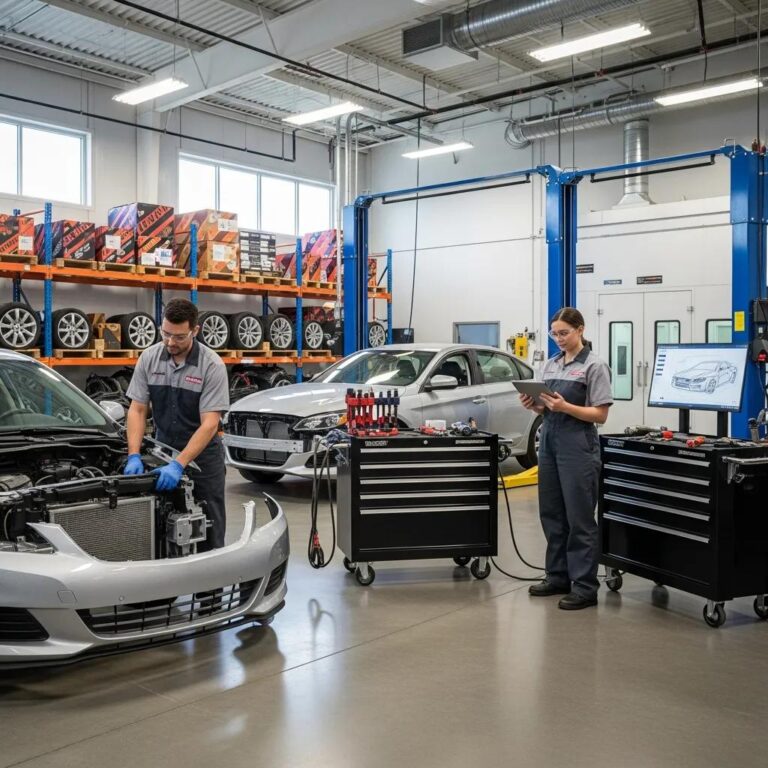
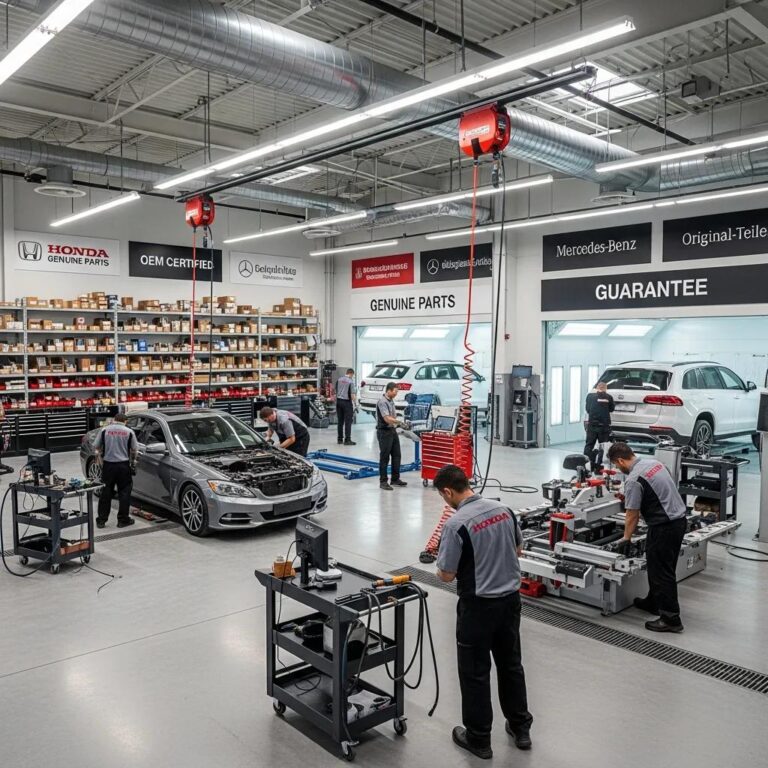
OEM-certified repairs and correct ADAS calibration help preserve vehicle safety and reduce the chance of secondary failures — which lowers future claim frequency and gives insurers confidence in the vehicle’s post-repair safety. OEM repairs use original parts and manufacturer procedures to keep structural integrity, while ADAS calibration restores sensor accuracy for systems like lane-keeping and automatic emergency braking. Insurers prefer documented, certified repairs because they reduce the risk of inadequate fixes that lead to more claims. Over time, that lower downstream risk can help stabilize your premiums. The table below compares OEM-certified repairs with aftermarket and other alternatives across safety, warranty, insurer acceptance, and long-term costs.
| Repair Approach | Safety Retention | Warranty / Documentation | Insurer Acceptance | Long-Term Cost Implication |
|---|---|---|---|---|
| OEM certified repairs | High – preserves factory tolerances | Manufacturer-aligned documentation | High – trusted by insurers | Lower risk of secondary claims; supports stable premiums |
| Aftermarket parts & non-certified repair | Variable – potential fit/performance issues | Limited or shop-specific warranties | Mixed – may trigger insurer scrutiny | Higher chance of rework and future claims |
| DIY or incomplete repairs | Low – safety systems may be compromised | Typically no warranty | Low – insurer may dispute repairs | Increased likelihood of additional claims and costs |
Why Are OEM Certified Repairs Important for Insurance Premium Stability?
OEM-certified repairs follow manufacturer procedures, use factory parts, and are performed by certified technicians — all of which preserve structural integrity and reduce the chance of post-repair failures. Insurers look at repair quality when gauging future risk; documented OEM repairs give stronger evidence that the vehicle meets safety expectations and lower expected future losses. Using OEM parts and proper calibration helps maintain crash energy paths and restraint performance, which affects claim severity. Certified repairs also reduce disputes with insurers and help protect your long-term premium profile.
Prime Time Collision Center is an I-CAR Platinum certified provider that delivers OEM-quality repairs and ADAS calibration, works with all major insurance companies, and supplies the documentation insurers expect. Their process shows how a certified shop can lower the chance of secondary damage and build insurer confidence after a repair.
What Is ADAS Calibration and How Does It Affect Vehicle Safety and Insurance?
ADAS calibration realigns sensors and cameras for advanced driver-assistance systems after repairs, replacements, or wheel alignment so features like lane assist, automatic emergency braking, and adaptive cruise control work as intended. Proper calibration restores sensor accuracy; without it, ADAS can misread the road and increase crash risk. Insurers view calibrated ADAS as evidence that safety systems were restored, which lowers the chance of future claims tied to system failure and helps maintain vehicle valuation. After a collision, keeping records of ADAS calibration and test results is critical when you present repairs to insurers and when protecting your premium profile.
How Can Efficient Insurance Claim Handling and Quality Repairs Prevent Premium Increases?
Fast, well-documented claims and high-quality repairs reduce back-and-forth with insurers and the rework that drives up administrative costs — costs that can eventually roll into higher premiums across an insurer’s book. Clear estimates, timely communication with the insurer, and certified repairs shorten cycle time and lower the chance of supplemental claims caused by poor work. Choosing a shop that coordinates with insurers and provides organized documentation reduces the risk of denials or reopened claims, helping your incident look like a single, well-handled event instead of an ongoing problem.
Steps that streamline post-accident claims and protect your premium:
- Prioritize safety and documentation at the scene — take photos and collect witness information.
- Report promptly and accurately to your insurer to start the claim process quickly.
- Obtain a certified estimate and keep detailed repair documentation.
- Choose a shop that works with insurers and follows up to prevent supplemental claims.
What Steps Streamline the Post-Accident Insurance Claim Process?
A clear, timely process reduces insurer uncertainty and the chance of disputes that can affect future premiums. First, make sure everyone is safe, document the scene, and call emergency services if needed. Take photos of all vehicles and damage. Then notify your insurer with the gathered evidence and ask for an adjuster or approval for a certified estimate; include photos, police reports, and witness statements. Book repairs promptly with a certified shop and keep every record — estimates, invoices, and ADAS calibration certificates — to submit to your insurer. A complete paper trail and regular follow-up prevent supplemental claims and show insurers you mitigated further risk.
How Does Choosing a Certified Auto Body Shop Influence Future Insurance Rates?
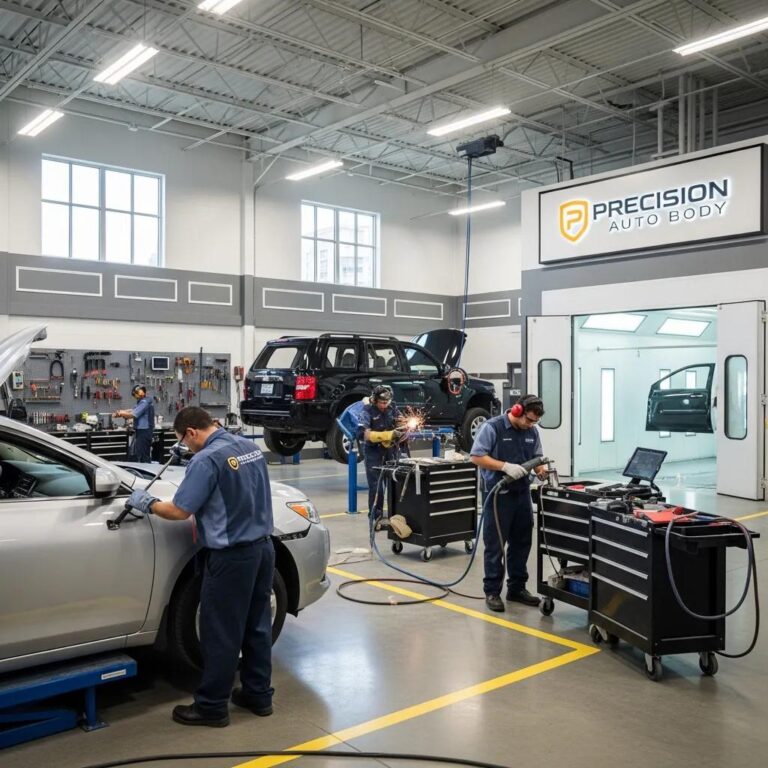
Picking a certified auto body shop affects how insurers view future risk because quality repairs with OEM parts and documented calibration reduce the chance of follow-up failures, rework, or later claims. Certified shops supply structured documentation — repair plans, parts lists, technician certifications, and ADAS calibration reports — that insurers accept as proof of proper restoration. When insurers see consistent documentation from trusted providers, they’re less likely to mark a repaired vehicle as higher risk, which lowers the chance of underwriting decisions that would raise premiums. Choosing certified shops supports better claim outcomes and can help prevent insurer-driven rate increases.
Prime Time Collision Center, serving Glendale and the greater Los Angeles area, works with all major insurance companies, provides free estimates, and offers 24/7 towing to get drivers timely, certified repairs and complete claim documentation. Their I-CAR Platinum certification and ADAS calibration services simplify insurer coordination and strengthen the records insurers need to keep premiums stable.
For drivers looking for a trusted partner after an accident, documented OEM repairs and efficient insurer coordination make a measurable difference in claims handling and can reduce the downstream risk that contributes to higher premiums. Contact a certified repair facility quickly after an incident and keep all repair and calibration records to protect your insurance profile.
Prime Time Collision Center offers OEM-certified repairs, ADAS calibration, free estimates, and claims assistance to drivers in Glendale and the greater Los Angeles area — contact them for certified post-accident repairs and help coordinating your claim.
Frequently Asked Questions
1. What factors should I consider when choosing car insurance coverage?
Think about your vehicle’s value, how much you drive, and your finances. Check your state’s minimum insurance requirements and decide if extra coverage — collision or comprehensive — makes sense given your car’s age and condition. Consider your risk tolerance: higher deductibles lower premiums but increase out-of-pocket costs after a claim. Always compare quotes from several insurers to find the best mix of price and protection.
2. How can I improve my driving record to qualify for better insurance rates?
Drive more safely: obey speed limits, avoid distractions, and use defensive-driving techniques. A certified defensive driving course can sharpen skills and may qualify you for discounts. Regularly review your driving record for errors and address small violations promptly. Over time, a clean record helps you qualify for safe-driver discounts and lower premiums.
3. Are there specific times when I should review my car insurance policy?
Review your policy at least once a year or after major life changes — moving, buying a new car, or a change in commute. Events like marriage or adding a household member are also good triggers to reassess coverage. Comparing quotes regularly ensures you’re getting competitive rates for the protection you need.
4. How does my credit score affect my car insurance premium?
Many insurers use credit information as a pricing factor, so your credit score can affect your premium. Higher scores often mean lower rates because they’re associated with more responsible behavior. Improving your credit — paying bills on time, reducing debt, and checking your report for errors — can help lower insurance costs where credit is used.
5. What should I do if I receive a traffic violation?
Handle it promptly: pay the fine or contest the ticket if you believe it’s wrong. If eligible, consider traffic school to reduce the violation’s impact on your record and insurance. Notify your insurer if required — violations can affect your premium — and focus on maintaining a clean driving record going forward.
6. Can I switch insurance providers at any time, and what are the implications?
Yes — you can switch whenever you want, but make sure your new policy is active before canceling the old one to avoid a coverage gap. Check current policy cancellation fees or penalties and consider timing (renewal dates can affect rates). Switching can affect how insurers view your claims history, so weigh the savings against any potential impacts.
7. How can I ensure I am getting the best value for my car insurance?
Compare quotes from multiple insurers and review the coverage each offers. Look for discounts you qualify for, like safe-driver or multi-policy savings. Match coverages to your vehicle’s value and driving habits. Working with an agent can help you optimize your policy for the best balance of cost and protection.
Conclusion
Lowering your car insurance premium is possible with a few smart moves: claim the discounts you qualify for, keep a clean driving record, and choose certified repairs when needed. Understanding what drives your rates lets you make decisions that save money and keep you safer on the road. Start by reviewing available discounts, checking your coverages and deductibles, and talking to your agent. If you need certified repairs and help with claims, Prime Time Collision Center can assist — contact us for expert support tailored to drivers in Glendale and the greater Los Angeles area.