EV Body Repair in Glendale — Expert Electric Vehicle Collision Service & Tesla-Certified Shop
Electric vehicle body repair covers collision and structural work tailored to battery-electric and hybrid cars. Because EVs use high-voltage systems, lightweight materials, and sensor-dependent safety features, repairs follow different safety steps and technical processes than conventional vehicles. This guide explains how EV collision repair differs from standard bodywork, what certifications and tools matter for safe, OEM-compliant restoration, and the specialized services owners need after a crash. If you’re worried about battery safety, ADAS recalibration, or sourcing OEM parts after an accident, this page walks through the diagnostics, decision points, and repair steps that protect safety and resale value. Topics include EV-specific hazards, technician credentials like I-CAR Platinum, services such as battery diagnostics and Tesla procedures, ADAS calibration essentials, and how Prime Time Collision Center supports estimates, towing, insurance coordination, and warranty coverage. Throughout, we use terms like EV collision repair, electric vehicle body repair, ADAS calibration for EVs, and high-voltage battery diagnostics to help owners find clear, practical information for EV repair in Glendale.
What Are the Unique Challenges of Electric Vehicle Collision Repair?
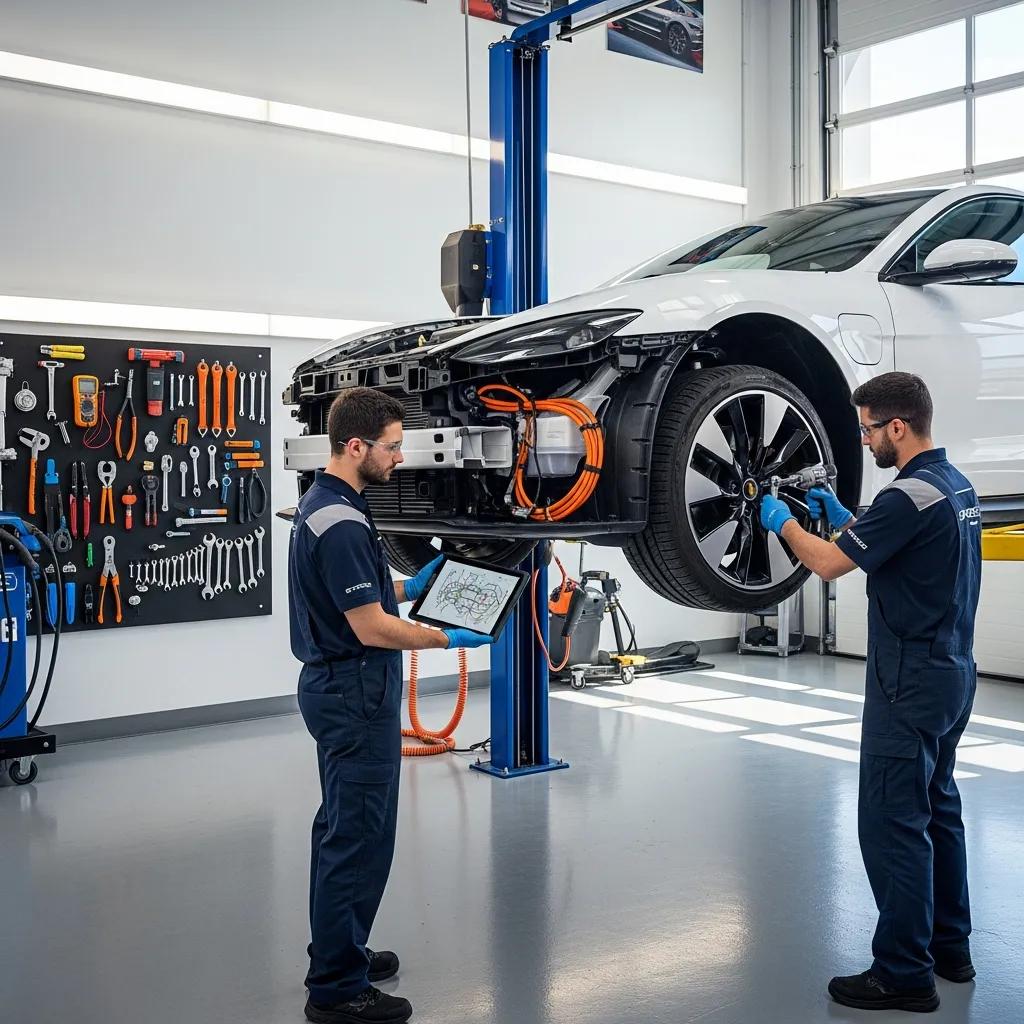
Repairing electric vehicles involves structural work plus electrical and software systems that need different safety rules and repair sequences than internal combustion engine (ICE) cars. The main difference is the high-voltage battery pack and integrated control systems, which require battery isolation procedures, special diagnostic tools, and material-specific bodywork to restore crash energy management. Proper EV repair restores occupant protection, ensures ADAS works correctly, and preserves range and charging performance—so following specialized processes matters for safety and resale value. Below are the primary challenges technicians must manage when repairing EVs.
Electric vehicle repairs bring several distinct challenges:
- High-voltage battery hazards: Batteries must be safely isolated using lock-out/tag-out procedures before any body or electrical work begins.
- Advanced materials and composites: Aluminum and composite panels need unique welding, bonding, and corrosion protection techniques to keep structural integrity intact.
- ADAS and sensor dependencies: Cameras, radar, and other sensors often need recalibration after panel, windshield, or alignment work.
- OEM procedure adherence: Many EV repairs require model-specific steps and authorized parts to maintain safety certifications and warranties.
These challenges demand trained technicians and controlled workflows. Prime Time Collision Center has hands-on experience with high-voltage systems and advanced materials, which underpins the certifications and processes described below.
How Do High-Voltage Battery Systems Affect EV Body Repair?
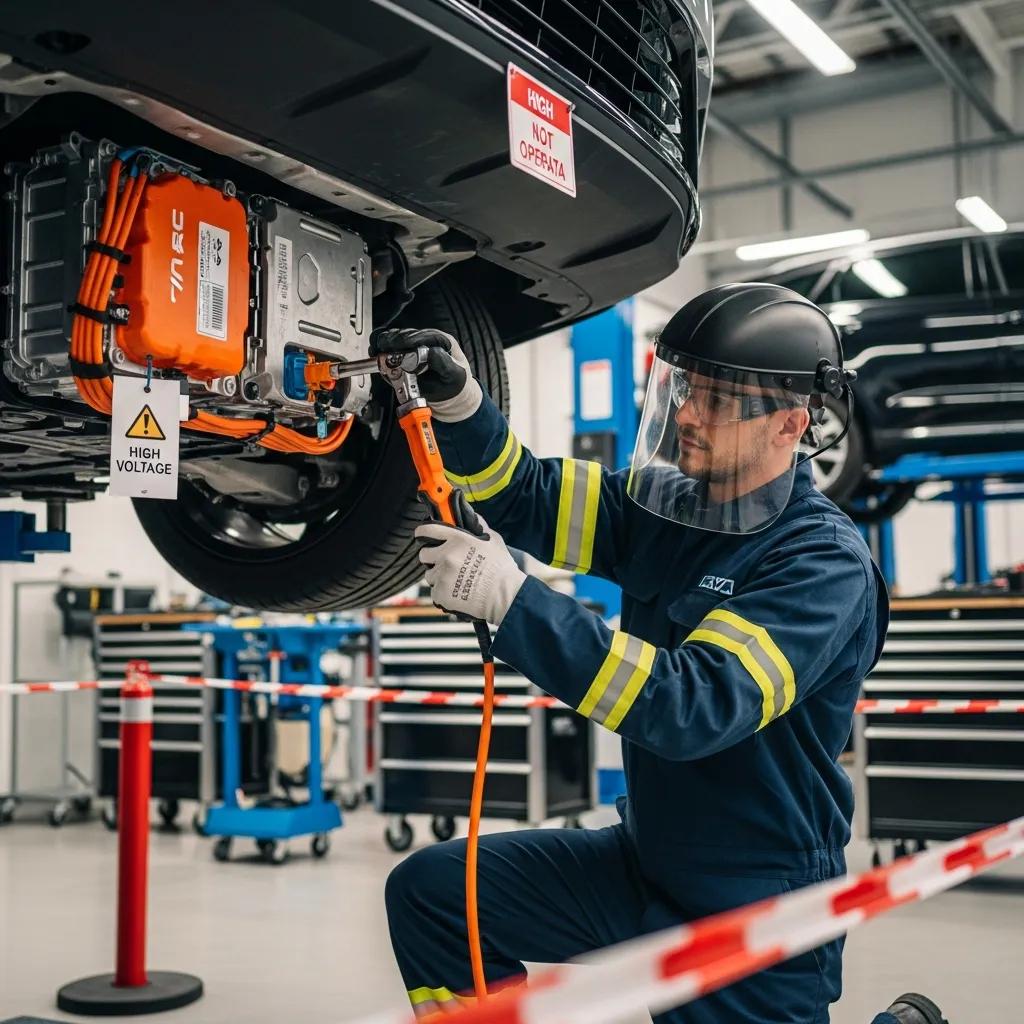
High-voltage battery packs change repair safety and sequencing because they are both part of the vehicle structure and electrically live until properly isolated. Technicians start by isolating the battery—following lock-out/tag-out steps—and verify isolation with meters designed for EV systems to eliminate shock or thermal risks. A damaged battery enclosure can hide electrical faults or risk thermal propagation, so diagnosing battery integrity before frame straightening or welding is critical. For example, rear impact that affects the battery enclosure may require controlled disassembly, insulated lifting, and consultation with battery specialists to decide between module replacement or enclosure repair. Confirming battery safety before secondary repairs prevents restart hazards and protects occupants.
Why Are Advanced Materials and Structural Integrity Critical in EV Repairs?
Materials like aluminum alloys and carbon-fiber composites affect how technicians weld, bond, and protect against corrosion, and these choices determine structural stiffness and crash energy management. Specialists use material-specific tools—aluminum frame racks, adhesive bonding systems, and precise measuring gear—to match OEM stiffness and avoid stress points that weaken crash zones. Using conventional steel techniques on aluminum or composites can cause alignment problems and compromise occupant protection. Following OEM structural procedures and validating alignment with precision systems restores designed crash paths and helps safety systems, like airbags, perform correctly.
Which Certifications and Expertise Ensure Quality EV Body Repairs?
Certifications and documented technician training reduce repair risk by proving teams know high-voltage safety, OEM procedures, and ADAS calibration requirements. Recognized training programs cover battery isolation, BMS diagnostics, and material-specific repair methods—credentials that translate into safer, more predictable outcomes for owners. Below is a practical summary linking common certifications to the benefits owners receive when choosing an EV body shop.
The following table explains how certifications translate into customer-facing guarantees.
| Certification | What It Assures | Customer Benefit |
|---|---|---|
| I-CAR Platinum | Documented, role-based training across collision repair disciplines | Consistent, safety-focused repair processes and oversight |
| ASE L3 / EV Specialist | Hands-on EV system diagnostics and repair competence | Correct battery handling and electrical diagnostics |
| OEM Repair Program Participation | Access to manufacturer repair procedures and updates | Repairs aligned with factory standards and warranty needs |
These credentials form a baseline for trust by mapping training to clear procedures that protect safety features and performance. The section below gives practical meaning to I-CAR Platinum and EV-specific training for vehicle owners.
What Is the Importance of I-CAR Platinum and EV-Specific Certifications?
I-CAR Platinum shows a facility invests in role-specific training across collision disciplines. EV-specific modules teach battery isolation, proper PPE, and safe diagnostic workflows that lower the risk of electrical injury during repairs. For owners, this means technicians follow verified steps for battery disconnect, insulation checks, and controlled repair sequencing—actions that protect both workers and the vehicle. Choosing a shop with these certifications reduces the chance of improper repairs that can cause sensor errors or structural compromises.
How Does Ongoing Technician Training Enhance EV Repair Safety?
Ongoing training keeps technicians up to date with new EV models, changing battery technology, and current OEM repair bulletins that affect hands-on repair and diagnostics. Regular refreshers and access to manufacturer procedures help ensure teams follow the correct torque specs, welding techniques, and ADAS recalibration sequences. Documented qualifications provide an audit trail during insurance discussions and owner inquiries, showing repairs followed current standards. Continuous training also builds cross-discipline skills so technicians can combine battery diagnostics, structural repair, and software checks into a safe, efficient workflow.
What Specialized Electric Vehicle Body Repair Services Are Offered?
Specialized EV body repair brings together structural collision work, high-voltage battery diagnostics, paint and dent services, and sensor recalibration for complete OEM-style restoration. The process follows an integrated diagnostic sequence: safety isolation, electrical and structural evaluation, OEM-compliant repair, and final ADAS verification—steps that restore safety, function, and appearance. Below is a table comparing common EV services, the tools used, and typical turnaround considerations for owners.
| Service | Tools/Process | Typical Notes / Turnaround |
|---|---|---|
| Collision Structural Repair | Frame rack, aluminum-specific tools, OEM alignment specs | Requires precise measuring; timeline depends on damage severity |
| Battery Diagnostics & Repair | High-voltage meters, BMS scan tools, insulation testers | Initial isolation required; module replacement can extend repair time |
| ADAS Calibration | Calibration targets, OEM diagnostic software | Controlled environment required after alignment or sensor work |
| Paint & PDR (Paintless Dent Repair) | OEM color matching, PDR and refinishing tools | Color and clearcoat work follow OEM refinishing steps |
These service definitions clarify why EV repairs can differ from conventional bodywork. The next section covers Tesla-specific procedures and OEM requirements.
How Is Tesla Collision Repair Performed to Meet OEM Standards?
Tesla repairs follow model-specific structural procedures and software checks to preserve crashworthiness and advanced feature performance. The workflow begins with a full inspection and battery isolation if needed, then OEM part sourcing or documented alternatives, followed by frame or subframe alignment and ADAS recalibration using manufacturer guidance. After repairs, technicians run diagnostics to verify electrical systems, BMS status, and Autopilot/ADAS sensors to ensure everything meets factory specs. Following these steps protects safety, charging behavior, and driver-assist features.
What Does High Voltage Battery Repair and Diagnostics Involve?
Battery repair starts with safe isolation of the pack, then a diagnostic triage: BMS interrogation, insulation resistance testing, and cell/module-level fault identification. If the enclosure or modules are damaged, technicians determine whether enclosure repair or module replacement is required, often consulting authorized remanufacturers or OEM support. Tests for thermal stability and controlled charge/discharge cycles confirm battery integrity before reassembly. Recording each diagnostic step protects owners during insurance reviews and supports follow-up monitoring under warranty if needed.
How Is ADAS Calibration Essential for Electric Vehicle Safety Post-Repair?
ADAS calibration resets and aligns sensors—cameras, radar, ultrasonic units—so driver assistance features operate within manufacturer tolerances after repair. Many ADAS functions depend on precise sensor positioning and software parameters, so any change to body geometry, windshield placement, or sensor mounts requires calibration to restore accuracy and safety. Proper calibration delivers dependable lane-keeping, emergency braking, and adaptive cruise performance, reducing false alerts and preserving crash-avoidance capability. The checklist below shows common triggers for calibration and why it matters for EV safety.
Calibration is required in these common scenarios:
- Windshield replacement or adjustment: Camera-based systems lose reference and need recalibration.
- Sensor replacement or removal: Any change to radar or camera units requires software alignment.
- Frame or suspension alignment: Changes to vehicle geometry affect sensor angles and must be verified.
Below we define ADAS calibration in more detail and explain critical safety reasons for performing it on EVs.
What Is ADAS Calibration and Why Is It Critical for EVs?
ADAS calibration is the formal alignment of sensor inputs and software settings so systems like AEB, lane-keeping, and adaptive cruise operate as the manufacturer intended. In EVs, regenerative braking and energy-management systems interact with driver-assist features—so incorrect calibration can affect brake force distribution or unexpected behaviors during maneuvers. Proper calibration ensures sensors feed accurate data to control systems that influence vehicle motion and energy recovery. For owners, correct calibration helps maintain warranty coverage and resale value by showing systems were restored correctly.
Which Advanced Diagnostic Tools Are Used for EV Sensor Recalibration?
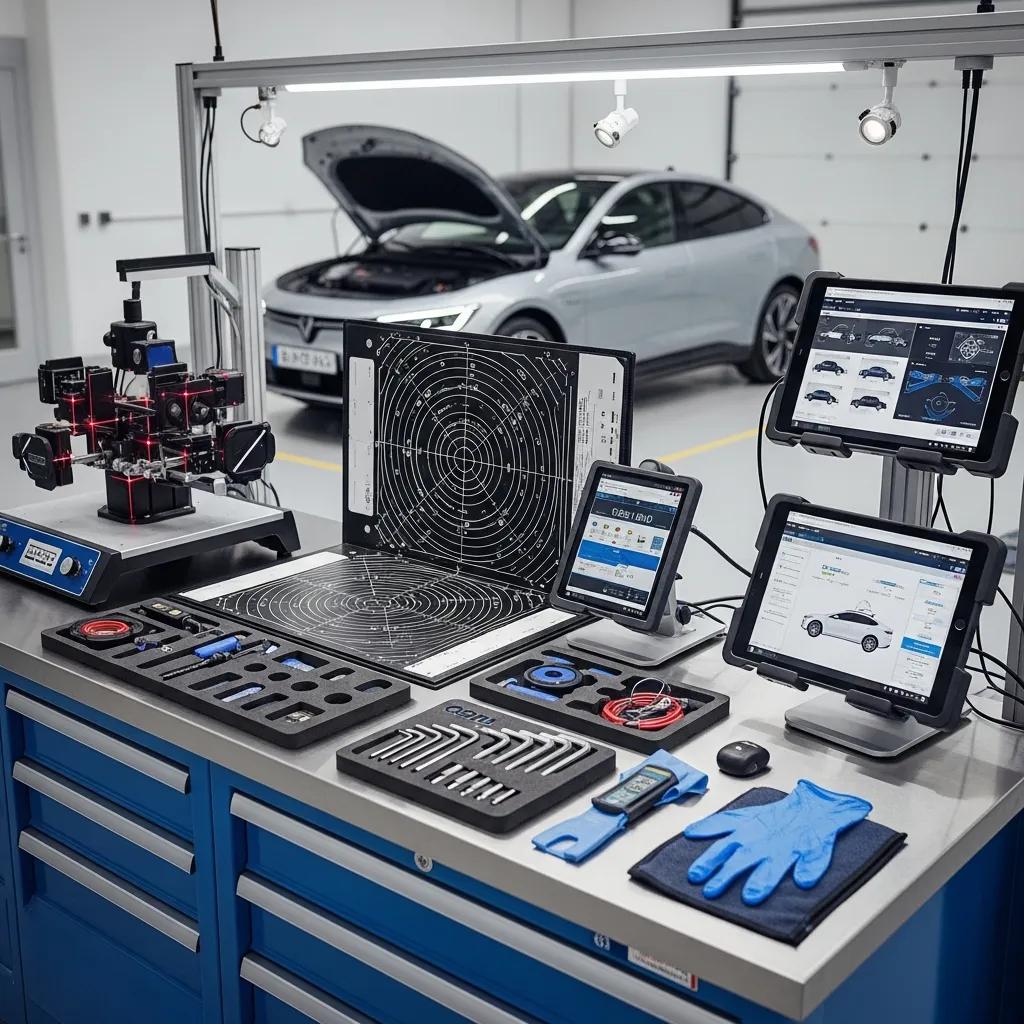
Sensor recalibration combines hardware targets, laser alignment tools, and OEM diagnostic suites that communicate with vehicle control modules to record and verify calibration values. Target-based setups position cameras and radar precisely while OEM software completes software-level parameter adjustments and confirms pass/fail status. A controlled space—flat surface, consistent lighting, and correct target distances—is required to avoid drift and get repeatable results. Shops that document the specific tools and procedures used can show calibrations met OEM tolerances as part of the repair record.
How Does Prime Time Collision Center Support EV Insurance Claims and Estimates?
Prime Time Collision Center helps EV owners through claims and estimates by documenting damage, coordinating with insurers, and offering owner-focused services like free estimates, 24/7 towing, and a lifetime workmanship warranty. Our approach is hands-on: technicians capture battery and structural diagnostics, prepare itemized estimates that reflect EV-specific parts and labor, and speak directly with adjusters to explain battery replacement or OEM part needs. The table below links our services to common insurance implications and customer outcomes so owners know what to expect during a claim.
| Service Provided | Insurance Implication | Customer Outcome |
|---|---|---|
| Free Estimates | Clear initial scope for adjusters | Faster claim triage and better transparency |
| 24/7 Towing & Triage | Immediate safe handling of a live EV at scene | Lower risk of battery or system escalation |
| Lifetime Warranty on Repairs | Confidence in workmanship after claim closure | Long-term coverage for labor-related issues |
| Coordination with All Major Insurers | Streamlined approvals for OEM parts | Fewer delays and smoother repair authorizations |
These services are designed to reduce stress and speed repairs. The next section explains how we document and communicate with insurers day-to-day.
What Expertise Is Provided for Navigating EV Insurance Claims?
We start claims support with thorough documentation: photos, BMS readouts, and diagnostic logs that show battery and system condition at intake. Estimates separate battery diagnostics, enclosure work, module replacement, and OEM parts so adjusters can see high-cost items unique to EVs. Our technicians and claims coordinators talk directly with insurers to explain technical findings, recommend approved repair paths, and secure authorizations for OEM parts or specialized services. Clear records and proactive communication reduce scope disputes that can delay safe repairs.
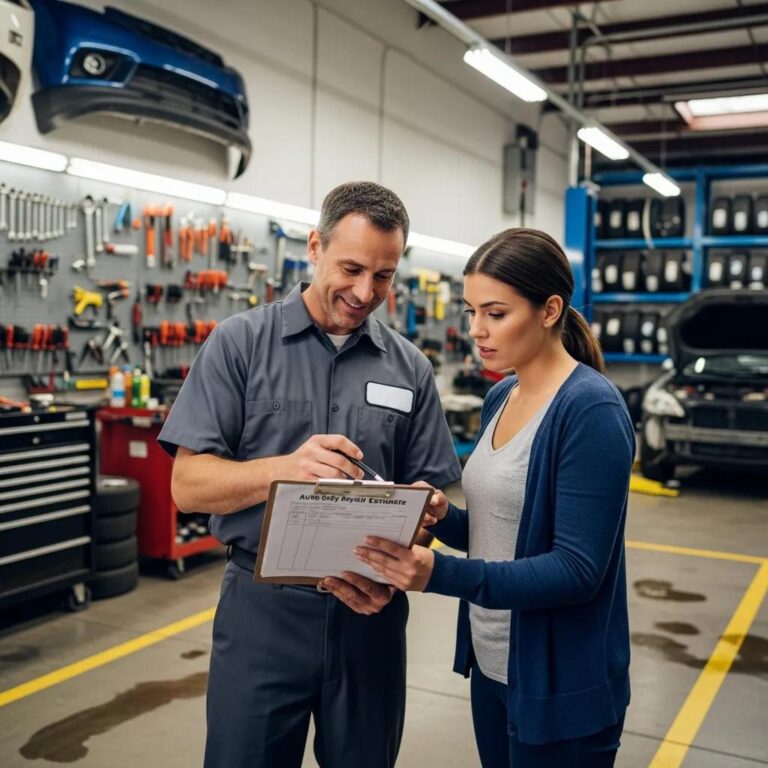
How Are Free Estimates and Transparent Pricing Offered for EV Repairs?
Free estimates begin with an intake inspection that includes battery isolation checks and a systems scan to uncover safety-critical damage beyond visible panels. Estimates list expected work, battery-related contingencies, and parts lead-time notes so owners understand potential cost and timing changes. If module replacement or special OEM parts become necessary, we update owners and document approvals to keep pricing transparent. This process gives owners clear expectations and regular updates while repairs progress.
Why Choose Prime Time Collision Center for OEM Certified EV Repairs Near You?
Prime Time Collision Center delivers OEM-quality repairs through certified technicians, documented procedures, and owner-focused services for EV drivers in Glendale and nearby communities. The practical result is restored vehicle performance and safety to manufacturer tolerances, backed by documented workmanship and a lifetime warranty. We work with all major insurers and provide free estimates, 24/7 towing intake, and certified technician oversight to help streamline repair outcomes. Below are the main advantages owners get when they choose a qualified local EV repair partner.
- OEM-quality repairs: We follow manufacturer procedures and document every step of the repair.
- I-CAR Platinum technicians: Trained staff who apply high-voltage and structural safety protocols.
- Lifetime warranty and local convenience: Workmanship protection plus nearby service locations in Glendale.
Those advantages give owners confidence after a collision. The section below explains how following OEM standards leads to factory-quality results.
How Does Commitment to OEM Standards Ensure Factory-Quality Repairs?
Following OEM repair procedures ensures correct repair sequencing, torque and welding specs, and validated ADAS recalibration steps so vehicle behavior returns to factory standards. OEM procedures set acceptable tolerances and identify authorized parts or documented alternatives that preserve crash performance and warranty conditions. Post-repair testing verifies electrical integrity, ADAS function, and structural alignment, producing a documented validation that safety systems will operate as intended. That diligence protects occupants and helps maintain vehicle value by avoiding shortcuts that can cause long-term problems.
What Benefits Does the Lifetime Warranty Provide for EV Owners?
Our lifetime warranty covers workmanship-related issues and gives owners a clear remedy if repaired components or labor fail during normal use. Warranty terms typically separate workmanship from parts coverage, and we document the scope and claim process so owners know how to request follow-up service. This extra layer of protection matters with costly EV repairs, especially when battery work or OEM parts are involved. Keep repair records and diagnostic outputs to simplify any future warranty claims and to show OEM procedures were followed.
Prime Time Collision Center serves Glendale-area EV owners at local locations and by phone for scheduling and questions. For service, call (818) 396-4997 or visit either location at 6010 San Fernando Rd, Glendale, CA 91202 or 5236 San Fernando Rd, Glendale, CA 91203 to arrange a free estimate, 24/7 towing intake, or to discuss OEM repair options and our lifetime workmanship warranty.
Frequently Asked Questions
What should I do immediately after an EV collision?
First, make sure everyone is safe. Move the vehicle to a safe spot if you can and turn the ignition off. Avoid touching damaged areas near the battery—high-voltage systems can be dangerous. Call emergency services for injuries, then contact a certified EV body shop like Prime Time Collision Center for an assessment. Take photos of the damage and collect information from other parties to support your insurance claim.
How can I ensure my EV repair shop is qualified?
Look for certifications such as I-CAR Platinum and ASE L3/EV Specialist—these show technicians have formal EV and high-voltage training. Check whether the shop participates in OEM repair programs to access manufacturer procedures and parts. Read reviews and ask for references, and don’t hesitate to ask the shop about the tools and diagnostics they use for EV work.
What is the typical turnaround time for EV repairs?
Turnaround depends on damage extent and the services needed. Minor jobs like PDR or small panel work can take a few days; complex repairs involving battery diagnostics or structural and ADAS work can take weeks. Parts availability, ADAS calibration needs, and shop workload also affect timing—ask your repair advisor for an estimated schedule based on your vehicle.
Are OEM parts always necessary for EV repairs?
OEM parts are generally recommended to maintain safety and performance and to protect warranty coverage. In some cases, documented alternatives that meet manufacturer standards may be acceptable. Always discuss part options and warranty implications with your technician so you can make an informed choice.
What are the risks of improper ADAS calibration?
Improper calibration can cause driver-assist features—lane-keeping, emergency braking, adaptive cruise—to behave incorrectly, increasing crash risk. Misaligned sensors can also produce false alerts or fail to detect hazards. Incorrect calibration may affect warranties and resale value, so ADAS work should be done by qualified technicians with the right tools and procedures.
How does Prime Time Collision Center assist with insurance claims?
We document damage thoroughly and prepare detailed estimates that include battery diagnostics and OEM parts to help adjusters understand the scope. Our claims coordinators communicate with insurers, explain technical findings, and request authorizations for OEM parts or specialized services. That proactive approach helps speed approvals and reduces delays during repairs.
What should I know about the lifetime warranty on repairs?
Our lifetime warranty covers workmanship-related issues, so if repaired components or labor fail under normal use, we’ll address it at no additional charge. The warranty typically excludes parts coverage unless specified; keep your repair records and diagnostic logs to make future claims straightforward. Understanding the warranty terms helps you plan follow-up service if needed.
Conclusion
Choosing a shop that specializes in electric vehicle body repair ensures your EV gets the right safety checks, technical diagnostics, and OEM-aligned repairs. With certified technicians, documented procedures, and a lifetime workmanship warranty, Prime Time Collision Center restores safety, performance, and value. Don’t leave EV repairs to chance—call (818) 396-4997 or stop by one of our Glendale locations to schedule a free estimate and get your vehicle back on the road with confidence.