
State Farm Auto Claims: A Clear, Step‑by‑Step Guide to Filing, Repair, and Closing Your Case
If you have State Farm coverage and were in an accident, this guide walks you through every step — from filing the claim to getting factory‑quality repairs and closing your case smoothly. We cover what to do right after a crash, the different ways to submit your claim, how adjusters create estimates, and why OEM‑level repairs matter for safety and resale. You’ll also find practical answers about timelines, rental cars, and deductibles, plus checklists and comparison tables that make it easy to document your claim and speed approvals. We conclude with how a local, I‑CAR Platinum–certified shop can support State Farm customers in Glendale and nearby communities. Read on for clear steps, useful lists, and side‑by‑side comparisons that simplify the process.
What Are the First Steps After a Car Accident with State Farm?
Right after a crash, focus on safety, preserving evidence, and notifying State Farm so your claim stays open and records remain accurate. Keeping people safe and securing the scene reduces future disputes, while good photos and notes create the strongest record for adjusters and repair shops. Move through the scene methodically — call emergency services if needed, collect information from other drivers, and take timestamped photos — to speed the claim and help produce accurate estimates. Below is a short, practical checklist to follow at the scene.
Follow these immediate steps after an accident:
- Call emergency services if anyone is hurt and, when safe, move to a secure location out of traffic.
- Take clear, timestamped photos of all vehicle damage, license plates, nearby road conditions, and traffic controls.
- Exchange names, insurance details, driver’s license numbers, and vehicle information with other drivers; collect witness contact info.
- Notify State Farm promptly and provide your policy details and any police report number if available.
How Do I Ensure Safety and Document the Accident Scene?
Start by checking for injuries and calling 911 if medical help is needed. Only move vehicles if they’re a hazard and it’s safe to do so. Document the scene carefully: photo every angle of each vehicle, close‑ups of damaged parts, license plates, skid marks, signs, and a wider shot showing the location. A short video walkthrough with verbal timestamps can be very helpful for adjusters, especially when multiple systems are affected. Keep a simple written log of times, witness statements, and weather or road conditions — that continuity makes the claim clearer for everyone involved.
What Information Should I Exchange and Report to State Farm?
Make sure you exchange names, phone numbers, insurance company and policy numbers, license plate numbers, and VINs when possible — these are the core details adjusters need. Get witness names and phone numbers, and request the police report or report number; police records are often required for injury or major damage claims. When you contact State Farm, give your policy number, the accident date and time, a brief description of what happened, and attach photos and the police report number if you have them. Clear, accurate reporting reduces back‑and‑forth and makes the next step — filing the official claim — faster.
How Do I File a State Farm Auto Insurance Claim?

You can file a State Farm claim online, in the mobile app, or by phone — pick the method that fits your situation and how ready you are with documentation. Each option creates a claim reference and assigns an adjuster; submitting good photos and the police report early helps adjusters triage remotely. If you’d rather have help, many repair shops will submit estimates and photos directly to the insurer on your behalf. Below we outline each way to submit a claim and offer tips to make the process faster and more effective.
What Are the Methods to Submit a State Farm Claim?
State Farm accepts claims through its online portal, the mobile app, or by calling their claims line; every route generates a claim number and leads to an adjuster assignment. Online and app submissions are best when you have photos and documents ready because you can attach them right away; phone calls work well when you need immediate answers or have a complex situation to explain. Repair shops can also upload shop estimates and supplemental photos for you, which prevents duplicate effort and helps align repair scope with the adjuster’s expectations. Using the app or portal with clear photos and your policy number usually speeds up the initial review.
What Documents and Information Are Required for Filing?
Before you file, gather your policy number, vehicle details (make, model, and VIN if available), driver and witness contact information, and the police report number. Attach timestamped photos that show the overall scene and detailed damage shots, and collect any medical records if injuries occurred. If you already have a repair shop estimate or inspection notes, include those — they clarify the expected repair scope and parts needs. Keeping these documents organized helps the adjuster make decisions faster and moves you more quickly toward repair authorization.
How Does State Farm Handle Collision Repair Estimates?
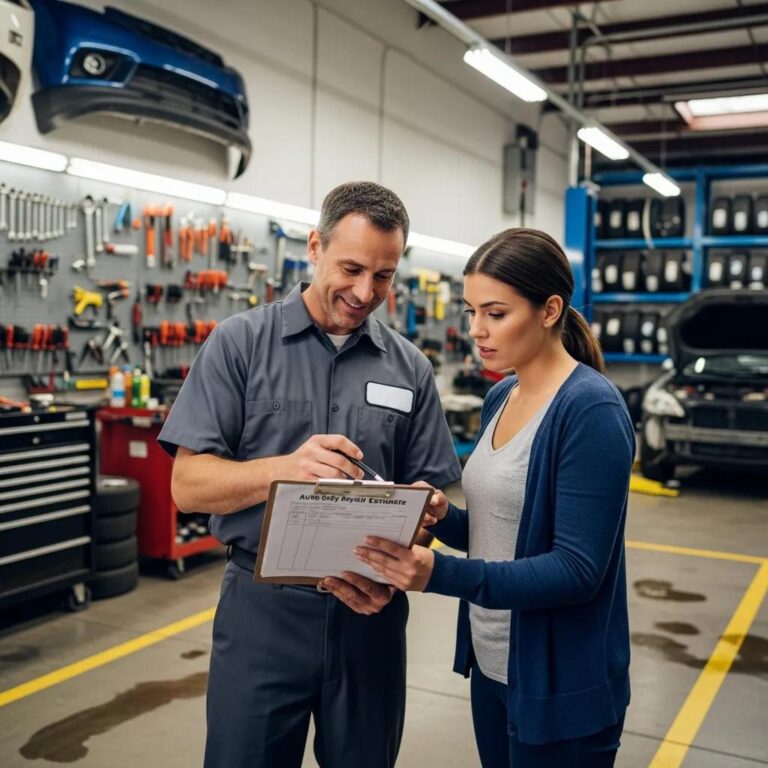
State Farm typically assigns an adjuster to review damage and produce an initial line‑item estimate listing parts, labor procedures, and recommended repairs — that estimate becomes the insurer’s baseline for payment. Adjusters look at structural and cosmetic damage, parts type (OEM vs. aftermarket), and labor operations to estimate repair cost per your policy. You still have the right to choose your repair shop, and shops can submit independent or supplemental estimates to make sure OEM procedures are followed. The table below shows common estimate types so you can see the differences when negotiating repair authorization.
Estimate comparison for collision repairs:
| Estimate Type | Typical Parts & Labor | Warranty & Timeframe |
|---|---|---|
| Insurer Adjuster Estimate | Varied parts recommendations with insurer standard labor rates | Warranty depends on insurer and chosen shop coordination |
| Independent Shop Estimate | OEM parts and factory procedures with technician labor detail | Shop‑backed warranty, often longer and more specific |
| OEM‑Authorized Estimate | Manufacturer parts and prescribed repair methods | Aligns with OEM fit, safety standards, and warranty expectations |
What Is the Role of State Farm Adjusters in Damage Assessment?
Adjusters document visible and accessible damage and create a line‑item estimate that authorizes repair scope and payment per your policy. Their process may start with a remote photo review, then move to an on‑site inspection for more complex damage, and include coordination with shop technicians to confirm structural or electronic needs. Ask your adjuster whether parts will be OEM or aftermarket, request photos of their findings, and clarify how supplements are handled if additional damage appears during teardown. Knowing the adjuster’s role helps you work with your shop to ensure OEM‑compliant repairs when needed.
What Are My Rights Regarding Repair Shop Selection?
You generally have the right to choose your repair shop. Tell State Farm which facility you prefer and provide the shop’s estimate and credentials (certifications, training) so the adjuster can review them. If there’s disagreement, ask for the adjuster’s explanation in writing and consider requesting a second review or submitting an independent estimate. Choosing your shop can improve adherence to OEM procedures and help protect safety and resale value — we cover those differences in the next section.
Why Choose OEM Certified Repairs for Your State Farm Claim?
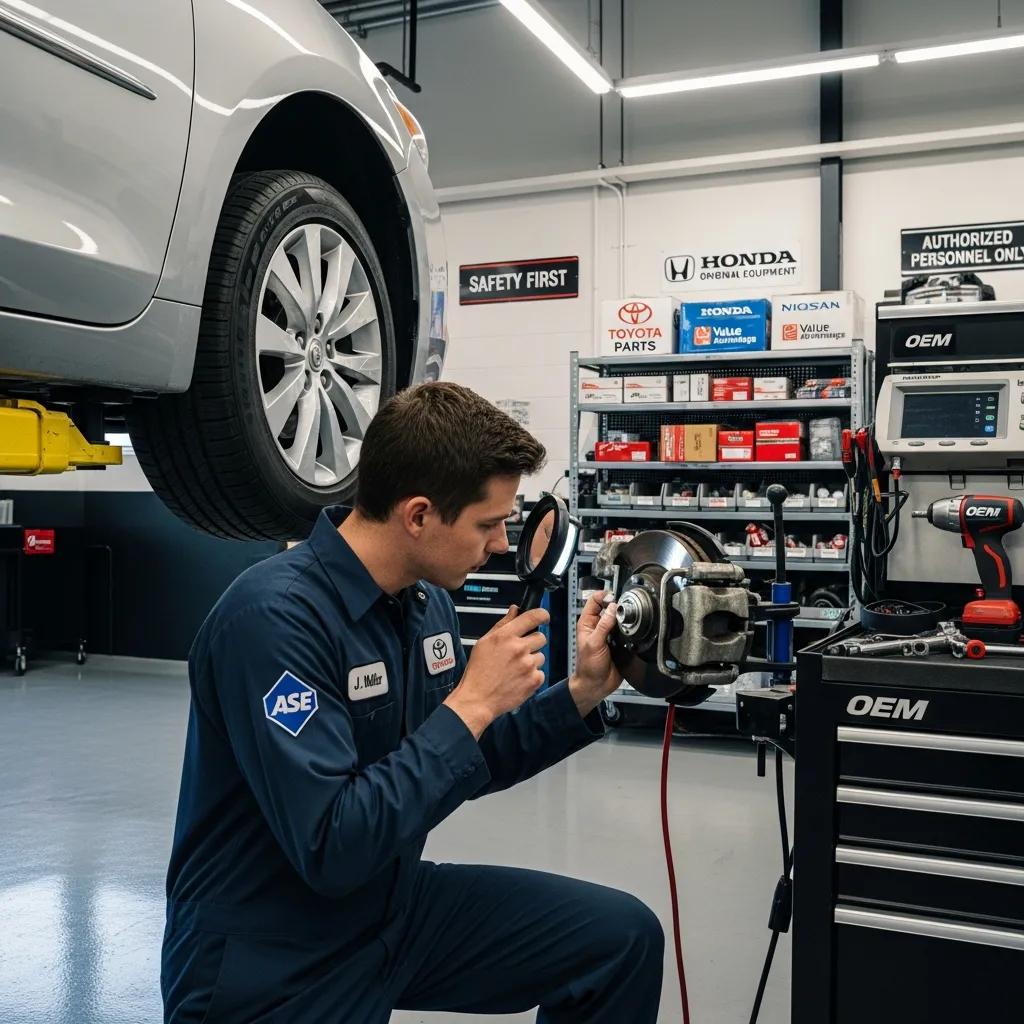
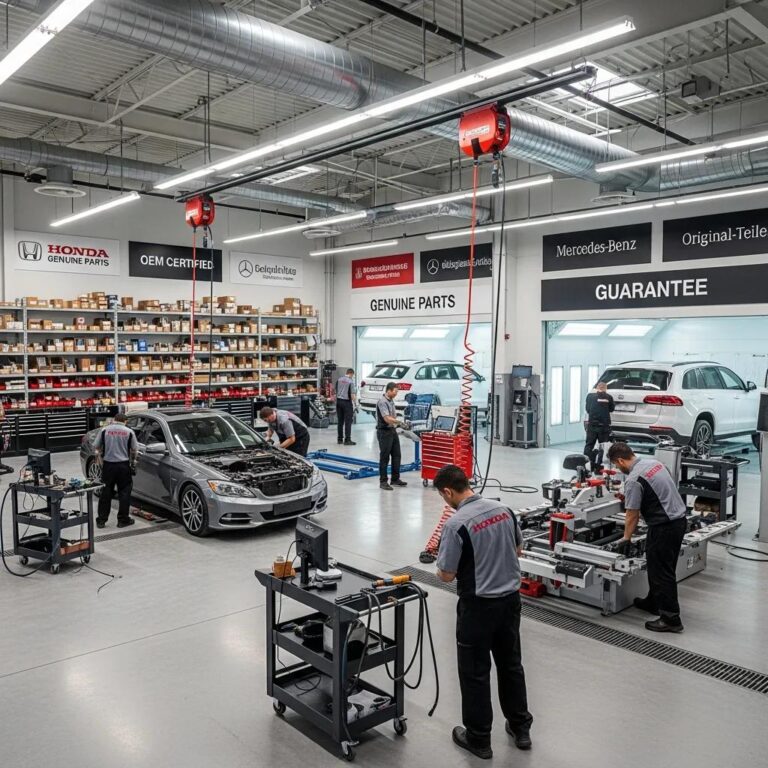
OEM‑certified repairs use manufacturer‑specified parts and procedures so safety systems and structural elements are restored to factory standards. That helps airbags, sensors, and advanced driver assistance systems work correctly and preserves fit, finish, and resale value. Shops and insurers that follow OEM procedures reduce the risk of follow‑up repairs and diagnostic issues because they follow the manufacturer’s sequences and calibrations. The table below compares OEM repairs to aftermarket options to help you weigh the trade‑offs during a State Farm claim.
OEM vs aftermarket repair comparison:
| Repair Approach | Characteristic | Impact on Vehicle |
|---|---|---|
| OEM Certified Repair | Manufacturer parts and factory procedures, trained technicians | Maintains safety systems and resale value |
| Aftermarket Repair | Generic parts and variable procedures | Possible fit or diagnostic inconsistencies |
| Mixed Approach | OEM for critical parts, aftermarket for non‑critical pieces | Saves cost but needs close quality control |
What Are OEM Certified Repairs and Their Benefits?
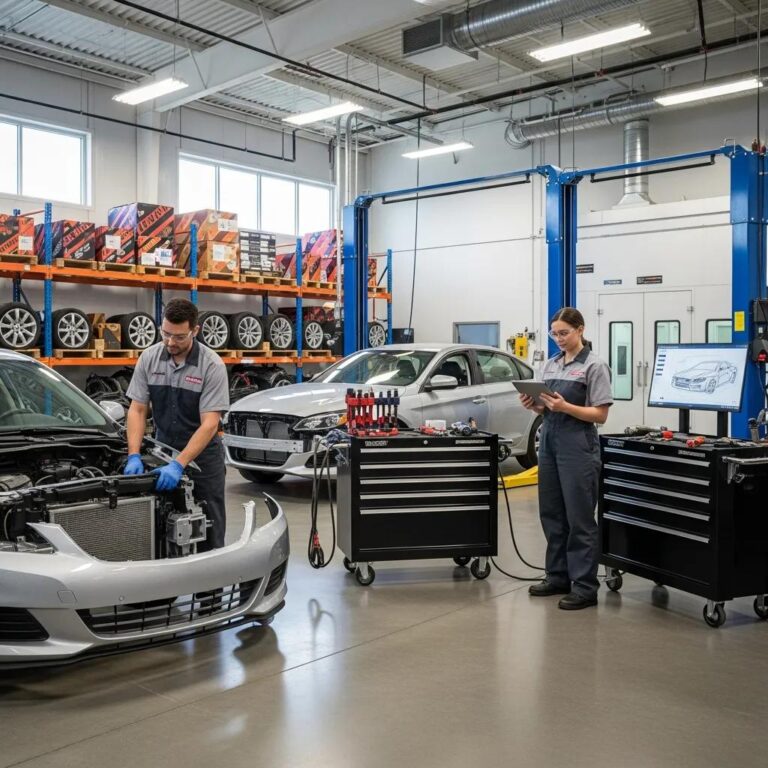
OEM certified repairs follow manufacturer repair manuals, use specified parts or approved equivalents, and include required calibration and diagnostics. That ensures airbags, ADAS, and structural components function as designed. Benefits include correct fit and finish, retained structural integrity, and repair records that support resale and warranty claims. Because modern cars rely on precise sensors and calibrations, OEM procedures reduce uncertainty and help preserve your vehicle’s long‑term value.
How Does Prime Time Collision Center’s I-CAR Platinum Certification Ensure Quality?
Prime Time Collision Center holds I‑CAR Platinum certification, which shows our technicians complete advanced training and keep up with modern vehicle repair practices. That means technicians follow factory repair steps, know structural and electronic diagnostics, and perform OEM repair sequences and calibrations correctly. For State Farm customers, choosing an I‑CAR Platinum shop helps when detailed, technician‑level estimates or OEM compliance are required. Prime Time also provides a lifetime warranty on repairs and helps coordinate claims, giving customers confidence in the repair process.
What Are Common Questions About the State Farm Auto Claim Process?
People often ask about timelines, rental coverage, deductibles, and how to secure OEM‑quality repairs. Clear, practical answers reduce stress and help move claims forward. The table below links common questions to typical insurer responses and recommended actions you can take. After the table we explain the most frequent operational questions in more detail.
FAQ mapping to action:
| Question | Typical Response Element | Recommended Action |
|---|---|---|
| How long will the claim take? | Acknowledgement, adjuster assignment, estimate | Submit complete documentation and request an adjuster visit or remote review |
| Will I get a rental car? | Depends on rental reimbursement or loss‑of‑use coverage | Confirm coverage with your adjuster and get authorization before renting |
| How is my deductible handled? | Deductible applies when repairs are authorized | Be prepared to pay the deductible to the shop or arrange payment details |
This mapping shows typical insurer responses and the next actions to speed each part of your claim. The sections below add detail on timelines and rental coverage.
How Long Does State Farm Take to Process and Pay Claims?
Online claim acknowledgements are often immediate, and an adjuster is usually assigned within a few business days depending on caseload and claim complexity. Simple claims with clear photos can move to repair authorization in several days; complex structural or total‑loss cases need longer inspections and parts sourcing, which stretches the timeline. Providing full photos, the police report, and a shop estimate up front reduces back‑and‑forth and speeds payment or authorization. Shops that submit detailed, OEM‑aligned estimates can shorten the adjuster review time.
Does State Farm Cover Rental Cars During Repairs?
Rental coverage depends on your policy’s rental reimbursement or loss‑of‑use terms. State Farm may authorize a rental up to a daily limit or cover a rental tied to the repair timeframe. Always confirm details with your adjuster before renting and keep receipts if reimbursement is required. Many shops can help arrange rentals or recommend approved vendors to simplify billing with the insurer. Clear documentation and prior authorization help avoid unexpected out‑of‑pocket costs.
Why Is Prime Time Collision Center the Trusted Choice for State Farm Claims in Glendale, CA?
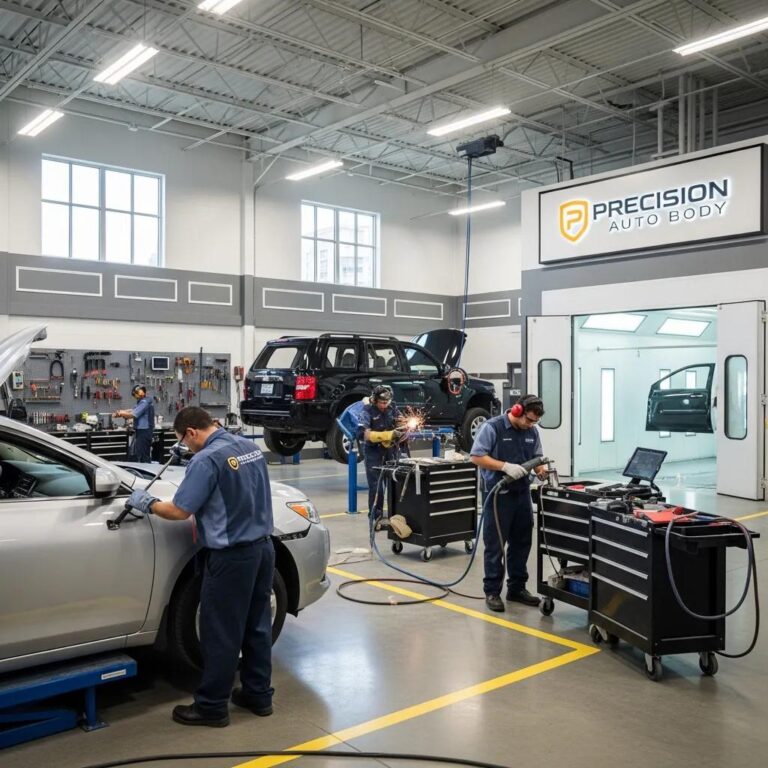
Prime Time Collision Center is a local collision partner serving Glendale, Burbank, Pasadena, and Los Angeles. We focus on factory‑quality repairs and hands‑on claims support for State Farm customers. Our I‑CAR Platinum–certified technicians, OEM repair procedures for domestic and foreign vehicles, and lifetime warranty all work together to protect safety and long‑term value. We work with all major insurers and provide free estimates, claims assistance, and 24/7 towing to make the transition from accident to repair as smooth as possible. Those local, practical services make a real difference for claimants who want OEM‑compliant repairs and clear adjuster communication.
How Does Prime Time Collision Center Assist with State Farm Claims?
We provide a free estimate and will submit photos and the shop’s estimate to State Farm to align repair scope with the adjuster’s findings and speed authorization. Our process includes a technician‑level inspection, direct communication with adjusters about parts and labor methods, and help arranging rentals when your policy permits. By documenting OEM procedures and our technicians’ credentials, we support requests for manufacturer parts and proper repair sequencing. This hands‑on claims support helps shorten approval cycles and ensures repairs meet factory standards.
What Do Local Customers Say About Our State Farm Collision Repair Services?
Local customers highlight repair quality, clear communication, and helpful claims support in their reviews. Many praise our trained technicians who follow OEM procedures and the peace of mind our lifetime warranty provides. Clients also value that we coordinate directly with adjusters and handle estimate submission, which simplifies the insurance side for vehicle owners. For specific customer stories and ratings, check local business listings and review sites that collect community feedback.
- Service Area Coverage: Prime Time Collision Center serves Glendale, Burbank, Pasadena, and Los Angeles communities.
- Certifications and Warranty: We maintain I‑CAR Platinum certification and back repairs with a lifetime warranty.
- Claims Support: We work with all major insurers and offer free estimates, claims help, and 24/7 towing.
Frequently Asked Questions
What Should I Do If My Claim Is Denied?
If State Farm denies your claim, read the denial notice carefully to understand why. Common reasons include missing documentation or policy exclusions. You can appeal by gathering extra evidence — photos, witness statements, or repair estimates — and submitting a formal appeal to State Farm. Speak with your adjuster for clarification and keep a record of all communications to support your appeal.
Can I Change My Repair Shop After Filing a Claim?
Yes. You can change shops after filing a claim, but tell your adjuster right away and provide the new shop’s contact info and any estimates. That ensures the adjuster coordinates inspections and approvals with the new facility. Keep in mind that switching shops may affect timing, so communicate changes promptly to avoid delays.
What Happens If Additional Damage Is Found During Repairs?
If extra damage appears during repairs, the shop will document it and notify your State Farm adjuster. The adjuster may need to reassess and approve supplemental work. Clear communication between the shop and insurer, plus detailed documentation of the new damage and cost estimates, helps get the additional repairs covered quickly.
How Can I Track the Status of My Claim?
You can track your State Farm claim in the mobile app or on the State Farm website for real‑time updates. You can also call your adjuster directly for the latest information. Regular follow‑ups keep you informed and help resolve issues as they come up.
What Should I Do If I Disagree With the Adjuster’s Estimate?
If you disagree with an adjuster’s estimate, get a second opinion from a shop you trust and present that estimate to State Farm. Document why you disagree and include photos or shop credentials to support your case. Open, documented communication with the adjuster usually helps reach a fair resolution.
Are There Time Limits for Filing a Claim with State Farm?
Yes — time limits vary by state and by policy. It’s best to file your claim as soon as possible after an accident to meet policy or legal deadlines. Check your policy documents or contact your State Farm agent for specific deadlines. Prompt filing avoids complications and helps ensure you get the coverage you’re entitled to.
Conclusion
Knowing the State Farm claim process helps you handle a claim with less stress and better results. Follow the steps here, use the checklists and documentation tips, and lean on local experts when you need help. For hands‑on support and OEM‑level repairs, consider Prime Time Collision Center — we’ll guide you through the claim, coordinate with your adjuster, and restore your vehicle to factory standards. Contact us to get started and make your repair experience straightforward and reliable.