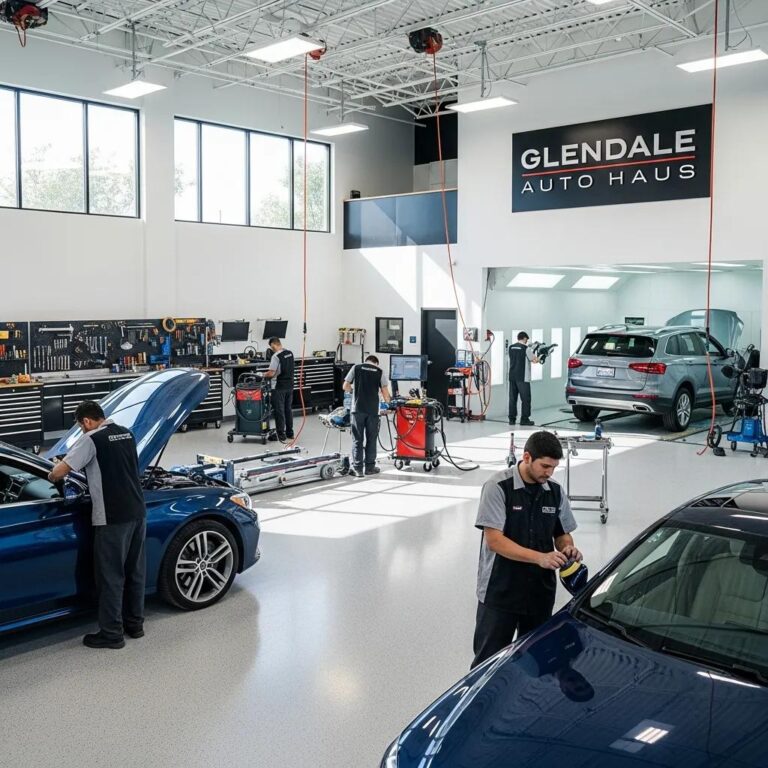

Suspension Repair in Glendale, CA — Expert Post‑Accident Solutions for Safety and Driveability
A compromised suspension after a crash changes how your car steers, stops, and protects people inside — so a prompt inspection and proper repair matter. This guide explains how suspension damage typically shows up after an accident, why you should have it checked right away, and the repair steps needed to bring handling and crash performance back to factory standards. You’ll learn to recognize warning signs like uneven tire wear, pulling, or clunking noises, understand hidden steering and structural risks, and compare repair choices — including OEM parts and certified technicians. We also walk through insurance-claim steps, the main cost drivers for suspension work, and how factory‑aligned shops handle diagnostics, alignment, and ADAS recalibration. Practical checklists, diagnostic mapping, and step-by-step repair and claims lists help you take fast, safe action while protecting value and warranty coverage.
How to Spot Suspension Damage After a Collision
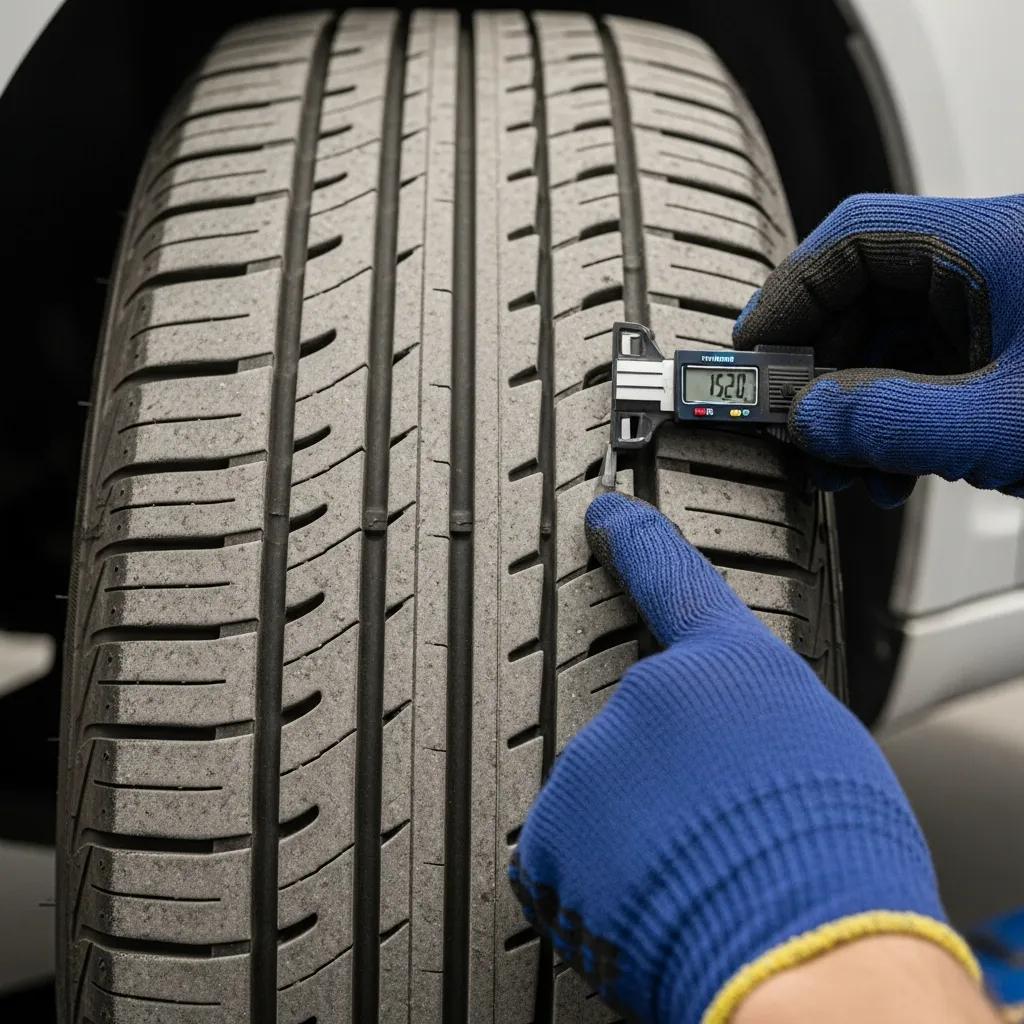
Suspension damage from a collision can mean bent or worn components—shocks, struts, control arms, springs, tie rods, or bushings—that affect stability and ride control. When parts are damaged, forces no longer transfer to the chassis as designed, which often results in uneven tire wear, steering pull, extra bounce, or strange noises. Spotting these symptoms early reduces safety risk and stops further wear. Below we list the common, visible signals you can check, map them to likely failing parts, and explain immediate actions to keep you safe. If you see any of these signs, arrange a professional inspection without delay.
Common post-accident suspension signs to watch for:
- Uneven Tire Wear: One-sided or cupped wear usually points to misalignment or bent suspension components that hurt traction.
- Vehicle Pulling to One Side: Persistent drift while driving often indicates alignment problems or bent steering parts.
- Clunking or Knocking Noises: Repeated bangs usually mean broken bushings, worn ball joints, or loose control arms.
- Excessive Bouncing or Harsh Ride: Reduced damping from damaged shocks or struts makes the ride unstable and less safe.
These are warning signs. If you notice one or more, slow down, avoid highway driving when practical, and get a qualified inspection to confirm roadworthiness and repair needs.
Intro to diagnostic mapping: the table below links observable symptoms to likely damaged components and recommended immediate actions so you can prioritize safety and next steps.
| Symptom | Likely Component(s) | Immediate Action |
|---|---|---|
| Uneven tire wear (inner/outer) | Misalignment, bent control arm, worn bushings | Limit driving; schedule suspension and alignment inspection |
| Vehicle pulling or steering drift | Tie rods, steering rack, alignment out of spec | Avoid high-speed driving; request steering geometry check |
| Repeated clunking or knocking | Broken mount, torn bushing, loose control arm | Tow vehicle for diagnostics; inspect mounts and joints |
| Excessive bounce or poor damping | Shock absorbers, strut assemblies, broken spring | Do not continue highway driving; arrange inspection and repair |
Use this mapping to judge urgency: loud noises or unstable handling usually require towing and immediate shop diagnosis, while mild tire wear may allow controlled travel to a repair facility for evaluation.
How to Identify Uneven Tire Wear and Steering Pull
Uneven tire wear and a pulling steering feel are often the first things drivers notice after an impact. Different wear patterns point to distinct problems: inner‑edge wear commonly means excessive negative camber from a bent control arm, while cupping suggests failing shocks or struts. Quick owner checks include comparing left/right tread depth and seeing whether the steering wheel is centered when driving straight. If the car drifts or the steering wheel sits off-center, pull over when safe and schedule a professional inspection — driving on can speed up tire and suspension damage and raise repair costs.
What Noises and Ride Changes Indicate Suspension Trouble?
Suspension noises and altered ride feel usually reveal which subcomponents are affected and how serious the issue is. A sharp clunk over bumps often signals a loose control arm, broken mount, or worn ball joint; constant squeaks point to dried or torn bushings; and scraping noises may mean a bent strut or a mount rubbing the wheel well. Ride symptoms like increased body roll, harshness over small bumps, or sloppy steering suggest failing shocks/struts or worn steering linkage. Simple checks include looking for unusual play in the steering wheel while parked and performing a bounce test. When unsure, limit driving and arrange a detailed suspension inspection — many noise sources involve parts critical to vehicle control.
Why You Should Inspect Suspension Right After a Collision
Immediate post-collision suspension inspection matters because hidden damage can undermine handling, safety systems, and crashworthiness even if outer panels look fine. A certified inspection finds bent subframes, misaligned geometry, and compromised energy-absorbing parts that affect occupant protection in a future crash. Timely checks also preserve insurance records and warranty eligibility, and they prevent progressive wear to tires, steering, and driveline components that raise repair costs. Measurement-grade diagnostics let technicians plan accurate repairs and avoid temporary fixes that compromise long-term safety.
Many drivers underestimate hidden faults because bodywork can hide bent mounts, control arms, or steering geometry. Detecting those issues requires dimensional checks, component diagnostics, and ADAS recalibration when sensors or cameras may have shifted. Verifying these items after a collision helps keep your vehicle within manufacturer tolerances and restores predictable handling.
Prompt inspection protects you mechanically and financially by documenting damage for insurers and stopping small faults from developing into major structural repairs. Fixing problems early preserves resale value and lowers the risk of sudden failures caused by cascading stresses.
What Hidden Damage Can Compromise Safety?
Hidden damage after a collision can include bent control arms, twisted steering knuckles, misaligned subframes, and damaged mounting points for suspension parts. Those defects can change camber, caster, and toe—reducing the tire contact patch, increasing stopping distances, and hurting high‑speed stability. Structural distortion in subframes or crossmembers can also alter how crash energy is absorbed, potentially reducing occupant protection in another impact. Finding these issues requires measurement equipment and experienced technicians, plus ADAS checks when cameras or radar are involved.
Because many of these problems aren’t obvious to the untrained eye, certified diagnostics that combine visual inspection, frame measurement, and alignment verification are essential. Early detection prevents you from driving a vehicle that no longer meets manufacturer safety specs and ensures the right parts and repair methods are used to restore original performance.
How Early Repair Stops Further Damage
Early repair breaks the chain reaction where one damaged component speeds wear on connected parts — for example, misalignment quickens tire wear, which changes steering response and loads bearings unevenly. Fixing suspension faults promptly restores original tolerances, prevents secondary damage to tires and steering, and often avoids the need for more invasive structural work. From a cost view, addressing shocks or bent arms early can save you the higher labor and parts costs of frame straightening or multiple replacements later.
Timely, correct repairs also simplify insurance conversations by documenting initial damage and repair steps, reducing disputes over supplements found during teardown. Repairs done to factory standards keep your vehicle’s handling and safety margins as intended by the manufacturer.
How Prime Time Collision Center Handles Certified Suspension Repairs
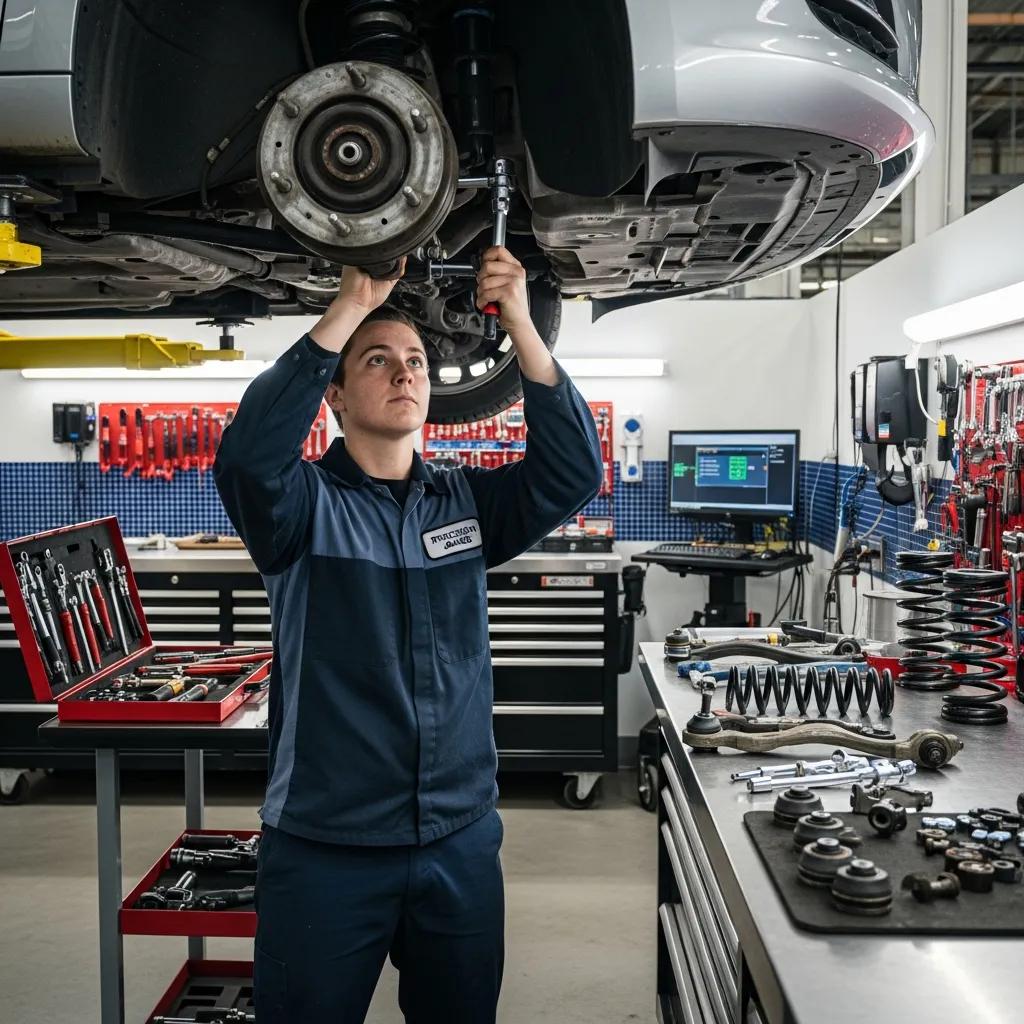
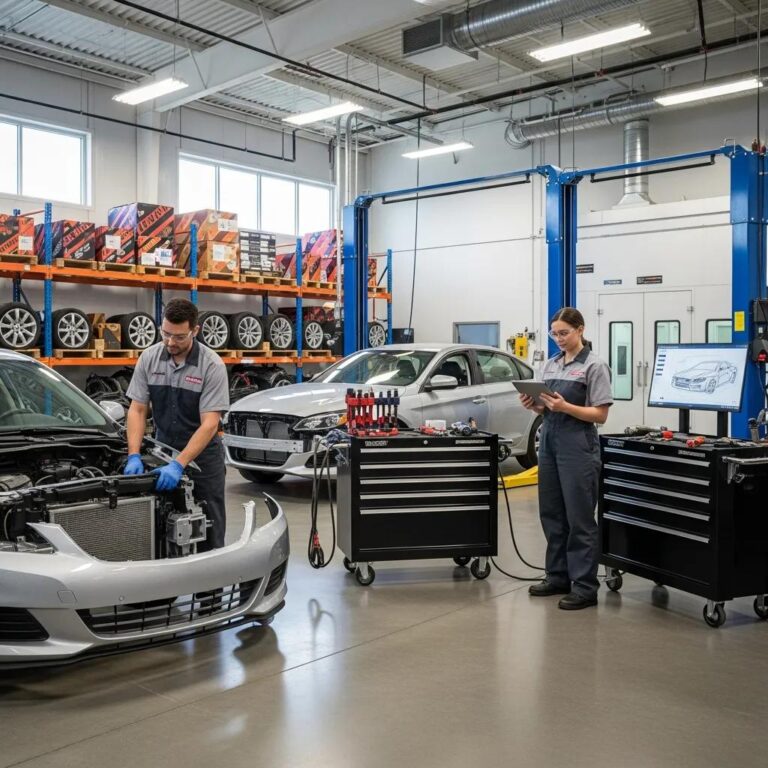
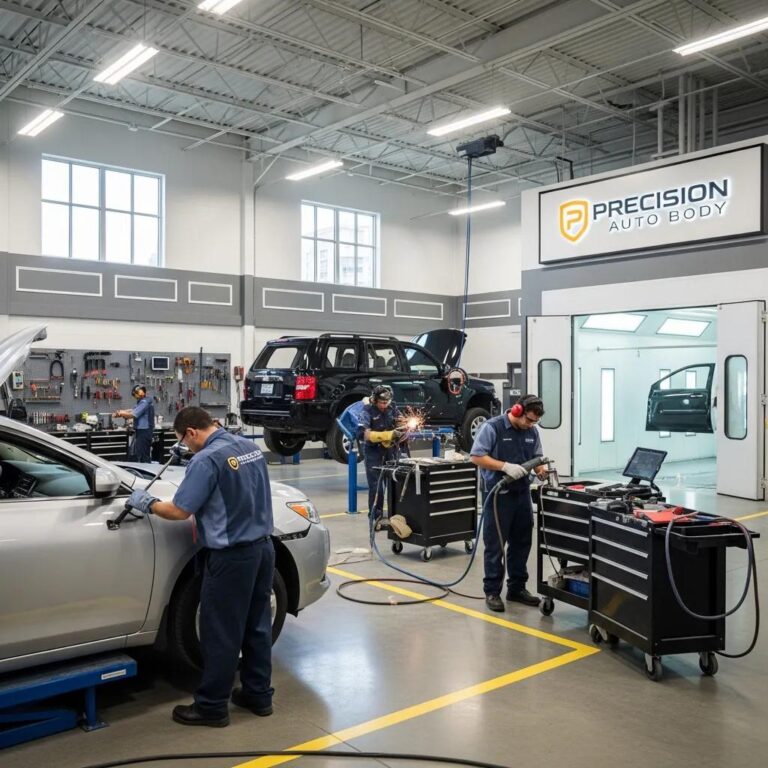
A factory-quality suspension repair program starts with a certified inspection, precise diagnostics, and transparent, documented estimates that follow manufacturer procedures. At Prime Time Collision Center we base our workflow on those principles: measurement-based inspection, identification of damaged components, OEM sourcing when required, structural or component repair, and final validation with alignment and road testing. We pair I-CAR Platinum technicians with OEM‑quality processes, back repairs with a lifetime warranty, and offer free 24/7 towing and assistance so you can focus on recovery while we restore your vehicle correctly.
That approach ensures every step—from accurate damage appraisal to ADAS recalibration when sensors are involved—is documented and done to factory tolerances. A certified workflow reduces the risk of incomplete fixes or aftermarket shortcuts that can hurt safety and resale value.
Below is a concise overview of the typical steps our technicians follow when restoring a collision-damaged suspension.
- Initial Certified Inspection and Documentation: Technicians measure geometry and record visible and hidden damage.
- Detailed Diagnostics and Estimate: Component-level tests isolate failed parts and produce a clear repair plan.
- OEM Parts Sourcing and Replacement: When required, factory parts are used to maintain fit and function.
- Alignment, ADAS Recalibration, and Road Testing: Final verification restores handling and safety systems to spec.
This step-by-step process ensures consistent, verifiable repairs that protect vehicle integrity and occupant safety, and it supplies the documentation insurers need.
The Step‑by‑Step Suspension Repair Process
A proper repair begins with a calibrated diagnostic inspection to find bent geometry, damaged mounts, and worn components. Technicians remove and replace failed parts—shocks, struts, control arms, tie rods, or bushings—using OEM components when manufacturer procedures require them. After parts are replaced, the vehicle gets a computerized alignment and any necessary ADAS sensor recalibration, then a controlled road test confirms handling, noise resolution, and correct steering center. Every step is recorded in an itemized estimate and repair order to keep owners and insurers informed.
We retain documentation and measurement records to show repairs meet manufacturer tolerances, which is important for warranty preservation and liability protection.
Why I‑CAR Platinum Technicians Matter
I‑CAR Platinum certification reflects advanced technician training and ongoing education in collision repair best practices aligned with OEM requirements. Technicians with this credential are trained in structural repairs, electronics, ADAS systems, and current manufacturer procedures, which lowers the chance of incorrect fixes or missed damage. Choosing a shop with I‑CAR Platinum staff means your repairs are handled by people who understand how suspension geometry, airbag systems, and sensor alignment interact after a crash. Together with OEM parts and a lifetime warranty, certified technicians help restore safety and performance to manufacturer intent.
This expertise is even more important on modern vehicles where suspension and safety systems tie into electronic driver‑assist technologies.
Why Choose an OEM‑Certified Suspension Repair Shop?
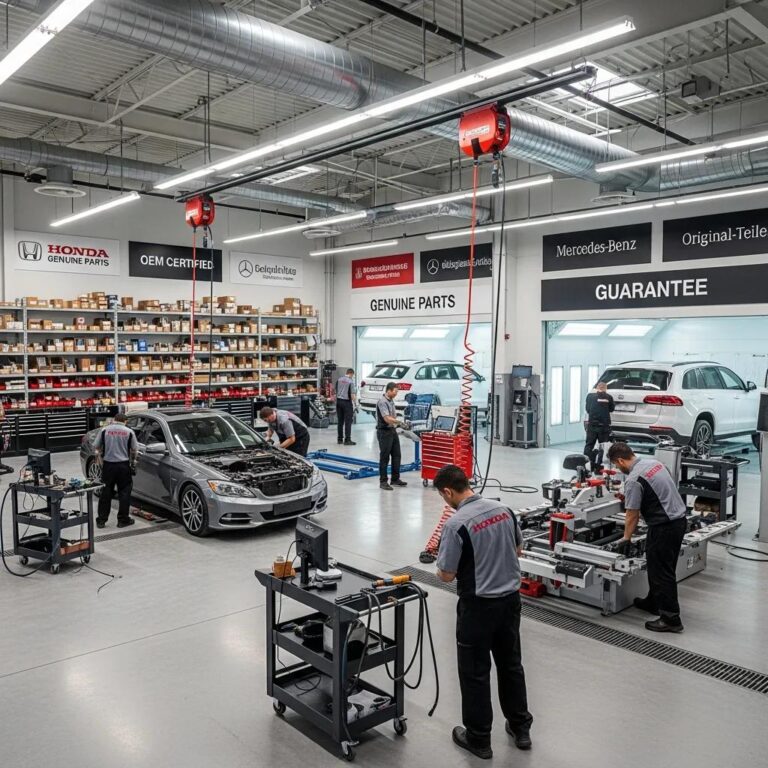
OEM‑certified suspension shops use parts, processes, and verification methods that match the vehicle maker’s design, which preserves handling, safety systems, and warranty coverage. OEM parts deliver precise fit and tested materials, and factory methods ensure measured restoration of suspension geometry and mounting integrity. An OEM‑aligned approach reduces rework risk, protects lease or resale value, and helps safety-critical components perform as intended. The table below links key OEM attributes to their practical benefits for repair outcomes.
| Attribute | Impact/Benefit | Practical Outcome |
|---|---|---|
| Exact fit & tolerances | Restores factory geometry | Predictable handling and reduced rework |
| Manufacturer validation | Tested safety performance | Preserved crashworthiness |
| ADAS compatibility | Easier sensor recalibration | Restored driver-assist accuracy |
| Warranty alignment | Maintains coverage expectations | Enhanced owner protection and resale value |
Choosing an OEM‑certified process minimizes surprises after repair and helps ensure the vehicle retains its engineered safety characteristics.
How OEM Parts Help Deliver Factory‑Quality Repairs
OEM parts are made to original specifications and tolerances, preserving the relationships among suspension components and steering geometry. Since they meet manufacturer test standards, OEM parts reduce fitment issues, premature wear, and altered load paths that change handling. When ADAS sensors or camera mounts are involved, OEM components simplify recalibration because reference points match factory baselines. Using OEM parts is a safety and quality choice that supports consistent braking, predictable steering feel, and even tire wear after repair.
This precision helps restore the vehicle’s pre‑accident performance and long‑term durability.
OEM Certified Repairs vs. Aftermarket Options
Aftermarket parts and shortcut repairs can vary widely in fit, material quality, and testing documentation, which may change suspension geometry or cause unexpected wear. OEM‑certified repairs follow manufacturer procedures that specify parts, torque values, and calibration steps—items aftermarket fixes sometimes skip. Over time, deviations from factory methods can lead to handling drift, more maintenance, or disputes with insurers or lenders. Choosing OEM‑certified processes reduces those risks and aligns repairs with the vehicle maker’s validated standards.
For owners focused on safety, resale value, or lease return conditions, factory‑aligned repairs offer measurable benefits over generic aftermarket approaches.
How to Handle Insurance Claims for Suspension Damage
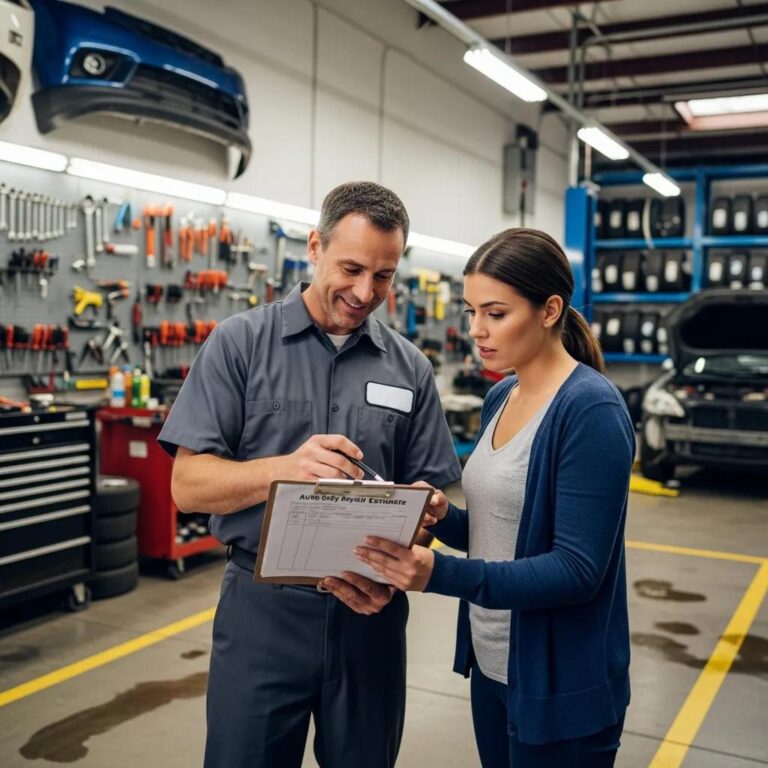
Filing insurance claims for suspension damage means documenting the scene, getting timely professional estimates, and knowing your right to choose a repair facility. Start by photographing damage, obtaining a certified measurement‑based estimate, and submitting supporting records to your insurer. Insist on OEM procedures when safety requires them, and work with adjusters to present measurement diagnostics and request supplemental scopes for hidden damage. Below is a practical, stepwise approach to claims and how repair shops can help move the process along.
Follow these steps to manage a typical suspension-related claim:
- Document the incident: Photograph visible damage, collect police or incident reports, and note symptoms like pulling or noises.
- Get a professional, measurement-based estimate: Certified inspections give insurers the technical justification they need for scope and parts selection.
- Submit estimate and documentation to your insurer: Provide clear records and ask for guidance while asserting your choice of repair facility.
- Approve repairs and track supplemental discoveries: If hidden damage appears during teardown, get updated estimates and notify the insurer right away.
How Prime Time Collision Helps with Insurance
Prime Time Collision Center helps customers with fast, documented estimates, photos, and direct communication with adjusters to explain the need for OEM parts, measurement work, or ADAS recalibration. Our technicians prepare clear evidence showing component-level damage and required repairs, which supports supplemental requests when hidden issues are found during disassembly. We work with all major insurers and help with appeals or supplemental claims, keeping you informed throughout the process.
Hands-on support shortens administrative timelines, improves scope accuracy, and reduces the stress owners face while their claims are resolved.
Understanding Coverage and Your Rights for Suspension Repairs
Many vehicle owners have the right to choose their repair shop and to request OEM parts under their insurance policy — so read your policy and ask questions. Request a written, itemized estimate that lists parts and labor, confirm whether a lifetime repair warranty is included, and get documentation for ADAS recalibration when sensors are affected. If an insurer suggests aftermarket parts or a reduced repair scope, ask for measurement-based justification or a second opinion before authorizing work. Keep detailed records and communication notes in case you need to contest decisions or submit supplemental estimates.
Being proactive when reviewing estimates prevents surprises, protects safety, and helps keep resale value intact.
What Affects Auto Suspension Repair Costs After a Collision?
Costs for suspension repair depend on how severe the damage is, which components need replacing, whether you choose OEM or aftermarket parts, and the labor involved — including frame measurement or ADAS recalibration. Replacing a shock or strut is relatively straightforward; bent control arms, subframe distortion, or ADAS work add time and require specialized equipment. Luxury and European vehicles often carry higher parts costs and may need factory tools, which increases the bill. Knowing the main cost drivers helps you evaluate estimates and choose repair methods that balance safety and value.
Key cost drivers at a glance:
- Severity of damage (cosmetic vs structural)
- Parts type (OEM vs aftermarket)
- Labor time and specialized processes (frame measurement, ADAS)
- Vehicle class and parts availability
The table below gives illustrative ranges by component so you can set expectations; actual costs depend on vehicle and confirmed damage.
| Component / Service | Attribute | Typical Range / Example Cost |
|---|---|---|
| Shock or strut replacement | Parts + labor | $200–$800 per corner depending on vehicle |
| Control arm replacement | Parts + labor | $300–$1,200 per arm for mainstream vs premium cars |
| Wheel alignment | Precision alignment | $80–$200 depending on ADAS and adjustments |
| Subframe/frame measurement & repair | Specialized equipment | $500–$2,500+ for structural work depending on severity |
How Damage Severity and Vehicle Type Drive Costs
Repair pricing follows a simple scale: cosmetic fixes cost less, component replacements add parts and labor, and structural or ADAS-related repairs require certified procedures and specialized tools that raise costs. Labor-intensive tasks like frame straightening or sensor recalibration increase shop hours and equipment needs. Luxury and imported cars typically use pricier OEM parts and may need factory data access or proprietary recalibration steps. Asking for an itemized estimate helps you compare options and see when OEM parts or certified processes are justified for safety.
Transparent, itemized estimates protect you from unexpected charges and clarify when higher-cost methods are needed to preserve safety and warranty coverage.
Free Estimate Options at Prime Time Collision Center
Prime Time Collision Center offers several estimate options to get a fast, documented assessment to you and your insurer. Choose from in‑shop certified inspections, photo-based remote triage, or tow-in evaluations using our free 24/7 towing when the vehicle is unsafe to drive. Each estimate lists recommended repairs, parts type (OEM when required), and expected labor steps. We work with insurers to explain the measurement-based basis for repairs. To schedule an inspection or start a claim, call (818) 396-4997 or visit our Google Business Profile for directions and reviews.
Clear estimate options speed decisions, help get authorizations faster, and reduce the chance of supplemental costs by documenting hidden damage early.
Ready to Take Action?
If you notice any of the signs above or have been in an accident, schedule a certified suspension inspection to protect safety and value. Prime Time Collision Center will provide a documented estimate, coordinate with your insurer, and arrange free towing if needed. For immediate help or to book a suspension inspection, call (818) 396-4997 or check our Google Business Profile for local details and customer feedback. With I‑CAR Platinum technicians, OEM-quality repairs, a lifetime warranty, and insurance assistance, we’ll work to restore your vehicle to factory safety and handling standards.
Frequently Asked Questions
What should I do immediately after a car accident regarding my suspension?
After an accident, get your suspension inspected as soon as possible — even if you don’t see obvious damage. Watch for uneven tire wear, pulling, or strange noises. If you notice any symptoms, limit driving and arrange a professional inspection. Photograph the damage and symptoms for your insurance claim. Early detection prevents bigger problems and keeps the vehicle safe to drive.
How can I choose the right repair shop for my suspension repair?
Pick a shop that follows OEM procedures and employs certified technicians, like I‑CAR Platinum staff. Those shops use manufacturer guidelines to ensure repairs meet safety and performance standards. Read reviews, ask about warranties, and confirm the shop will provide clear documentation and work directly with your insurance company to simplify the claim process.
What is the role of ADAS recalibration in suspension repairs?
ADAS recalibration is critical after suspension work because driver‑assist systems depend on properly aligned sensors and cameras. If suspension or sensor mounts move, systems like lane‑keeping or adaptive cruise control can behave incorrectly. A certified repair shop includes ADAS recalibration when needed so all safety features work as intended.
How can I prevent suspension damage in the future?
Regular maintenance helps prevent suspension problems: keep tires properly inflated, rotate them as recommended, and get alignments when needed. Avoid potholes and rough roads when possible, slow down over speed bumps, and have routine inspections — especially after hard impacts — to find issues early before they grow into costly repairs.
What are the long-term effects of ignoring suspension issues?
Ignoring suspension problems leads to faster tire wear, poorer handling, and reduced safety. Over time, damaged suspension parts strain related components, causing more extensive and expensive repairs. Unresolved issues can also make your vehicle less stable and comfortable to drive and increase the risk of accidents.
Are aftermarket parts a good option for suspension repairs?
Aftermarket parts can be less expensive, but quality varies. OEM parts are built to original specs and help preserve handling, fit, and safety — especially when ADAS recalibration is required. If you consider aftermarket parts, choose reputable brands and discuss options with your technician to understand trade-offs for your vehicle.
Conclusion
Addressing suspension damage quickly after a collision is essential for your safety and the vehicle’s performance. By recognizing warning signs and choosing certified repairs, you protect your vehicle’s value and restore proper handling. Prime Time Collision Center offers expert inspections and OEM-quality repairs to bring your vehicle back to factory standards. Contact us today to schedule your suspension inspection and keep your driving experience safe and predictable.