The Importance of Uninsured Motorist Coverage: Protecting Your Vehicle and Your Finances After an Accident
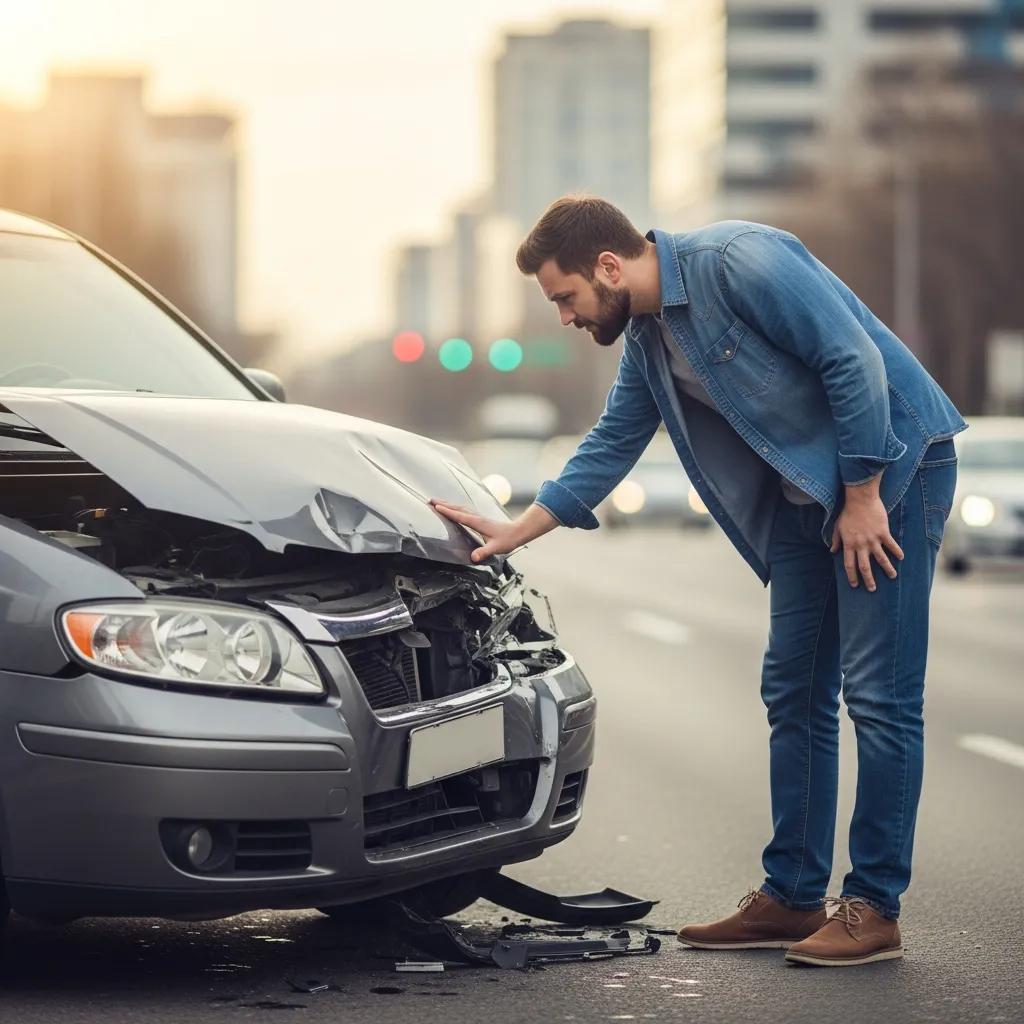
Uninsured drivers and hit-and-runs are an unfortunate reality on our roads. A single collision with an uninsured motorist can leave you facing thousands in repair bills and medical costs. Uninsured motorist (UM) coverage is part of your auto policy that picks up the tab when the at-fault driver can’t — protecting your wallet and helping you get your vehicle back to safe, reliable condition. This article walks through what UM covers, how UMBI and UMPD differ, California rules that affect claims, and practical steps to get collision repairs done when the other driver is uninsured. You’ll also learn why OEM-certified repairs and trained technicians matter for safety and resale, and where to find trusted repair help in Glendale and greater Los Angeles so you can act quickly after an accident.
What Is Uninsured Motorist Coverage and How Does It Protect You?
Uninsured motorist coverage steps in when the at-fault driver has no liability insurance or can’t be identified after a hit-and-run. It acts as a backstop to third‑party liability, using your policy’s UM limits to cover medical expenses, vehicle repairs, and other eligible losses up to your limits — usually subject to your deductible and the policy’s language. UM generally comes in two varieties: Uninsured Motorist Bodily Injury (UMBI) and Uninsured Motorist Property Damage (UMPD). Knowing the difference helps you pick the right limits and understand what to expect during a claim. Below is a clear comparison to help you decide and plan.
UMBI vs UMPD: what each covers and common policy features.
| Coverage Type | Covers What | Typical Policy Details |
|---|---|---|
| UMBI (Bodily Injury) | Medical bills, lost wages, and pain-and-suffering for you and passengers | Usually higher limits than UMPD; may have per-person and per-accident caps |
| UMPD (Property Damage) | Repair or replacement of your vehicle and other property after uninsured or hit-and-run crashes | Often subject to a deductible; may follow collision deductible rules unless UMPD is specifically selected |
| Situational Examples | When the other driver is uninsured or leaves the scene | Generally requires a police report and supporting proof; coverage details vary by insurer and state law |
That comparison shows why choosing appropriate UM limits matters for both medical costs and vehicle restoration. Understanding these basics also prepares you for how California law can influence recovery and claims handling.
What Are Uninsured Motorist Bodily Injury and Property Damage Coverages?
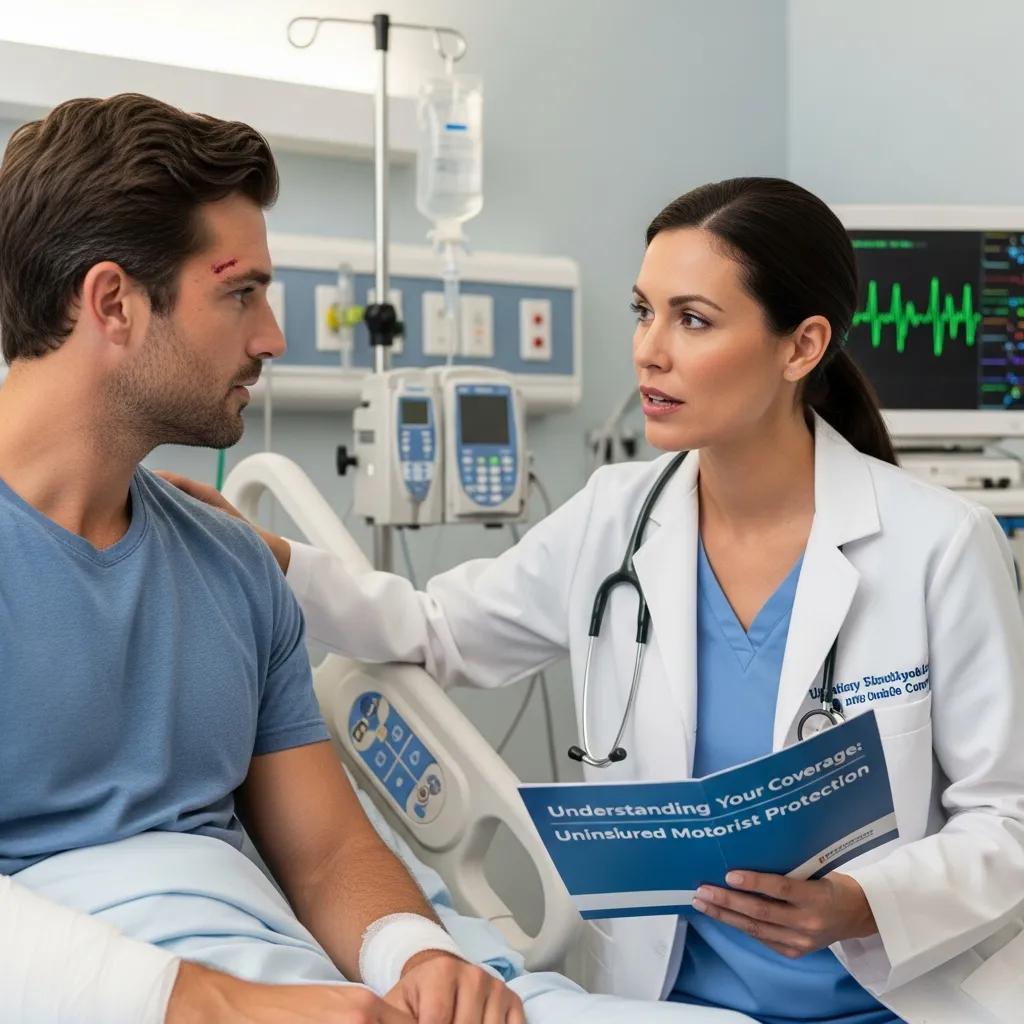
Uninsured Motorist Bodily Injury (UMBI) helps pay medical bills, rehabilitation, lost wages, and sometimes pain-and-suffering when an uninsured driver injures you or your passengers. Uninsured Motorist Property Damage (UMPD) covers vehicle repairs or replacement and other property loss. Because medical costs can rise quickly, UMBI often has higher limits. UMPD commonly mirrors collision coverage but may have lower limits or a separate deductible; whether it covers rental cars or diminished value depends on your policy language. For example, UMBI could cover ER visits and follow-up therapy after a serious crash, while UMPD would handle frame alignment, OEM parts, and ADAS sensor recalibration needed to return a modern vehicle to safe operation. Knowing these differences helps you prioritize coverage when shopping and filing claims.
How Does UM Coverage Work Under California Law?
In California, insurers must offer uninsured motorist coverage, but you can reject it in writing — so it’s available but not always accepted. State rules affect stacking, subrogation, and the documentation required for UM claims. How multiple policies interact and whether you can combine limits depends on the specifics of your coverage and state guidance. Filing a UM claim in California typically requires a timely police report, medical records for bodily injury claims, and clear documentation of vehicle damage; insurers may also expect cooperation for subrogation attempts. Knowing these state-specific steps helps reduce delays and improves your chance of a successful recovery.
What Are the Benefits of Having Uninsured Motorist Insurance?
Uninsured motorist insurance gives you direct financial protection when the other driver can’t pay. It limits your out-of-pocket exposure for repairs and medical care, and helps preserve access to quality repairs when third‑party recovery is unlikely. UM also protects against indirect losses like diminished vehicle value and legal gaps if the at-fault driver can’t be found. For drivers in areas with higher uninsured rates or frequent hit-and-run incidents, UM serves as a practical safety net that complements liability and comprehensive coverage. The table below outlines example scenarios showing how UM can change the financial outcome after a crash.
Estimated financial scenarios showing how UM coverage helps.
| Benefit Scenario | Typical Cost Without UM | Typical Coverage Outcome With UM |
|---|---|---|
| Minor collision, uninsured driver | $2,500 out-of-pocket for repairs | UMPD covers repair cost, minus deductible |
| Moderate injury, uninsured driver | $15,000 for medical care and lost wages | UMBI pays medical bills and partial wage loss up to policy limits |
| Hit-and-run causing total loss | Total loss and diminished value unpaid | UMPD may reimburse replacement value minus deductible |
These examples show how UM can turn large out-of-pocket liabilities into recoverable claims up to your limits, protecting both your finances and your vehicle’s integrity.
Key financial advantages of UM coverage include:
- Lower out-of-pocket repair and medical expenses when the other driver lacks insurance.
- Protection against unrecoverable diminished vehicle value.
- Access to claim payments that may cover rental cars, towing, and related expenses depending on your policy.
These points explain why UM is a cost-effective addition to a complete auto insurance plan and lead into real-world examples of UM in action.
How Does UM Coverage Provide Financial Protection After an Accident?
When the at-fault driver is uninsured or can’t be identified, UM coverage steps in to pay eligible expenses so you aren’t left holding the bill. Practically speaking, UMBI can cover ER visits and ongoing therapy, while UMPD can pay for OEM parts and ADAS recalibration so your vehicle is safe to drive again. For example, on a rear-end crash with $7,000 in repairs and $8,000 in medical bills, sensible UM limits can make those costs claimable under your policy — leaving you responsible only for deductibles or amounts over the limit. Fast documentation, a police report, and an insurer-ready repair estimate all speed payments and reduce the chance of disputes.
Does UM Coverage Include Hit and Run Accident Claims?
Yes — many UM policies cover hit-and-run incidents, but the coverage trigger and evidence needed vary by policy and state. In California, UMPD and UMBI commonly apply to hit-and-run claims when you provide a police report and supporting evidence.
To strengthen a hit-and-run UM claim, file a police report right away, collect witness statements and photos, and submit insurer-ready documentation that links the damage to the incident.
For example, a car hit in a parking lot with surveillance footage and a timely police report is much more likely to get UMPD reimbursement than a claim without documentation.
Quick action and thorough evidence gathering increase the likelihood of UM claim approval after a hit-and-run.
How to Navigate Collision Repair After an Uninsured Driver Accident
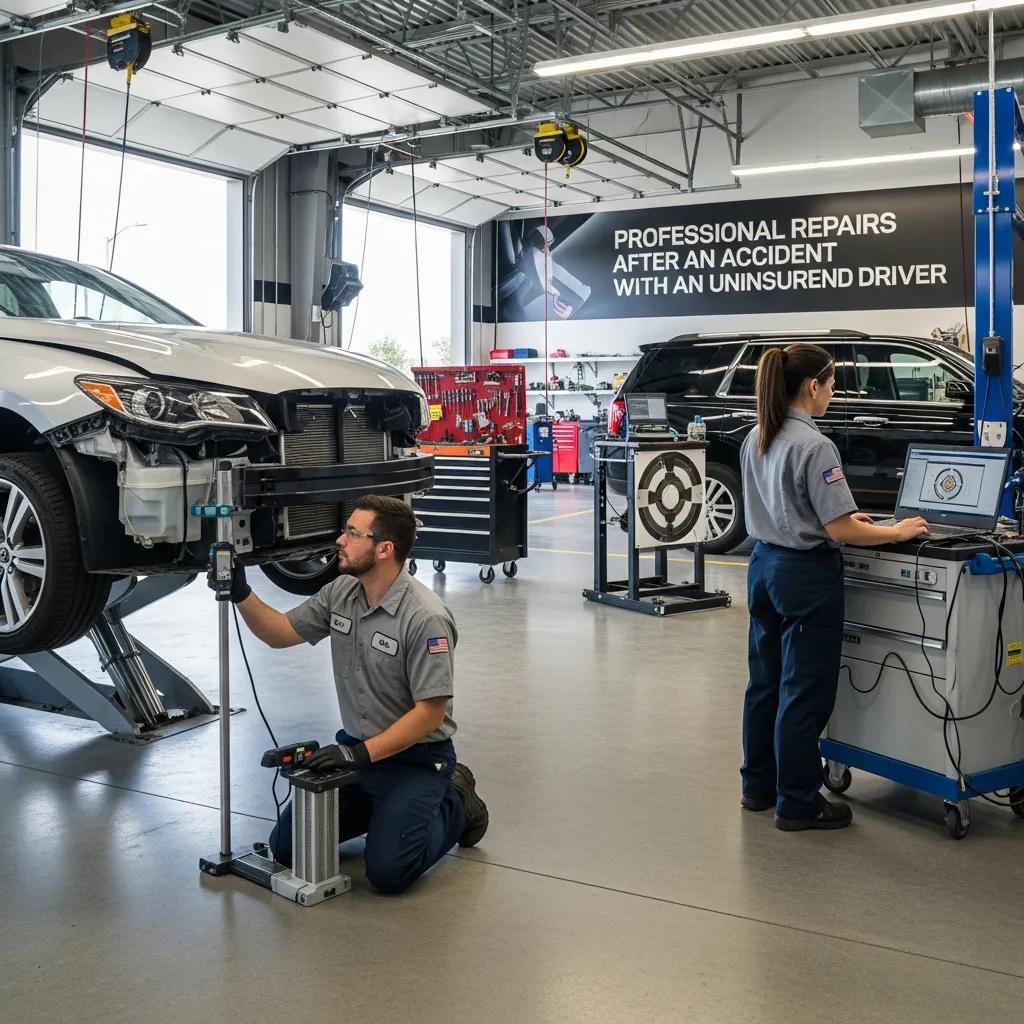
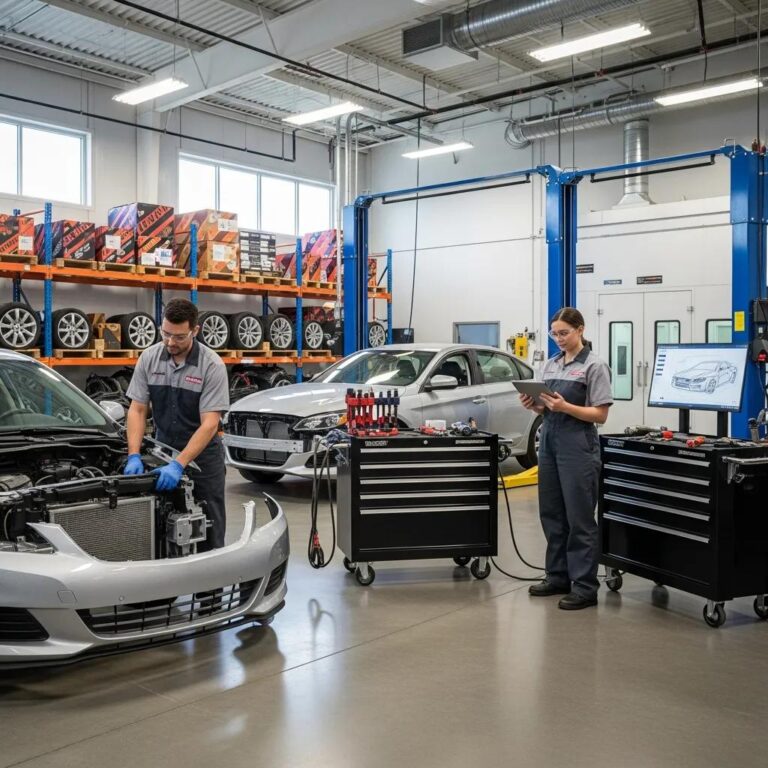
Repairing your car after a crash with an uninsured motorist takes careful documentation, prompt reporting, and choosing a repair shop that understands both the technical work and UM claims process. Start with safety and scene documentation, file a police report, preserve evidence, then get an insurer-ready estimate and pick a shop capable of OEM parts, ADAS recalibration, and insurer coordination. Working with a shop experienced in UM claims reduces friction and helps ensure repairs follow manufacturer procedures — important for safety and resale value. Below is a short, practical checklist to follow immediately after an uninsured motorist accident.
What Are the Immediate Steps to Take After an Uninsured Motorist Accident?
After you’ve checked for injuries and handled any urgent medical needs, follow this checklist to preserve evidence and strengthen a future UM claim.
- Make sure everyone is safe and call 911 if anyone is injured.
- Move to a safe spot when possible and turn on your hazard lights to avoid secondary crashes.
- Take clear photos of all damage, vehicle positions, skid marks, and the surrounding scene.
- Get witness names and contact info, and ask about video or dashcam footage.
- File a police report as soon as you can and get the report number for your records.
- Call your insurer, document every conversation, and ask how to start a UM claim.
Following these steps preserves vital evidence and speeds insurer review. The next section explains how an experienced repair shop can further support you with towing, estimates, and claims coordination.
How Does Prime Time Collision Center Assist with UM Claims and Repairs?
Prime Time Collision Center focuses on claim-friendly support that reduces stress and gets you back on the road with safe, OEM-quality repairs. We coordinate free towing and estimates, prepare insurer-ready photos and documentation, work directly with adjusters, and perform OEM-certified repairs using I-CAR-trained techniques. Our process — towing, damage assessment, insurance liaison, OEM parts and repairs, and a lifetime warranty — helps move you from accident to road-ready with fewer disputes and clearer expectations. By handling the logistics and technical details, we let you focus on recovery while we restore your vehicle to manufacturer standards.
Why Are OEM Certified Repairs Crucial for Uninsured Motorist Claims?
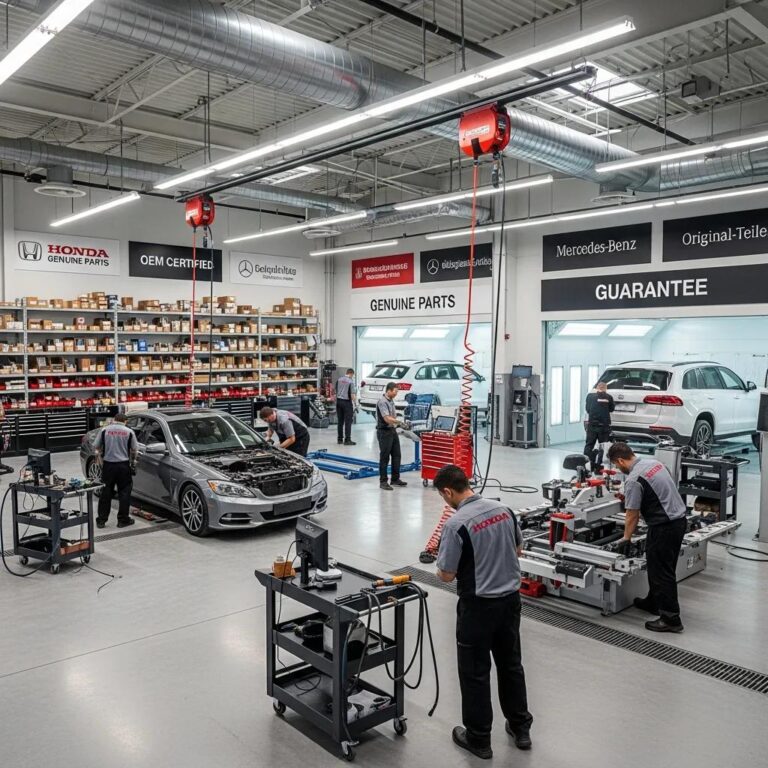
Modern vehicles depend on integrated safety systems, calibrated sensors, and precise structural tolerances. Aftermarket or improper repairs can compromise crash performance and lower resale value. OEM-certified repairs use manufacturer-approved parts and procedures that preserve structure, ensure correct sensor calibration (ADAS), and align with warranties — which is important when UM claims or subrogation come into play. The table below compares OEM repairs with aftermarket and salvage options in key areas that affect safety, warranty, and resale.
Comparing repair approaches: safety, warranty status, and resale implications.
| Repair Approach | Safety & Integrity | Warranty & Resale Impact |
|---|---|---|
| OEM Repair | Preserves manufacturer tolerances, sensor calibration, and structural performance | Supports warranty and resale value; favored by insurers |
| Aftermarket Parts | Quality can vary; may need additional calibration or adjustments | Can lower resale value and complicate warranty claims |
| Salvage/Used Parts | Cheaper but may hide damage and fit inconsistently | May reduce safety and significantly lower resale value |
This comparison explains why insurers and safety-minded owners prefer OEM-certified repairs after a collision, and points to the technician credentials that make those repairs reliable.
What Is the Value of I-CAR Platinum Certified Technicians in UM Repairs?
I-CAR Platinum certification indicates advanced technician training across vehicle systems and repair disciplines. Technicians with this certification understand structural repairs, ADAS calibration, and manufacturer procedures required after modern collisions. Using I-CAR Platinum technicians reduces the risk of missed repairs or sensor miscalibration — outcomes that matter when a UM claim will fund the work. Highly trained technicians also improve the credibility of repair documentation submitted to insurers and support requests for OEM parts and procedures during claim recovery.
How Do OEM Certified Repairs Maintain Vehicle Safety and Value?
OEM-certified repairs follow manufacturer repair manuals, restore structural alignment, and perform ADAS recalibration so airbags, automatic braking, and lane systems work as intended after repair. These steps use precise measurements, OEM parts that match original tolerances, and documented calibration processes to lower the risk of post-repair failures and protect occupants. From a resale perspective, documented OEM repairs and I-CAR-certified workmanship help preserve value and support diminished-value claims because they show the vehicle was restored to manufacturer standards.
How Does Uninsured Motorist Coverage Impact Your Insurance Claim Process?
Filing a UM claim is different from filing a third-party liability claim because you’re usually submitting evidence to your own insurer and must show the other driver was uninsured or that a hit-and-run occurred. UM claims can follow different timelines, subrogation efforts, and evidence requirements, and they may require cooperation if your insurer later pursues the at-fault party. Common challenges include proving the other driver lacked coverage, meeting notice requirements, and negotiating when damages approach policy limits. The next section lists typical document and procedural hurdles and offers practical tips to avoid delays.
Common challenges when filing UM claims include:
- Proving the at-fault driver had no valid insurance or couldn’t be identified.
- Providing timely, convincing evidence such as a police report, medical records, and witness statements.
- Handling policy limit and stacking rules that affect how much you can recover.
Fast reporting, thorough documentation, and a repair shop that supplies insurer-ready evidence reduce delays and improve claim outcomes.
What Challenges Arise When Filing UM Claims?
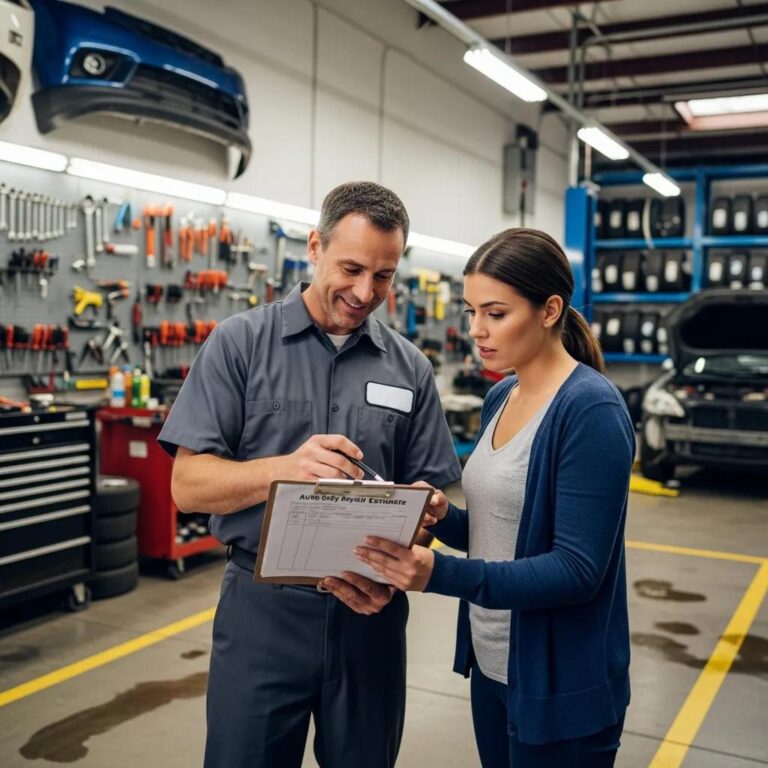
UM claimants often face evidentiary gaps, policy complexities, and delays while insurers verify uninsured status and assess damage. Missing or weak documentation is the main reason claims stall — a late police report or blurry photos can lead to denials or reduced settlements. Policy features like deductibles, caps, or anti-stacking clauses further complicate recovery. To avoid these problems, collect solid evidence at the scene, document injuries and repair needs carefully, and work with repair shops that produce detailed, itemized estimates and photo documentation tailored for UM claims. Strong early documentation and an engaged repair partner smooth insurer review and increase the chance of prompt payment.
How Does Prime Time Collision Center Simplify Insurance Claim Assistance?
Prime Time Collision Center minimizes claim friction by preparing detailed estimates, high-resolution photos, and supporting documentation that match insurer requirements, then communicating directly with adjusters to speed approvals. Our services — free towing and estimates, OEM repair procedures by trained technicians, and a lifetime warranty — present a complete, insurer-ready repair package. By handling technical and administrative work, we reduce the burden on the vehicle owner and help keep repairs moving without unnecessary delay. Contacting Prime Time Collision Center can simplify the UM claim path from documentation through final repair.
Where Can You Find Expert Uninsured Motorist Accident Repair in Glendale, CA?
Having a local repair center that understands UM claims, OEM procedures, and ADAS calibration matters for safety and timely claim resolution in Glendale and the Los Angeles area. Prime Time Collision Center serves Glendale, Burbank, Pasadena, and Los Angeles with OEM-certified repairs by I-CAR-trained technicians, free towing and estimates, and a lifetime warranty to protect safety and value. Choosing a shop with these services cuts logistical friction during UM claims and increases the chance of a complete, well-documented repair. Below are our local contact points and service highlights for drivers who need fast, reliable help.
Why Choose Prime Time Collision Center for UM Accident Repairs in Glendale?
Prime Time Collision Center stands out for OEM-certified repairs, I-CAR Platinum technician expertise, free 24/7 towing and estimates, and lifetime warranty-backed workmanship — all priorities for UM claimants who want reliable, documented repairs. These benefits ensure repair quality, reduce disputes over repair methods, and give both insurers and vehicle owners confidence that work meets manufacturer standards. Our local presence in Glendale and surrounding communities means faster towing response and easier in-person estimate coordination — practical advantages when time and evidence matter.
Prime Time Collision Center locations and phone contact for service and estimates:
- 6010 San Fernando Rd, Glendale, CA 91202
- 5236 San Fernando Rd, Glendale, CA 91203
- Phone: (818) 396-4997
What Services and Support Are Available for UM Claims in the Los Angeles Area?
Prime Time Collision Center offers services tailored to UM claimants that cover the logistical, technical, and documentation needs of a full repair and claim process. We provide free 24/7 towing to either Glendale location, complementary damage estimates prepared for insurer review, OEM parts installation and ADAS recalibration by I-CAR-trained technicians, insurance liaison support with adjusters, and a lifetime warranty on completed repairs. These services reduce delays, protect safety-critical repairs, and supply the documentation insurers need for UM payments and diminished-value considerations.
- Free towing: Immediate vehicle recovery and transport to a certified repair facility.
- Insurance-ready estimates: Detailed, itemized repair and damage reports for claims reviewers.
- OEM repairs & ADAS calibration: Manufacturer-based parts and procedures to restore safety systems properly.
Each service cuts friction in the UM claim process and helps get you safely back on the road faster.
Frequently Asked Questions
What should I do if I am involved in an accident with an uninsured driver?
First, make sure everyone is safe and call emergency services if needed. Document the scene with photos of damage, vehicle positions, and relevant details. Collect witness information and file a police report as soon as possible. Then notify your insurance company and provide all documentation, including the police report and any medical records. These steps help support your uninsured motorist claim.
How can I determine if I have adequate uninsured motorist coverage?
Check your policy details for UMBI and UMPD limits. Think about your financial situation, likely medical costs, and the value of your vehicle. Comparing your limits to typical local medical and repair costs can help — and talking with your insurance agent will clarify whether your coverage is sufficient.
Are there any exclusions in uninsured motorist coverage I should be aware of?
Yes. UM coverage exclusions vary by policy and state. Common exclusions include incidents involving vehicles not covered by your policy, crashes while driving under the influence, or when the driver lacks a valid license. Some policies also exclude commercial use. Read your policy carefully and ask your agent about any specific limitations.
How does uninsured motorist coverage affect my insurance premiums?
Adding UM coverage can raise your premium slightly because it provides extra protection. However, it can save you significant money if you’re hit by an uninsured driver. Premium effects vary by insurer and driver history, so compare quotes to find the right balance of cost and protection.
What documentation is needed to file a claim for uninsured motorist coverage?
Typical documents include a police report describing the accident, medical records for injuries, repair estimates, and photos of the scene and damage. Witness statements and proof of your insurance are also helpful. Complete documentation speeds the claims process and improves the likelihood of a favorable outcome.
Can I stack uninsured motorist coverage if I have multiple vehicles?
Stacking lets you combine limits from multiple policies to increase coverage for one accident, but whether you can stack depends on state law and your policy terms. Some states allow stacking, others limit or prohibit it. Check with your insurance provider to see if stacking applies to your situation.
Conclusion
Uninsured motorist coverage is a vital safeguard for your finances and for getting timely, proper repairs after an accident with an uninsured driver. Understanding UMBI and UMPD helps you choose the right protection for your health and your vehicle’s value. Don’t leave your recovery to chance — consider enhancing your policy with adequate UM limits. If you need OEM-certified repairs and claim help, reach out to Prime Time Collision Center for expert, local support and peace of mind on the road.