
The Role of an Insurance Adjuster After an Accident: What They Do, How Claims Work, and Why Certified Repairs Matter
An insurance adjuster investigates collisions, documents vehicle damage, and calculates settlement amounts so insurers and policyholders can resolve claims fairly and efficiently. Their findings affect whether repairs are approved, how much you’ll receive, and whether a vehicle is deemed a total loss. This guide walks through how adjusters investigate accidents and inspect vehicles after a crash, explains the typical claims steps, and shows why OEM-certified repairs matter for safety and warranty protection. You’ll also get practical tips for documenting damage, talking with an adjuster, and presenting OEM-quality repair estimates that support your claim. For drivers near Glendale, Prime Time Collision Center prepares OEM-grade estimates, staffs I-CAR Platinum–trained technicians, offers free estimates, and provides 24/7 towing to help coordinate with adjusters and protect your vehicle’s safety and value. Read on for a clear walkthrough of adjuster duties, the claims workflow, the insurance implications of certified repairs, communication best practices, and how a certified shop can help your claim.
What Are the Key Duties of an Insurance Adjuster After a Car Accident?
An adjuster’s main job is to confirm coverage, measure damage, and recommend a settlement that follows the policy while controlling the insurer’s risk. They start by investigating the accident and assessing damage using on-site inspections, photos, and diagnostic checks to build a repair estimate or recommend a total-loss payout. Their report affects whether OEM repair procedures are approved, how deductibles apply, and the final settlement based on Actual Cash Value. Below is a short list of core duties with one-line explanations.
- Investigation: Review police reports, witness statements, and scene evidence to establish facts and liability.
- Damage assessment: Inspect the vehicle visually and with diagnostic tools to list needed repairs.
- Policy interpretation: Confirm coverage limits, exclusions, and deductible to determine what’s payable.
- Settlement negotiation: Work with claimants and repair shops to agree on costs and authorizations.
- Total loss decision: Compare repair cost to Actual Cash Value (ACV) and advise salvage or payout.
These steps feed directly into repair authorization and payment. Knowing how each stage works makes it easier to see how a certified shop’s documentation can strengthen your claim. The next section explains how adjusters assess damage and liability.
How Do Insurance Adjusters Assess Vehicle Damage and Liability?

Adjusters combine a visual inspection, photographs, diagnostic scans, and manufacturer repair procedures to estimate repair scope and cost. They compare the shop’s estimate with their own, check for structural and safety-system damage, and use evidence like the police report and photos to weigh liability. When advanced systems—airbags, ADAS sensors, or module-controlled features—are involved, adjusters often rely on OEM procedures or certified-shop documentation to confirm the right repairs. Clear, OEM-based estimates and diagnostic logs reduce disputes and speed authorization.
What Types of Insurance Adjusters Handle Claims?
Adjusters typically fall into three groups: staff adjusters who work for the insurer, independent adjusters hired per claim, and public adjusters who represent the policyholder. Staff adjusters follow company processes for routine claims. Independent adjusters are contracted when there’s high volume or complex losses. Public adjusters advocate for claimants and may push for a higher recovery. Each type has different priorities, so it helps to know who you’re speaking with and why their recommendations might differ.
Use the comparison below to match adjuster type with what to expect during your claim.
| Adjuster Type | Primary Role | Typical Duty |
|---|---|---|
| Staff Adjuster | Represent the insurer | Handle routine claims, follow company guidelines, authorize standard repairs |
| Independent Adjuster | Contracted investigator | Manage peak volume or complex losses, provide third-party estimates |
| Public Adjuster | Represent the policyholder | Negotiate on the claimant’s behalf and challenge insurer valuations |
Knowing the adjuster’s role helps you present evidence and coordinate with a certified body shop. Next, we’ll walk through the typical claims process and timelines.
How Does the Car Accident Claims Process Work?
A claim starts when you report the incident, continues through inspection and estimate reconciliation, and ends with repair authorization or a settlement. Adjusters work with repair shops, review documentation, compare ACV to repair cost, and either approve repairs or propose a payout. Timelines vary by case, but each step has predictable actions you can influence with good documentation and quick engagement. Below is a clear step-by-step sequence and when to bring in an OEM-aware repair shop.
- Report the accident: Notify your insurer and provide the police report and basic details promptly.
- Initial inspection: An adjuster or appraiser inspects the vehicle or reviews photos to document visible damage.
- Shop estimate: An OEM-aware repair shop prepares a detailed estimate and repair procedure notes.
- Adjuster reconciliation: The adjuster compares estimates, verifies coverage, and negotiates repair scope.
- Authorization or settlement: Insurer approves repairs and pays the shop, or offers a total-loss payout if repair cost approaches or exceeds ACV.
This sequence shows where documentation and a certified shop’s estimate influence the outcome. Below is a compact timeline for typical timeframes.
| Step | Action | Typical Timeframe |
|---|---|---|
| Report | Notify insurer, file police report | 0–3 days |
| Inspection | Adjuster appraises vehicle or reviews photos | 1–7 days |
| Shop Estimate | Detailed OEM-based estimate prepared | 1–5 days after inspection |
| Reconciliation | Adjuster and shop resolve scope and parts | 2–10 days |
| Settlement | Repairs authorized or total loss offered | 3–14+ days depending on complexity |
Early engagement with a certified repair provider shortens reconciliation, preserves evidence, and helps move your claim forward. Next we outline the practical steps to file and manage a claim.
What Steps Are Involved in Filing and Navigating a Claim?
After an accident, put safety first, then document everything and notify your insurer quickly—these actions build the factual record adjusters need. Photograph all vehicles, the scene, and any visible injuries. Get the police report and witness contact details. Call a certified repair shop early for a free OEM-aware estimate so the adjuster can review shop documentation right away. Early shop involvement preserves evidence, speeds inspections, and gives repair-method details that influence settlement decisions and whether OEM parts or procedures are required.
These steps make it easier for the adjuster to reconcile estimates and authorize repairs. Next we explain how adjusters calculate settlements and decide on total losses.
How Do Adjusters Determine Settlements and Total Losses?
Adjusters base settlements on Actual Cash Value (ACV): replacement cost minus depreciation. They compare ACV with the estimated repair cost to decide if a vehicle is a total loss. Depreciation, mileage, pre-existing damage, and local market value all affect ACV. If repair costs reach a common insurer threshold of roughly 70–80% of ACV (varies by company and state), the vehicle may be declared a total loss. Accurate OEM repair estimates that include manufacturer procedures and part costs can change the repair-versus-total analysis by showing the true work required to restore safety-critical systems. A documented OEM-based estimate often leads to a fairer, more precise settlement and can affect whether a vehicle is repaired or paid out as salvage.
Knowing how valuation works helps you anticipate negotiation points and underscores why certified repair detail matters. Next, we cover why OEM-certified repairs are important to insurers and your safety.
Why Are OEM Certified Repairs Important for Insurance Claims?

OEM-certified repairs follow manufacturer procedures and use specified parts and calibrations, which protects safety systems, warranty coverage, and resale value. Adjusters favor detailed OEM-based estimates because they reflect the full scope of necessary repairs, including structural work, electrical repairs, and ADAS recalibration that generic estimates can miss. Choosing OEM-quality repairs lowers the risk of improper restoration, supports post-repair safety, and provides the documentation insurers need to approve payment. Below are three core benefits presented clearly.
- Safety: OEM procedures ensure structural repairs and safety-system recalibration meet manufacturer tolerances.
- Warranty: Following OEM methods helps preserve manufacturer warranty and avoids future disputes.
- Resale value: Proper parts and documented OEM work protect vehicle provenance and resale pricing.
These benefits explain why adjusters give weight to certified repair documentation. The table below compares OEM repairs with other approaches on insurance and safety impact.
| Repair Approach | Characteristic | Benefit |
|---|---|---|
| OEM Certified Repair | Manufacturer parts & procedures | Preserves safety systems, warranty, and resale value |
| Aftermarket Parts Repair | Non‑OEM components | Lower cost but may affect safety claims and resale |
| Generic or Quick Repair | Cut‑rate methods, omitted calibrations | Higher risk of safety issues and insurer rejection |
OEM-certified work better matches adjuster expectations and speeds claim approvals. Next we explain how certified repairs protect safety and warranties in practice.
How Do OEM Certified Repairs Affect Vehicle Safety and Warranty?
OEM-certified repairs protect critical safety systems by using manufacturer parts, approved structural techniques, and required recalibration of driver-assist systems. Parts like airbag sensors, frame alignment points, and ADAS radar need exact repair steps; sticking to OEM procedures prevents cascading issues and maintains crashworthiness. Insurers and adjusters look for documentation of these steps because it shows the vehicle will perform as designed after repair. Keeping OEM-compliant records also supports your collision-repair warranty and helps with future resale or valuation discussions.
Thorough OEM documentation reduces insurer concern about hidden damage and cuts down on disputes that can delay repairs. The next section explains how technician certifications influence adjuster confidence.
What Is the Role of I-CAR Platinum Certification in Repair Quality?
I-CAR Platinum certification shows a facility has invested in advanced training for technicians across many vehicle brands and repair areas. Adjusters view I-CAR–trained teams as more likely to follow manufacturer procedures, estimate complex repairs accurately, and understand ADAS recalibration needs. That training reduces estimate disputes and makes it more likely an adjuster will approve OEM-recommended procedures without lengthy back-and-forth. For vehicle owners, choosing a shop with I-CAR Platinum technicians increases the chance the repair will meet both safety and insurer expectations.
I-CAR certification helps bridge accurate damage appraisal and approved repairs, which is why certified shops are often recommended when working with adjusters.
How Can You Effectively Communicate with Your Insurance Adjuster?
Communicate with adjusters using clear facts, organized documentation, and coordination with your repair shop so estimates and evidence line up. Use simple, objective language, give a chronological account, and share shop estimates and diagnostic reports promptly. Prepare an evidence packet—photos, the police report, and the shop’s OEM-based estimate—so the adjuster can reconcile scope quickly. Below are practical do’s and don’ts, followed by a documentation checklist to strengthen your claim.
Do’s:
- Be factual and concise: Stick to observed facts, dates, and documents.
- Share evidence early: Provide photos, police reports, and the repair estimate as soon as you can.
- Ask for time to review: Request a pause if you need to consult your repair shop before answering technical questions.
Don’ts:
- Avoid admitting fault: Don’t guess or apologize in ways that could be read as admitting fault.
- Don’t guess repair needs: Let the certified shop and adjuster determine technical scope.
- Don’t delay documentation: Missing or late evidence can slow the process or reduce settlement value.
These guidelines keep the conversation focused on facts and documentation—what adjusters need to balance policy rules with repair realities. Next is a focused documentation checklist to prepare before adjuster review.
What Should You Say and Avoid When Speaking to an Adjuster?
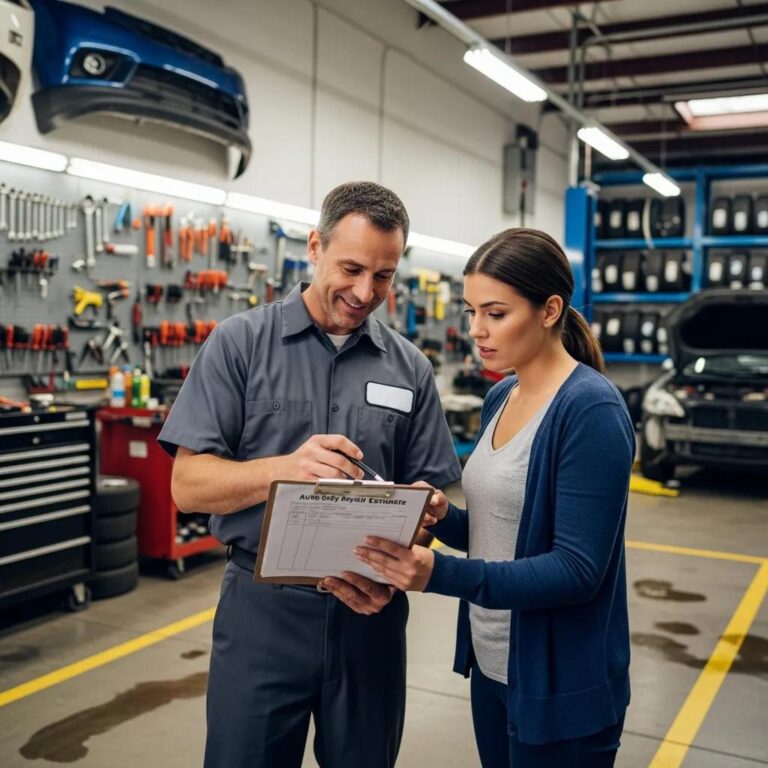
When you talk with an adjuster, stick to brief factual statements like the accident time, what you saw, and any injuries you noticed. If asked about fault, refer to the police report and witnesses instead of offering your opinion. If technical repair questions come up, tell the adjuster you’ll refer them to your certified repair shop for a detailed estimate and OEM procedure notes. If you need time to gather paperwork or consult the shop, politely request it—this protects your interests and ensures technical accuracy.
Keeping answers factual reduces misinterpretation and leads into how a complete documentation packet supports your claim and repair authorization.
How Does Documentation Support Your Claim and Repair Process?
Documentation turns observations into verifiable evidence that adjusters and shops use to agree on repair scope and settlement. Essential items include photos, the police report, a detailed shop estimate, receipts for emergency expenses, and medical records if relevant. A structured evidence packet—cover sheet, incident chronology, photos, police report, and OEM-based estimate—makes adjuster review faster and authorization more likely. Repair shops that prepare OEM-compliant estimates and diagnostic logs help adjusters approve necessary procedures and parts. Prime Time Collision Center can prepare detailed OEM-based estimates and coordinate documentation with your adjuster to streamline the claims workflow.
Complete documentation clarifies negotiations and protects your rights under the policy. Next, we describe how a local certified shop supports you after an accident.
How Does Prime Time Collision Center Support You After an Accident?
Prime Time Collision Center is a local auto body and collision repair shop focused on OEM-quality repairs, smooth insurance claims, and customer trust. We prepare OEM-based estimates that list manufacturer procedures and parts so adjusters clearly understand the required work. Our technicians include I-CAR Platinum–trained staff who handle complex repairs and ADAS recalibration that insurers look for. We also offer logistical support—free estimates and 24/7 towing—to preserve evidence and keep claims moving for Glendale, Burbank, Pasadena, and Los Angeles drivers.
Our service approach makes Prime Time a practical partner when you need repair coordination and claims help. Below are the main services we provide that align with insurance workflows.
What Services Does Prime Time Offer to Assist with Insurance Claims?
Prime Time offers services tailored to simplify claims and return vehicles to OEM standards for drivers in the Glendale area. We provide free estimates that document manufacturer procedures and parts, which helps adjusters reconcile scope faster. Our I-CAR Platinum–trained technicians perform OEM repairs and required recalibrations to restore safety systems and keep warranty alignment. We work with all major insurers, coordinate directly with adjusters when appropriate, and back our repairs with a lifetime warranty to protect long-term value.
- Free OEM-based estimates: Detailed documentation for adjuster review.
- I-CAR Platinum technicians: Certified competency for complex repairs.
- Insurance coordination: Direct liaison with adjusters for smoother authorization.
- Lifetime warranty on repairs: Long-term assurance of repair quality.
These services reduce friction in the claims process and help ensure repair work meets insurer standards. The section below shows a typical rapid-response scenario involving towing and immediate estimates.
How Do Free Estimates and 24/7 Towing Facilitate a Stress-Free Experience?
Quick towing and no-cost estimates protect the vehicle’s condition, capture accurate damage evidence, and shorten the window before adjuster inspection—all of which speed repair authorization. A common sequence: your vehicle is towed to the shop, a certified estimator documents OEM-required procedures, and the adjuster reviews the evidence packet—this minimizes evidence loss and supports an accurate appraisal. Fast estimates plus 24/7 towing align the vehicle with adjuster timelines, reduce storage or secondary damage risk, and limit disputes over pre-existing issues. For Glendale-area drivers, having a shop that provides these logistics lowers administrative hassle and shortens the path from accident to certified repairs.
Prime Time Collision Center (6010 San Fernando Rd, Glendale, CA 91202; phone (818) 396-4997) offers these coordinated services to help drivers work with adjusters and ensure repairs follow OEM and insurer expectations.
This article covered adjuster duties, the claims process, why OEM-certified repairs and I-CAR certification matter to insurers, how to communicate effectively with adjusters, and how a certified local shop can support your claim from towing through warranty-backed repair.
Frequently Asked Questions
What should I do immediately after an accident to support my claim?
After an accident, put safety first, then document the scene. Take photos of all vehicles, any visible injuries, and the surrounding area. Get a police report and witness contact information. Notify your insurance company promptly and share the details. Contact a certified repair shop for an OEM-based estimate early—this helps preserve evidence and speeds the claims process.
How can I ensure my repair shop meets insurance requirements?
Choose a shop that follows OEM procedures and has I-CAR Platinum–trained technicians. Those credentials show the shop understands manufacturer repair methods and uses appropriate parts—important for safety and warranty compliance. Provide the shop with all documentation (photos, police report) so they can prepare a detailed estimate that aligns with insurer expectations.
What happens if my vehicle is declared a total loss?
If your vehicle is declared a total loss, the insurer will typically offer a settlement based on the vehicle’s Actual Cash Value (ACV), accounting for depreciation and market value. You can accept that payout or negotiate if you think the valuation is low. Gather recent repair records and market comparisons to support your case during negotiations.
Can I choose any repair shop for my vehicle repairs?
Yes—you can choose your repair shop. Insurers can recommend facilities but generally can’t force you to use a specific one. That said, picking an OEM-certified shop with a good reputation for working with insurers makes it easier to ensure repairs are done correctly and your warranty remains intact.
How can I expedite the claims process with my adjuster?
Keep communication clear and timely. Provide photos, the police report, and repair estimates as soon as possible. Be factual and concise in conversations and avoid speculating about fault. If you need time to gather information, ask for it. Early involvement from a certified repair shop provides accurate estimates and documentation that help speed the process.
What role does I-CAR certification play in the repair process?
I-CAR certification shows a facility invests in advanced training for its technicians across many vehicle makes and repair areas. Insurers trust I-CAR–trained shops to follow manufacturer procedures, estimate complex repairs correctly, and handle ADAS recalibration. Choosing a shop with I-CAR Platinum technicians increases the likelihood repairs meet safety and insurer expectations.
How can I prepare for my conversation with the insurance adjuster?
Gather all relevant documents: photos of the accident, the police report, and the repair shop’s OEM-based estimate. Create a clear timeline of events and practice stating only factual information. If technical questions come up, refer the adjuster to your repair shop for detailed answers. This preparation helps ensure a productive conversation.
Conclusion
Knowing what an insurance adjuster does helps you manage the claims process and ensure your vehicle receives proper OEM-certified repairs. Clear communication and complete documentation make a real difference in claim outcomes and protect your vehicle’s safety and value. Working with a certified shop like Prime Time Collision Center can simplify the process and improve your chances of a fair settlement. Reach out to us for a free estimate and guidance on your repair journey.