

Keep Your EV Battery Healthy: Practical Charging, Temperature & Driving Strategies
Taking care of your EV’s battery preserves range, safety, and resale value by reducing the chemical and mechanical stress on lithium‑ion cells. This guide walks through straightforward charging habits, temperature management, and driving techniques that help your battery last longer — and explains when software updates or professional diagnostics are the right move to protect performance and warranty coverage. Many drivers focus only on range and overlook how state of charge, thermal cycles, and charging speed work together to speed up degradation. Understanding those relationships lets you make small daily choices that add years to your pack. The article is organized into clear, actionable sections: charging best practices (including the 20–80% rule), temperature tips for hot and cold climates, energy‑saving driving habits, why software and qualified service matter, long‑term storage guidelines, and how Prime Time Collision Center supports post‑accident diagnostics and OEM‑quality repairs. Read on for checklists, comparisons, and step‑by‑step tips to get the most out of your EV every day.
What Are the Best Charging Practices to Maximize EV Battery Longevity?
Your charging choices heavily influence long‑term battery wear because charge speed and state of charge affect voltage, temperature, and internal stress on cells. In practice, steady, moderate charging beats frequent extremes: it cuts the chemical reactions that drive capacity loss and keeps your usable range steadier over years. Make Level 2 or slower charging your daily routine and save DC fast charging for trips when you really need speed. The short list below sums up the behaviors that balance convenience with battery care and leads into why the 20–80% window is commonly recommended.
Recommended charging practices to protect your EV battery:
- Set daily charge limits in the mid‑range (avoid routine 100% top‑offs).
- Prefer Level 2 charging at home or work for regular fills instead of frequent DC fast charging.
- Schedule charging to finish just before you leave so the battery spends less time at a high SoC.
- Don’t leave the battery at very low SoC for long stretches; keep a moderate charge for storage.
These everyday habits lower cumulative stress on cells and pave the way to understanding the benefits of the 20–80% charge window.
Why Is the 20-80 Percent Charge Range Optimal for EV Batteries?
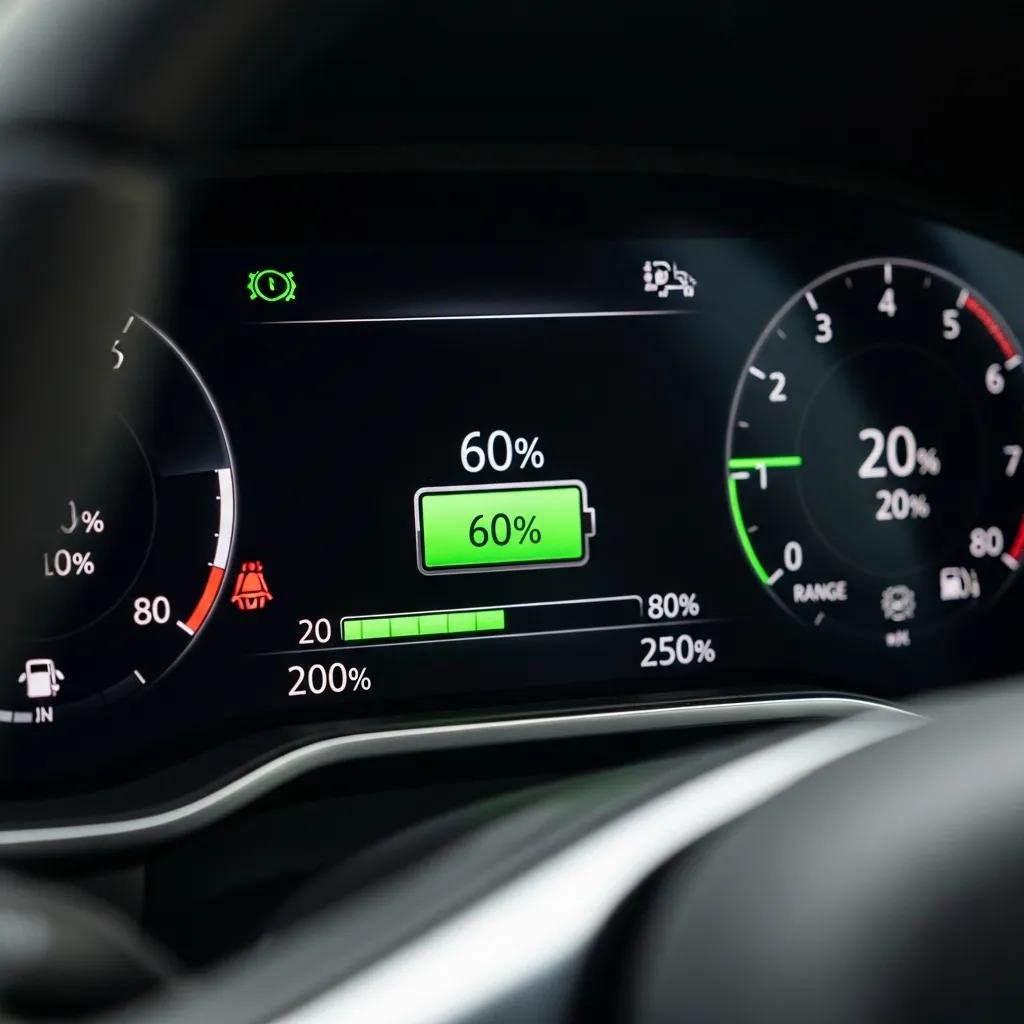
Keeping the charge between about 20% and 80% avoids the voltage extremes that encourage lithium plating and faster electrode wear near 0% and 100% SoC. Operating in the mid‑range keeps cell voltages in a gentler band where reactions are less aggressive and the battery management system (BMS) can do its job of balancing cells more effectively. For most daily drivers, that trade‑off takes only a small slice of absolute range while substantially slowing the rate of degradation over years. Knowing how this works helps you pick charge limits and schedule fills that protect both daily usability and long‑term capacity.
How Does Minimizing Fast Charging Protect Your EV Battery?
DC fast charging pushes lots of power into the pack quickly, which raises cell temperatures and creates steep charge currents — both increase internal chemical stress and speed aging if done often. Limiting fast charging to occasional trips and relying on Level 2 charging for routine top‑ups reduces thermal cycling and peak C‑rate exposure, which preserves cell chemistry and structure. When you must fast charge, space out sessions and let the battery cool between high‑power charges to lessen cumulative wear. These charging choices tie directly into temperature management strategies that further protect batteries in real‑world use.
Different charging methods compared to show typical use‑case, power, and impact on battery degradation:
| Charging Method | Typical Use Case | Speed (kW) | Impact on Degradation |
|---|---|---|---|
| Level 1 charging | Overnight home charging, low daily miles | 1–2 kW | Low impact when used regularly |
| Level 2 charging | Home or workplace daily charging | 3–11 kW | Moderate impact; excellent balance |
| DC fast charging | Long trips, rapid top‑ups | 50–350+ kW | Higher impact if used frequently |
This comparison makes it clear why Level 2 is the everyday sweet spot and why DC fast charging is best saved for specific needs.
How Can Temperature Management Improve Your EV Battery Health?
Battery chemistry is highly temperature‑sensitive: heat speeds irreversible aging while cold temporarily reduces usable capacity. Managing thermal exposure with smarter parking, preconditioning, and charging timing reduces cumulative degradation and keeps range more predictable. Modern EVs have active thermal systems (coolant loops, heaters, fans), but owner behavior — like avoiding long sun exposure and preconditioning before charging — complements those systems and lowers stress on the pack. Below are practical steps you can use seasonally and by climate to help preserve your battery.
Common effects of temperature extremes and quick mitigation steps:
- High heat speeds internal reactions and worsens capacity loss; park in shade or a garage to limit peak temperatures.
- Moderate temperatures are best for longevity; aim to keep the pack near ~15–25°C when you can.
- Cold reduces immediate output and may cut range temporarily; precondition the battery before driving or charging when possible.
These simple mitigations prepare you for the more detailed comparisons of hot, moderate, and cold conditions and storage tips that follow.
What Effects Do Extreme Heat and Cold Have on EV Batteries?
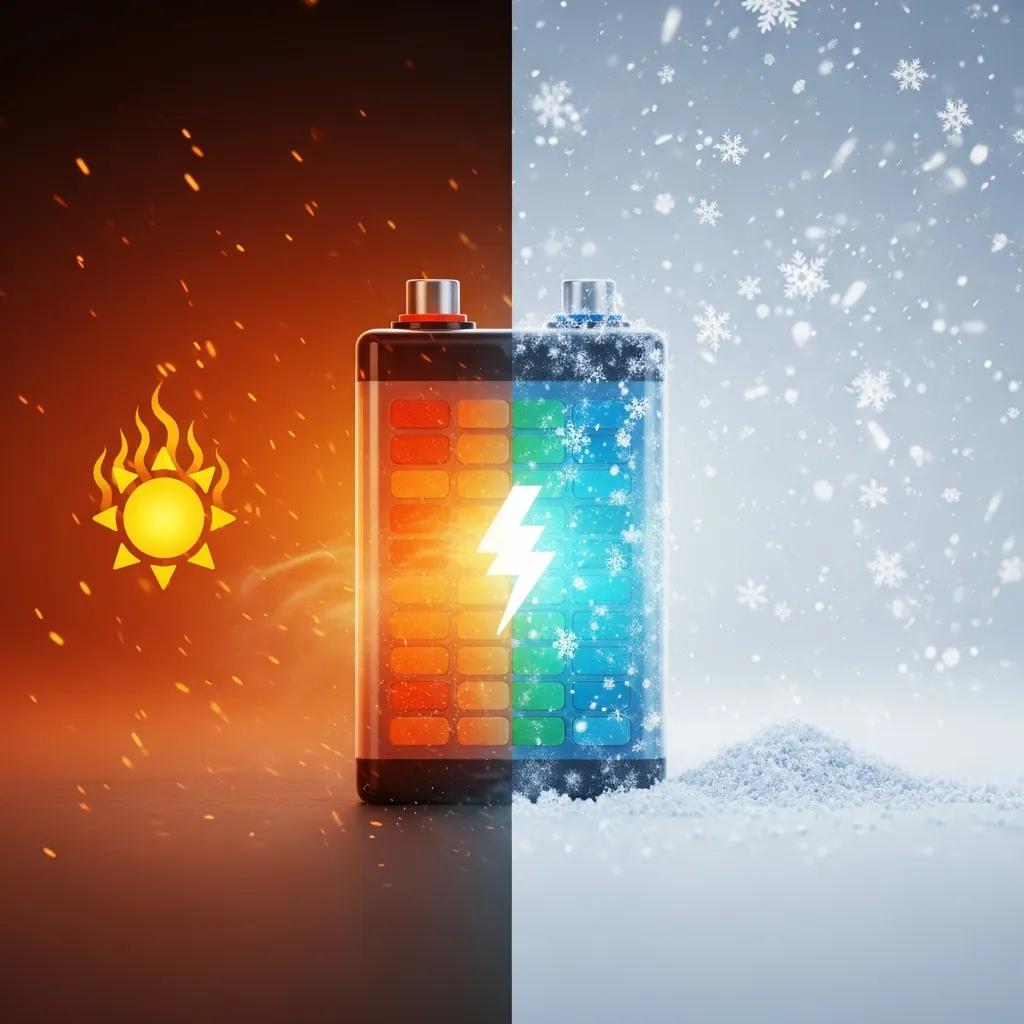
High temperatures accelerate electrolyte breakdown and electrode corrosion, which shortens usable life and raises internal resistance — you’ll see lower range and less efficiency in high‑load situations. Cold temperatures slow electrochemical reactions, reducing charge acceptance and power output until the pack warms up through driving or preconditioning. Repeated swings between hot and cold add thermal cycles, so minimizing those swings with sensible parking and climate‑aware charging helps batteries last longer.
Which Parking and Preconditioning Strategies Help Maintain Optimal Battery Temperature?
Parking in shade or a garage cuts daily thermal peaks, and avoiding a full 100% charge in high heat reduces stress that speeds aging. Preconditioning — using the vehicle’s controls to warm or cool the pack before charging or driving — improves charge acceptance and lowers the thermal load when you plug in. In hot regions, schedule charging for cooler night hours and limit direct sun during long stops. These vehicle settings and simple habits work together to stabilize pack temperature and support long‑term cell health.
| Temperature Condition | Effect on Degradation | Storage Recommendation | Mitigation Actions |
|---|---|---|---|
| Hot (above ~30°C) | Accelerates chemical aging | Store in shade/garage | Use shade, avoid full charge, schedule night charging |
| Moderate (~10–25°C) | Lowest rate of degradation | Ideal for storage | Maintain mid SoC, normal charging |
| Cold (below ~5°C) | Temporary capacity loss, slower charging | Warm storage or precondition | Precondition before charging, avoid deep discharge |
That table shows why temperature‑aware parking and preconditioning should be part of your regular EV routine.
What Driving Habits Enhance EV Battery Efficiency and Range?
The way you drive determines how much energy you pull from the battery and how much heat you create — both affect battery life. Smooth acceleration, steady cruising, and smart use of regenerative braking lower peak power demands and thermal stress, protecting range now and battery health over time. Use drive modes that limit output when you don’t need full performance and favor steady speeds over aggressive driving. The list below gives concrete habits to help you drive more efficiently and preserve the pack.
Driving habits that conserve energy and protect battery life:
- Accelerate gently to avoid high instantaneous power draw and excess heat.
- Use regenerative braking settings to reclaim energy and reduce brake wear.
- Choose eco or efficiency modes for everyday commuting to balance performance and range.
- Plan routes to minimize stop‑start traffic when possible to reduce thermal cycling.
These adjustments cut energy waste and let regenerative braking and eco modes do the heavy lifting for efficiency.
How Does Smooth Acceleration and Regenerative Braking Benefit Battery Life?
Smooth acceleration reduces peak current demand, which means less internal heating and chemical stress — that conserves energy and slows long‑term degradation. Regenerative braking captures kinetic energy during slowdowns and returns it to the battery, lowering net consumption and cutting mechanical brake use. In city driving, leaning on regeneration can noticeably extend range and reduce thermal cycling compared with frequent hard accelerations and stops. Together, these techniques reduce charge–discharge stress and help the battery last longer.
When Should You Use Eco Modes to Extend EV Battery Performance?
Eco modes soften throttle response, limit peak power, and often boost regenerative braking — all of which reduce energy use and extend range on everyday trips. Use eco mode for commutes, errands, and city driving where quick acceleration isn’t needed. Switch to normal or sport when merging on highways, towing, or when you need rapid response. The trade‑off is lower peak performance for improved range and reduced thermal load, which is a smart choice for most daily driving and supports battery longevity.
Why Are Software Updates and Professional Maintenance Crucial for EV Battery Care?
Software updates and professional maintenance matter because the BMS controls charging profiles, thermal strategies, and cell balancing — all key drivers of aging and safety. Over‑the‑air updates and manufacturer fixes can refine charging logic, tweak cooling behavior, and correct issues that would otherwise reduce battery life. Professional service adds diagnostics and hands‑on inspection to find cell imbalances, coolant leaks, or crash damage that software can’t detect. Knowing when to accept OTA updates and when to book a shop visit helps you protect battery health and warranty coverage.
Signs you should schedule a professional inspection include persistent range loss beyond normal seasonal change, charging irregularities, dashboard battery warnings, or any collision that might have affected the pack. A trained technician can run a full battery health report, check BMS calibration, and recommend OEM‑aligned repairs. Acting on these triggers quickly can prevent minor problems from becoming permanent damage.
How Do Over-the-Air Updates Optimize Battery Management Systems?
Over‑the‑air updates adjust charging algorithms, balancing routines, and thermal control parameters based on field data and manufacturer improvements. These updates can smooth charge acceptance curves to reduce stress at particular SoC ranges, change cooling or heating thresholds, and improve state‑of‑charge accuracy. Installing updates keeps your vehicle’s control systems aligned with the latest manufacturer strategies for longevity and safety, and it complements regular physical maintenance.
When Should You Schedule Professional EV Battery Diagnostics and Repairs?
Book professional diagnostics after any crash, unexpected or persistent range loss that isn’t explained by weather or usage, charging failures, or repeated battery warnings. Certified technicians run targeted tests — pack voltage scans, cell imbalance checks, thermal system pressure tests — to identify root causes and recommend OEM‑compliant fixes. Timely inspections stop small issues from becoming irreversible and ensure repairs follow manufacturer procedures for safety and warranty protection. Consider a local certified partner for these services.
Prime Time Collision Center offers local OEM‑quality EV repair and diagnostic services to protect battery integrity after incidents or when diagnostics flag concerns. Our I‑CAR Platinum Certified technicians follow manufacturer procedures to preserve safety systems and battery performance. We provide free estimates and 24/7 towing to simplify getting your vehicle to the shop, and we help with insurance claims while offering a lifetime warranty on repairs to build trust. Our Glendale location serves drivers across the Los Angeles area and helps move vehicles from diagnostics to safe, manufacturer‑aligned repairs.
What Are the Best Practices for Long-Term Storage of Your EV Battery?
Storing an EV long term requires attention to state of charge, environment, and periodic maintenance to avoid accelerated degradation. Keep the battery at a partial SoC — typically around 40–60% or as the manufacturer recommends — to reduce time spent at voltages that promote aging. A cool, dry storage spot slows chemical activity and capacity fade. Regular check‑ins and occasional top‑offs let the BMS rebalance cells as needed. The checklist below gives concrete steps to prepare an EV for months of inactivity while protecting battery health.
Long-term storage checklist:
- Set the charge limit to the manufacturer‑recommended storage level (generally ~40–60%).
- Park in a cool, dry, and ventilated spot out of direct sun or heat.
- Schedule battery checks and top‑offs every 4–8 weeks.
- Turn off or disable systems that draw power, or enable a storage mode if available.
Following these steps reduces the chemical and thermal stresses that speed up degradation and keeps the vehicle ready when you return to regular use.
What Is the Ideal Charge Level and Environment for Storing an EV?
For storage, aim for a mid‑range SoC — roughly 40–60% — because that balances chemical stability with readiness for occasional movement without exposing cells to high voltage stress. Cooler, stable ambient temperatures slow electrochemical reactions and are preferable to warm, fluctuating environments that accelerate aging. Avoid leaving the pack at 100% or near 0% for long periods, and if the vehicle will sit for months, plan scheduled top‑ups and BMS checks to keep cell balance. These choices help minimize irreversible capacity loss while idle.
How Does Proper Storage Prevent Accelerated Battery Degradation?
Good storage limits time at high SoC and elevated temperatures — both of which speed side reactions that consume active materials and electrolyte, causing permanent capacity loss. Periodic maintenance charges prevent deep discharge and give the BMS chances to rebalance cells, countering the slow drift that happens when packs sit idle. Think of it like storing fruit in a cool cellar: moderate charge and cool temperature slow the processes that cause “spoilage.” Scheduled checks and controlled conditions translate into measurable long‑term preservation of battery life.
| Item | Recommendation | Maintenance Interval |
|---|---|---|
| State of Charge | Store at ~40–60% SoC or follow manufacturer guidance | Check every 4–8 weeks |
| Environment | Cool, dry, shaded, ventilated location | Monitor temperature periodically |
| BMS/Settings | Enable storage mode if available, disable parasitic drains | Verify before storage and during checks |
This table sums up practical steps to limit long‑term degradation while the vehicle isn’t in regular use.
How Does Prime Time Collision Center Support Your EV Battery Health and Repair Needs?
Prime Time Collision Center is a local auto body and collision shop committed to OEM‑quality repairs, clear insurance support, and customer confidence. We specifically help EV owners with certified inspection and repair workflows: our I‑CAR Platinum Certified technicians follow manufacturer procedures designed to preserve battery integrity and safety after collisions. We offer free estimates and 24/7 towing to make getting your vehicle to us easier, and our lifetime warranty on repairs reinforces our commitment to quality. Drivers in Glendale and across the Los Angeles area can rely on our team for post‑accident battery inspections and OEM‑aligned repair plans.
What sets our process apart is the mix of certified training, OEM repair commitment, and hands‑on claims assistance that smooths the path back to safe vehicle operation. After a diagnostic evaluation we produce a clear battery health report and repair estimate, coordinate with insurers to simplify approvals, and perform factory‑quality repairs that protect warranty and structural integrity. If you’re concerned about post‑collision battery performance or charging anomalies, scheduling a professional diagnostic with a certified shop is the best next step.
What Makes Our I-CAR Platinum Certified EV Repairs Essential for Battery Integrity?
I‑CAR Platinum certification means our technicians have advanced training and follow manufacturer repair procedures — crucial when work involves high‑voltage systems and battery enclosures. Our team knows how to inspect structural battery mounts, electrical isolation, and thermal components to find hidden damage that can affect safety or lead to faster degradation. Sticking to OEM procedures for disassembly and reassembly helps retain original performance and supports warranty preservation. Choosing a certified repair facility reduces the risk of improper work that could harm battery health.
How Do We Assist with Hassle-Free Insurance Claims and Free EV Repair Estimates?
We help customers by performing a thorough inspection, preparing a detailed estimate, and communicating directly with insurers to speed approvals and cut down on paperwork. We provide free estimates and 24/7 towing to get vehicles to the shop safely after an incident, and our lifetime warranty on repairs gives owners confidence in the work. From diagnostics and claim coordination to OEM‑quality repairs, our end‑to‑end service is designed to restore EVs to safe, manufacturer‑aligned condition while reducing stress for owners.
Frequently Asked Questions
What are the signs that my EV battery needs professional maintenance?
Look for persistent range loss that doesn’t match seasonal or driving changes, odd charging behavior, or dashboard battery warnings. If you notice any of these, schedule a diagnostic with a certified technician. They can run tests to pinpoint issues and recommend repairs so you avoid further damage.
How can I prepare my EV for long-term storage?
Set the charge to about 40–60% (or follow your manufacturer’s guidance), park in a cool, dry, ventilated spot away from direct sun, and check the battery every 4–8 weeks for top‑ups. If your vehicle has a storage mode, enable it to prevent parasitic drains from systems like alarms or infotainment.
What should I do if my EV battery is exposed to extreme temperatures?
If the pack sees very high heat, move the vehicle to shade or a cooler area and avoid charging to full. In cold weather, precondition the battery before driving or charging to improve performance. If you suspect damage, book a professional inspection to verify the BMS and overall pack health.
How often should I check my EV battery’s health?
Have the battery checked at least once a year, or sooner if you notice performance changes. If your car has been in an accident or shows sudden range loss or charging issues, schedule diagnostics right away to catch problems early.
Can I use fast charging regularly without harming my battery?
Fast charging is convenient, but frequent use increases heat and stress on cells. Reserve DC fast charging for long trips or emergencies and rely on Level 2 for daily use. When you do fast charge, let the battery cool between sessions and avoid charging to 100% regularly.
What role do software updates play in maintaining EV battery health?
Software updates refine the BMS — they can improve charging profiles, thermal management, and cell balancing. Installing updates keeps your vehicle running with the latest manufacturer recommendations for efficiency and safety, which helps reduce degradation over time.
How can I enhance my EV’s driving efficiency to protect the battery?
Drive smoothly — avoid aggressive acceleration and hard braking — and use regenerative braking and eco modes to recover energy. Plan routes to reduce stop‑and‑go traffic. These habits reduce thermal stress and energy waste, helping the battery last longer.
Conclusion
Protecting your EV battery starts with everyday choices: thoughtful charging limits, temperature‑aware parking and preconditioning, and gentle driving habits all add up to longer range, better safety, and stronger long‑term value. Keep software current, watch for warning signs, and bring your vehicle to a certified shop for diagnostics after collisions or unexplained performance changes. If you want expert help, our team at Prime Time Collision Center is ready to inspect, diagnose, and repair to OEM standards so your EV stays safe and reliable for years to come.