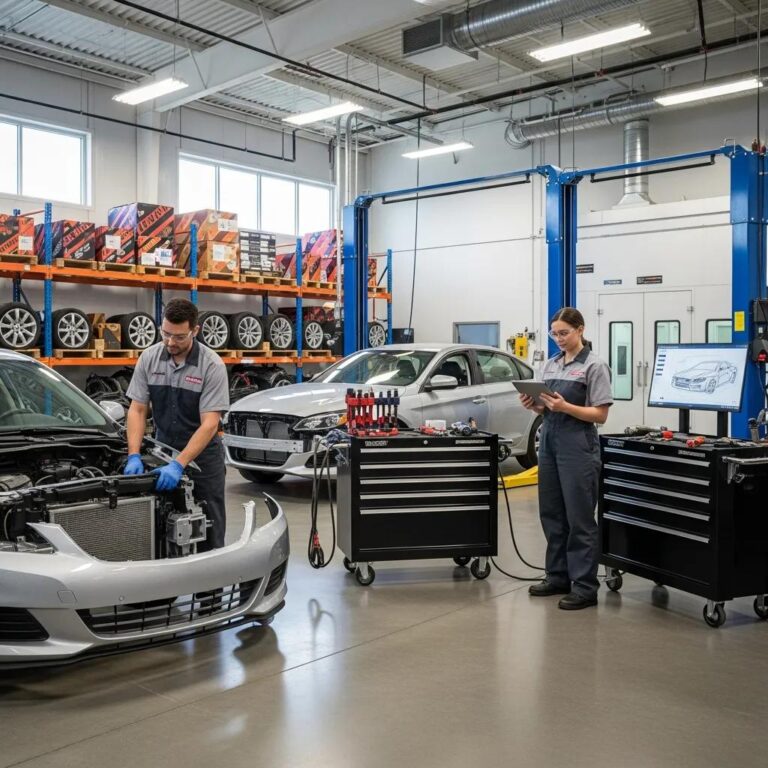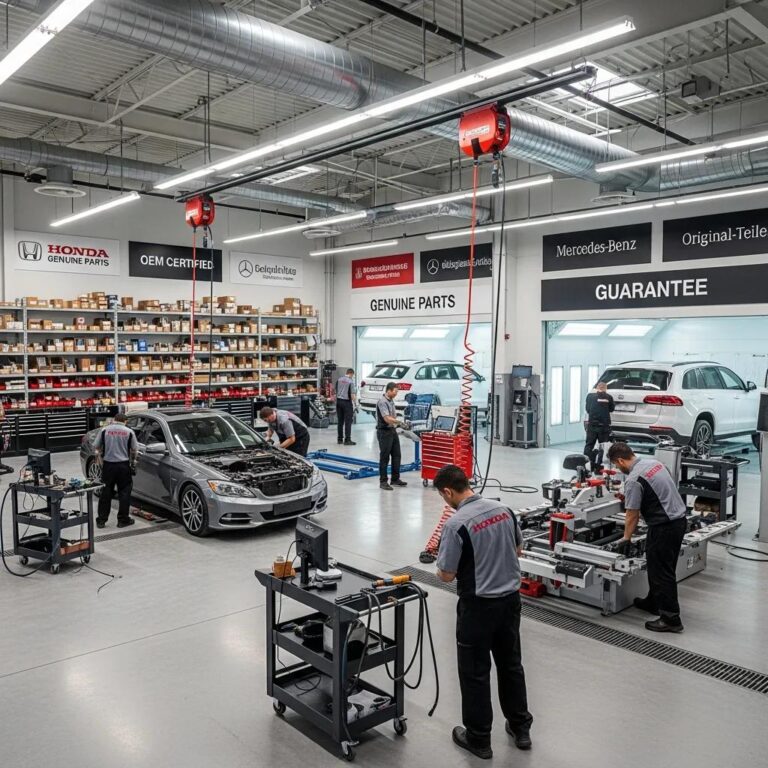

Understanding OEM vs Aftermarket Parts for Auto Repair
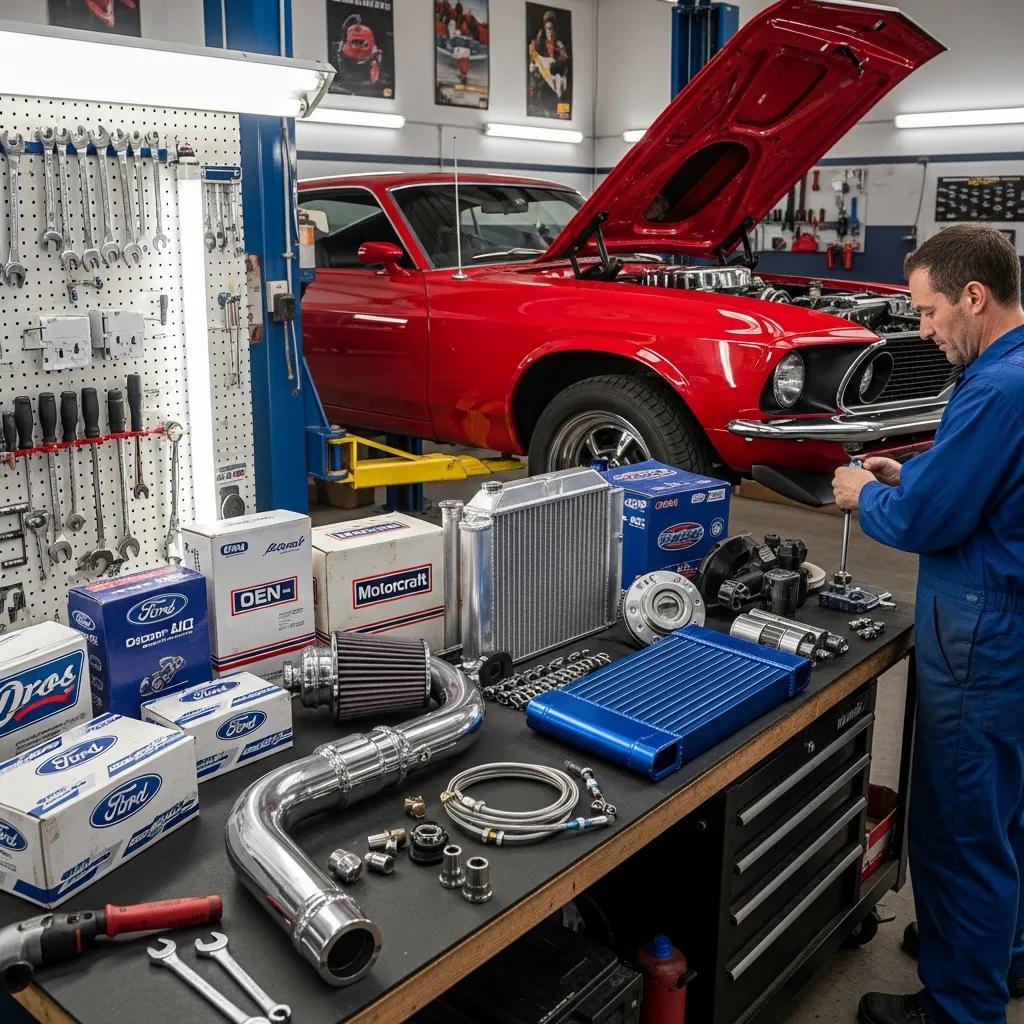
OEM vs Aftermarket Parts: A Clear Guide to Choosing the Right Repair
When your vehicle is repaired after a collision, the choice between OEM (genuine) parts and aftermarket parts affects safety, fit, insurance, and resale value. OEM parts are made to the vehicle maker’s specs to match the original assembly. Aftermarket parts come from third-party suppliers and can vary in design, testing and quality. This page walks through those differences, the pros and cons of each option, and a practical checklist you can use when reviewing repair estimates. You’ll learn how parts impact advanced safety systems, how to spot trustworthy aftermarket options, and when following OEM procedures matters for insurance and resale. Sections below define OEM and aftermarket parts, summarize OEM benefits with a parts-level comparison, outline risks tied to aftermarket pieces, offer a step-by-step decision checklist, explain certified collision repair, and point to reliable sources and verification steps for parts authenticity.
What Are OEM and Aftermarket Auto Parts?
OEM parts are components produced by the vehicle manufacturer or to the same factory specifications. They’re built to fit the vehicle’s systems and mounting points exactly. Aftermarket parts are made by independent suppliers and range from high-quality branded replacements to lower-cost generics — so compatibility and testing can differ. That distinction matters right after a collision because fit, sensor compatibility and structural performance influence how safely and effectively your vehicle is restored. Below are quick, practical differences to watch for when you review an estimate or are asked to approve a parts substitution.
- OEM (Original Equipment Manufacturer): Genuine factory parts made to original part numbers and specifications.
- Aftermarket (Third-Party): Parts made by other manufacturers with varying standards for fit and testing.
- Key practical difference: OEM parts prioritize exact fit and system compatibility; aftermarket parts offer more price and availability variation.
These basics lead into the technical differences that determine how parts perform in real repairs and why some components should stay OEM for safe restoration.
How Do OEM Parts Differ from Aftermarket Alternatives?
OEM and aftermarket parts differ in fit, materials and testing protocols — and those differences show up in repair outcomes that affect safety and long-term reliability. OEM components are engineered to factory tolerances and usually undergo supplier controls and manufacturer validation. That helps ensure airbags, sensors and ADAS components reconnect and recalibrate correctly. Aftermarket parts may match the visible shape but can vary in internal materials, connector geometry or sensor mounting, which can complicate calibration and create subtle misalignments. For safety-critical items — like bumpers that house radar sensors or headlights that need precise optical alignment — OEM parts often perform more predictably. Knowing where those technical gaps appear helps you ask targeted questions during an estimate and request documentation such as part numbers and test certificates.
Common Synonyms and Related Terms for OEM and Aftermarket Parts
Repair estimates and invoices use terms that can hide a part’s origin unless you know what to look for. “Genuine,” “factory” and “OEM replacement” indicate manufacturer-grade parts. Words like “compatible,” “replacement” or “aftermarket branded” usually mean third-party parts that need vetting. “Remanufactured” or “refurbished” mean the part was restored and should prompt questions about the reman process and inspection records. Knowing these synonyms makes it easier to spot when a part is truly manufacturer-grade versus a third-party substitute, and it lets you ask for exact part numbers and supplier documents during the repair.
Benefits of Using OEM Parts in Auto Repair
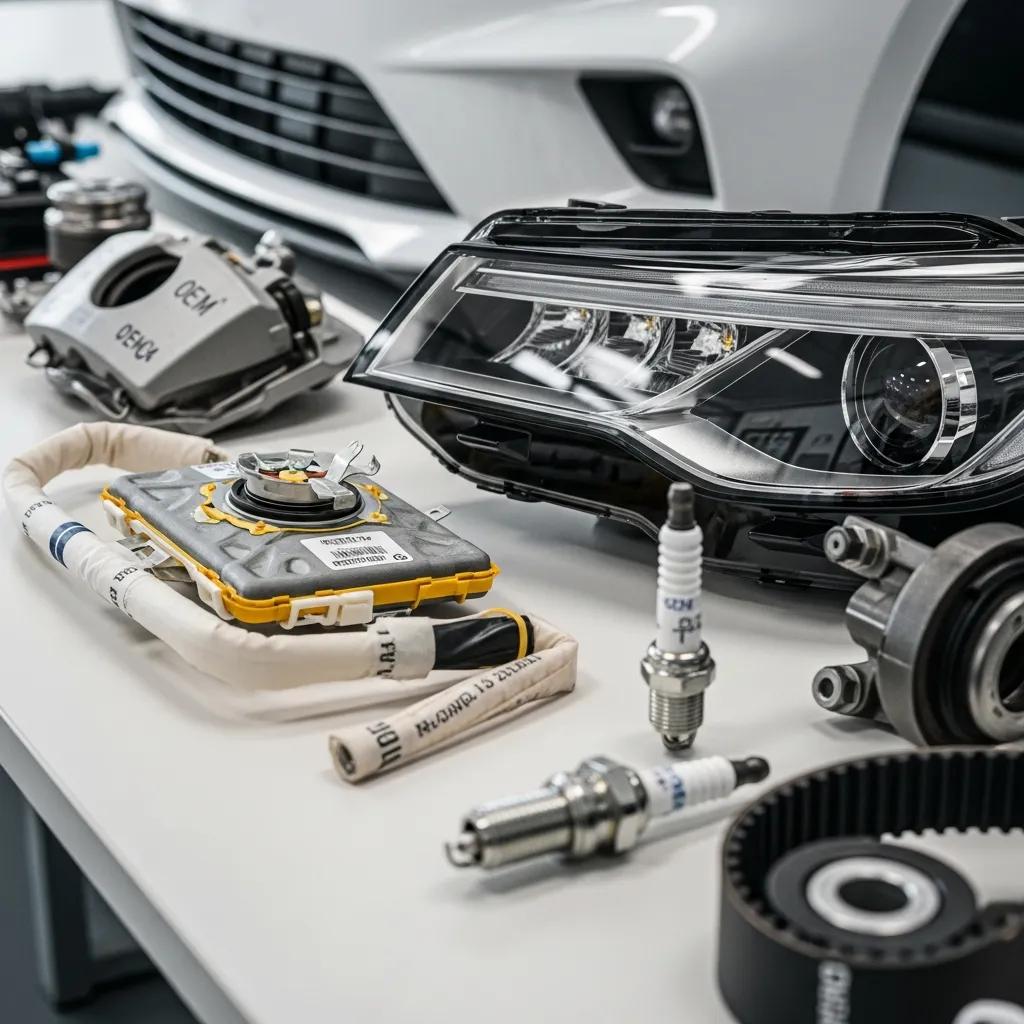
OEM parts deliver consistent fit and verified compatibility with the vehicle’s systems, reducing the chance of calibration issues and repeat visits after a repair. Built to original engineering specifications, OEM components align with sensors, connectors and mounting points — which helps preserve safety system function and ADAS performance. The table below highlights where OEM fit and testing translate into practical benefits for drivers.
| Part Type | Attribute Preserved | Practical Value |
|---|---|---|
| Airbags | Connector and deployment compatibility | Reliable deployment and correct sensor function |
| Headlights | Optical alignment and beam pattern | Safer night visibility and correct aim |
| Bumpers with sensors | Accurate sensor mounting | Maintains ADAS performance and calibration |
| Body panels | Exact fit and finish | Restores structural geometry and appearance |
This table shows that OEM parts preserve system-level performance, not just the visible surface. Below we explain the manufacturing and supplier controls that produce those benefits and how they reduce compatibility risks.
Prime Time Collision follows an OEM-first repair approach focused on returning vehicles to factory standards with documented parts sourcing and fitment practices. When OEM parts are required or recommended, we prioritize manufacturer-aligned procedures and clearly communicate part choices during estimates to support straightforward insurance claims. That local, hands-on approach pairs OEM sourcing with certified repair workflows and functional testing.
How Do OEM Parts Ensure Quality and Compatibility?
OEM parts meet quality and compatibility standards through engineering specs, factory testing and controlled supplier processes that match the vehicle maker’s requirements. These steps include matching part numbers, specified materials and dimensional tolerances validated during production. For ADAS and other sensor-driven systems, OEM components are designed to work with recalibration procedures, so installing the right part lowers the risk of inaccurate readings or misalignment. That means technicians can follow documented repair steps with confidence, and drivers face fewer post-repair issues and have clearer documentation for insurance and resale.
Manufacturers and suppliers also track warranty and quality metrics to reduce defects and costly recalls — a practice that supports consistent part performance.
OEM Quality, Aftermarket Risk & Warranty Management
Manufacturers focus on improving product quality and cutting warranty costs by monitoring claims and addressing defects early. Strong internal controls, careful design, and supplier oversight help reduce failures and ensure replacements perform reliably in real-world use.
Long-Term Advantages of OEM Parts
Over time, OEM parts generally help preserve vehicle performance, lower the chance of repeat repairs, and provide clearer documentation that can protect resale or lease-return value. Because OEM components match original engineering, they tend to last as expected and avoid placing extra stress on surrounding parts. For sellers or lessees, documented OEM repairs give buyers and lessors confidence in the vehicle’s history. These long-term benefits matter most for cars with ADAS features or when resale value is a priority.
Risks Associated with Aftermarket Auto Parts

Aftermarket parts span a wide quality range, introducing variability in fitment, materials and testing — and that variability can create risks for safety, reliability and long-term repair outcomes. Some aftermarket brands offer excellent, well-documented replacements. Others cut corners. Risk is highest for safety-critical components where connector geometry, sensor placement or material composition affect performance. The list below highlights common risk areas and practical checks to use when an estimate suggests aftermarket substitutions.
- Fit and alignment issues: Aftermarket panels may need extra adjustment, which can affect structural alignment.
- Sensor and connector mismatches: Different connector geometry or mounting can change ADAS behavior.
- Variable material quality: Lower-grade materials can wear faster or perform worse in a crash.
Ask for part numbers, supplier names and any test evidence when aftermarket parts are proposed. That documentation helps verify safety and compatibility before you approve a repair.
How Can Aftermarket Parts Affect Vehicle Safety and Reliability?
Subtle mismatches from aftermarket parts can change how safety systems behave in daily use. A headlamp with slightly different optics can alter beam cutoff and increase glare. A bumper cover with incorrect sensor mounting can reduce radar accuracy. A mismatched airbag connector can produce diagnostics or deployment problems. To protect safety and reliability, request supplier certifications, part numbers and test reports for any aftermarket part, and ask the shop to show recalibration and functional test results. Those steps lower the chance an aftermarket substitution will create hidden safety issues.
Research into component reliability highlights how variation in parts can affect safety outcomes and repair costs when standards aren’t consistent.
Component Reliability and Safety Considerations
Component reliability varies widely across part types. Careful analysis and quality controls help reduce financial loss and ensure an acceptable safety level for repaired vehicles.
What Consumers Should Know About Aftermarket Quality Variations
The aftermarket market includes reputable branded replacements with testing and warranties, and low-cost generics that offer limited documentation. When an aftermarket part is proposed, ask for the brand, any certification or test reports, warranty and return policies, and the exact part number so you can cross-check it. Reputable suppliers usually provide limited warranties and clear traceability; unclear return policies are a red flag. This helps you accept aftermarket parts for low-risk, cosmetic items while insisting on OEM for safety-critical components.
How to Compare Auto Repair Parts: OEM vs Aftermarket
A structured comparison helps you evaluate parts proposals by focusing on fitment, safety impact, warranty, insurance acceptance and resale implications — not just upfront cost. Use the checklist below during estimates to ensure each point is addressed and documented. After the checklist is a quick comparison table that summarizes typical differences between OEM and aftermarket options to guide your decision.
When evaluating parts proposals, consider the following decision checklist:
- Fitment: Confirm exact part numbers and ask for test-fit evidence to ensure correct alignment and sensor connections.
- Safety impact: Determine whether the part affects airbags, ADAS or structural crash paths — favor OEM for critical systems.
- Documentation: Request supplier invoices, certification labels and recalibration reports as proof of conformity.
- Warranty and returns: Verify the supplier’s and shop’s guarantee and the process for defective parts.
- Insurance and resale: Ask how the choice will appear in claims and whether it affects future resale transparency.
Use the table below as a quick reference during estimate review.
| Attribute | OEM Parts | Aftermarket Parts |
|---|---|---|
| Fitment Accuracy | Built to factory specifications | Varies; may need adjustments |
| Safety Compatibility | Designed to work with integrated systems | Depends on supplier testing |
| Documentation | Manufacturer part number and traceability | Varies; sometimes limited |
| Insurance Acceptance | Often supported in OEM repair programs | May require extra justification |
| Resale Impact | Clear factory-aligned service history | May need disclosure to buyers |
This comparison helps you prioritize OEM parts for safety-critical attributes. If you want a hands-on review or help interpreting an insurance estimate, contact a certified collision center for an in-person parts inspection — a qualified shop can identify part numbers, show physical differences and document findings for your insurer.
What Criteria Should Be Used to Evaluate Auto Parts?
Judge parts by fitment, safety impact, certification/documentation, brand reputation and post-installation guarantees. Fitment checks include matching part numbers and inspecting mounting points. Safety impact looks at whether the part affects airbags, sensors or structural crash paths. Documentation covers supplier certificates and invoices. Brand reputation means checking manufacturer history and reviews. Guarantees determine who covers defects and under what terms. During an estimate, ask for a written list of part numbers, supplier names and any recalibration or testing steps the shop will perform. These criteria reduce uncertainty and keep the repair process transparent.
When Is It Appropriate to Choose Aftermarket Parts Over OEM?
Aftermarket parts can be a reasonable choice when the component is cosmetic and not safety-critical, when a reputable aftermarket brand provides clear certification and fitment guarantees, or for older vehicles where OEM parts are scarce or cost more than the vehicle is worth. Practical rules:
- Use aftermarket only for non-safety items unless you have strong documentation.
- Require supplier documentation and a warranty for any aftermarket part.
- Ensure the installer performs fitment checks and recalibration when needed.
- For borderline parts that interact with sensors or structure, escalate to a certified collision center or request OEM-equivalent validation.
This cautious approach protects safety while allowing reasonable cost choices when risk is low.
What Is Certified Collision Repair and Why It Matters
Certified collision repair that follows OEM standards means the facility uses manufacturer-recommended procedures, approved tools and trained technicians, and documents parts and processes so the vehicle is restored to designed safety and performance levels. Certification programs usually require staff training, calibrated measurement systems, documented workflows and adherence to factory repair procedures, including correct part selection and ADAS recalibration. These steps reduce the chance of improper repairs and give insurers and buyers clearer proof the vehicle was restored to factory intent. The practical result is better safety restoration and stronger documentation for claims and resale.
| Certification Element | What It Guarantees | Why It Matters |
|---|---|---|
| Technician training | Proper procedures and repair methods | Consistent, safe repairs and fewer mistakes |
| Factory procedures | Use of OEM specs and instructions | Preserves structural and systems integrity |
| Calibrated tooling | Accurate measurements and alignment | Correct ADAS recalibration and fitment |
| Documented processes | Traceable repair records and part receipts | Transparency for insurance and resale |
This mapping shows how certification elements produce the outcomes that matter after a collision — verified recalibration, traceable parts and clearer claims records.
Prime Time Collision focuses on OEM-quality repairs and follows manufacturer procedures and documentation practices when OEM parts are required. As a local collision repair provider, we help drivers with claims and provide clear records of parts used and procedures performed so insurers and future buyers can evaluate the repair history. If you want an OEM-aligned estimate or claims help, request an inspection and ask the repairer to document parts and recalibration steps.
How Does Certified Collision Repair Ensure OEM Standards?
Certified repair shops meet OEM standards through mandated training, calibrated measurement tools, factory-approved procedures and documentation that tracks parts and repair steps. Training keeps technicians current with vehicle designs and repair sequences. Calibrated tools restore geometry to factory tolerances. Factory procedures guide disassembly, replacement and ADAS recalibration. Documentation ties parts and work to the vehicle record. Together, these practices reduce variability and help restore systems to intended performance levels, making certified repairs more defensible for safety and claims.
What Are the Implications for Insurance and Vehicle Resale?
Repairs done to OEM standards give insurers more confidence in estimates that include OEM parts and documented processes, and they give buyers clearer proof of quality work in the vehicle history. Certified repairs usually produce repair orders listing part numbers, supplier invoices and recalibration records that insurers can use to validate claims. For resale, documented OEM-style repairs reduce ambiguity for buyers assessing condition. Keep copies of repair documentation and part receipts to maintain a clear record for insurance and future transactions.
Where to Find Reliable Information and Buy Auto Repair Parts
Trusted sources include dealer parts departments, OEM-authorized suppliers, reputable aftermarket brands and certified collision centers that document sourcing and testing. Each source has verification methods: dealer parts departments give direct manufacturer part numbers and packaging; OEM-authorized suppliers include supplier codes or certification; reputable aftermarket brands provide test reports and warranties; and certified repair centers supply repair orders and recalibration records. The short list below ranks common procurement channels and gives verification tips to help you confirm parts before or during a repair estimate.
- Dealer / OEM parts department: Ask for part numbers and OEM packaging to verify authenticity.
- Certified collision center procurement: Request supplier invoices and documented repair procedures.
- Reputable aftermarket brands: Look for test reports, clear warranties and straightforward return policies.
These tips make it practical to check where parts come from and how to confirm authenticity during the repair process.
Trusted Sources for OEM and Aftermarket Parts
Dealer parts departments and OEM-authorized suppliers are the most reliable sources for genuine parts because they provide factory part numbers and traceability to the manufacturer. Certified collision centers that order through dealer channels or approved suppliers add assurance by pairing sourcing with documented repair and recalibration services. Reputable aftermarket brands can be acceptable if they provide testing data, clear part numbers and reliable return policies — always cross-reference part numbers and request supplier documentation. Evaluating sources by traceability and documentation helps ensure parts used in repairs meet expected standards.
How to Verify Part Authenticity and Certification
Verify part authenticity with a simple process: check the part number against OEM catalogs, compare packaging and labels to manufacturer images, request supplier invoices and any certification labels, and confirm recalibration or functional testing when relevant. If doubts remain, escalate verification to the vehicle manufacturer or a certified collision center that can cross-reference serial numbers and confirm compliance. These steps create a defensible record for insurance claims and help prevent substitutions that compromise safety or resale value.
For hands-on verification and an in-person parts comparison during an estimate, consider contacting Prime Time Collision to schedule an inspection and get help documenting part choices and claims. Our OEM-first approach helps drivers confirm part origin and required procedures while preparing clear paperwork for insurers.
Prime Time Collision can inspect repair estimates, verify part numbers and assist with insurance documentation to support OEM-quality results and transparent claims handling. Our local team focuses on restoring vehicles to factory-aligned standards and provides detailed repair orders and parts receipts that insurers and future buyers recognize. If you want an in-person assessment for parts selection or a documented OEM-style estimate, request an inspection and ask us to include part-level details and recalibration steps in the written estimate.
Documenting parts and procedures preserves safety, insurance clarity and resale transparency after a collision. Prime Time Collision is available to help drivers who prioritize OEM-quality repairs and complete claims records.
Frequently Asked Questions
1. What are the key differences in warranty coverage between OEM and aftermarket parts?
OEM part warranties are typically broader and backed by the manufacturer, often covering defects for a longer period. Aftermarket warranties vary widely by brand and supplier — some are solid, others are limited. Always read the warranty terms so you understand coverage for defects, labor and return procedures.
2. How can I determine if an aftermarket part is of good quality?
Research the aftermarket brand and ask for documentation: test reports, certifications and warranty details. Check reviews and supplier reputation. A clear return policy and a warranty are good signs. Confirm the exact part number and compare it to OEM specifications before approving the install.
3. Are there specific types of parts where OEM is always recommended?
Yes. Safety-critical components — like airbags, brake parts and ADAS sensors — should be OEM whenever possible. These parts are tied directly to safety systems and vehicle performance, so using OEM parts reduces risk and simplifies recalibration and diagnostics.
4. What should I do if my insurance company prefers aftermarket parts?
If your insurer leans toward aftermarket parts, you can request OEM for safety-critical items or when you prefer factory fit and function. Talk to your adjuster, share documentation or a shop opinion that supports OEM use, and if needed, get a second estimate from a certified collision center to back your request.
5. How do I know if a repair shop is certified for OEM repairs?
Ask the shop for manufacturer or industry certifications, proof of technician training and examples of their documented repair procedures. Certified shops are open about qualifications and should provide documentation on request.
6. Can using aftermarket parts affect my vehicle‘s resale value?
Yes. Buyers often favor vehicles with documented OEM repairs. If aftermarket parts were used, keep detailed records — brand, part numbers, warranties and any test documentation — to address buyer concerns and reduce potential impact on resale value.
7. What steps can I take to ensure a smooth repair process when using OEM parts?
Choose a certified collision repair center that prioritizes OEM sourcing, clearly state your preference for OEM parts, and ask for documentation for all parts used. During estimate review, confirm part origins and required recalibration steps, and keep open communication with your insurer to avoid delays.
Conclusion
Choosing between OEM and aftermarket parts matters for safety, reliability and long-term value. OEM parts give predictable fit and system compatibility that reduce the risk of repeat repairs and help protect resale value. Aftermarket options can be appropriate in low-risk situations but require careful verification. Understanding these differences helps you make informed choices during repairs. For personalized help and OEM-quality repair options, contact a certified collision center today.