

When to Call the Police After a Car Accident: Clear, Practical Guidance for Drivers
A crash can leave you shaken and unsure what to do next. Knowing when to call the police protects your safety, preserves evidence, and supports any insurance or legal steps that follow. This guide walks through when police involvement is required, why getting a police report—even for a minor collision—can help, what to do if officers arrive or don’t, how a report helps with collision repairs and insurance, the risks of not reporting, and typical timelines for filing. You’ll find straightforward checklists, quick comparisons of common reporting triggers and deadlines, and practical tips to preserve evidence and speed claim resolution.
When Is Calling the Police Mandatory After a Car Accident?
Most states require police notification for crashes that involve injury, serious property damage, or criminal behavior. Calling 911 when these situations occur gets medical help on scene, lets officers document the facts, and helps preserve evidence for insurance or legal use. A police response creates an official, time-stamped record—usually with an officer’s narrative, involved-party information, and a report number—that insurers and courts rely on when assigning fault and handling claims. Below are common triggers that typically make reporting mandatory, plus quick next steps if one applies to your crash.
The short list below covers the most common situations that usually require a police report and works well for quick reference or featured-snippet answers.
- Someone is injured or killed and emergency medical help is needed.
- A hit-and-run where a driver leaves the scene or can’t be identified.
- Suspected impairment (DUI/DWI) or other criminal behavior related to the crash.
- Significant property damage that meets state-specific dollar thresholds.
These are general patterns across jurisdictions. If you’re unsure whether your crash meets a legal reporting threshold, call law enforcement—better to document the incident and get any needed care right away.
Before the table below: this short note explains the comparison’s purpose. The table summarizes common mandatory-report triggers, typical property-damage examples that often require reporting, and usual timelines so you can compare your situation to likely state expectations.
| Trigger | Typical Threshold / Example | Typical State Reporting Expectation |
|---|---|---|
| Bodily injury or death | Any injury needing medical attention or a fatality | Call 911 immediately; police report at the scene |
| Hit-and-run | Damage to another vehicle or property plus driver leaves | Immediate report; police investigate |
| Suspected DUI/DWI | Visible signs of impairment or an arrest | Immediate police response; possible detention |
| Significant property damage | Often $500 to over $1,000, depending on state | Many states require reporting within 24–72 hours or immediate on-scene reporting |
While exact rules differ by state, injury, hit-and-run, suspected impairment, and substantial property damage are reliable triggers for police involvement and timely reporting.
What Are the Legal Requirements for Reporting Injuries or Deaths?
When a crash causes injury or death, reporting is typically required right away because public safety and possible criminal charges are involved. Calling 911 brings medical care and law enforcement to the scene; officers document injuries, collect witness statements, and write a formal report that records occupants’ conditions and any statements about how the crash happened. That officer narrative, together with medical records, often forms the basis for criminal inquiries, traffic citations, and insurance decisions. If you’re unsure how serious an injury is, call for help—delaying medical attention or documentation can hurt recovery and later claims.
Police documentation of injuries also supports compensation and insurance benefits; the officer’s observations help build a timeline and establish causation, which matter in both criminal and civil proceedings.
How Do Property Damage Thresholds Affect Police Reporting?
Property-damage thresholds vary by state and determine whether you must report a crash to law enforcement or a motor vehicle agency. These thresholds usually refer to a dollar amount or whether the vehicle is drivable. What looks like a small dent at the scene can hide structural or mechanical damage discovered later, so underestimating damage is risky. If you can’t judge the extent of damage, call the police or file a delayed report to preserve your right to document the incident and support any future insurance claim. When in doubt, take photos and contact the non-emergency police line to confirm reporting requirements.
Knowing these thresholds ahead of time helps avoid unexpected legal obligations and ensures you can provide an official report if later repairs or OEM-certified work are needed.
Why Should You Consider Calling the Police Even for Minor Accidents?
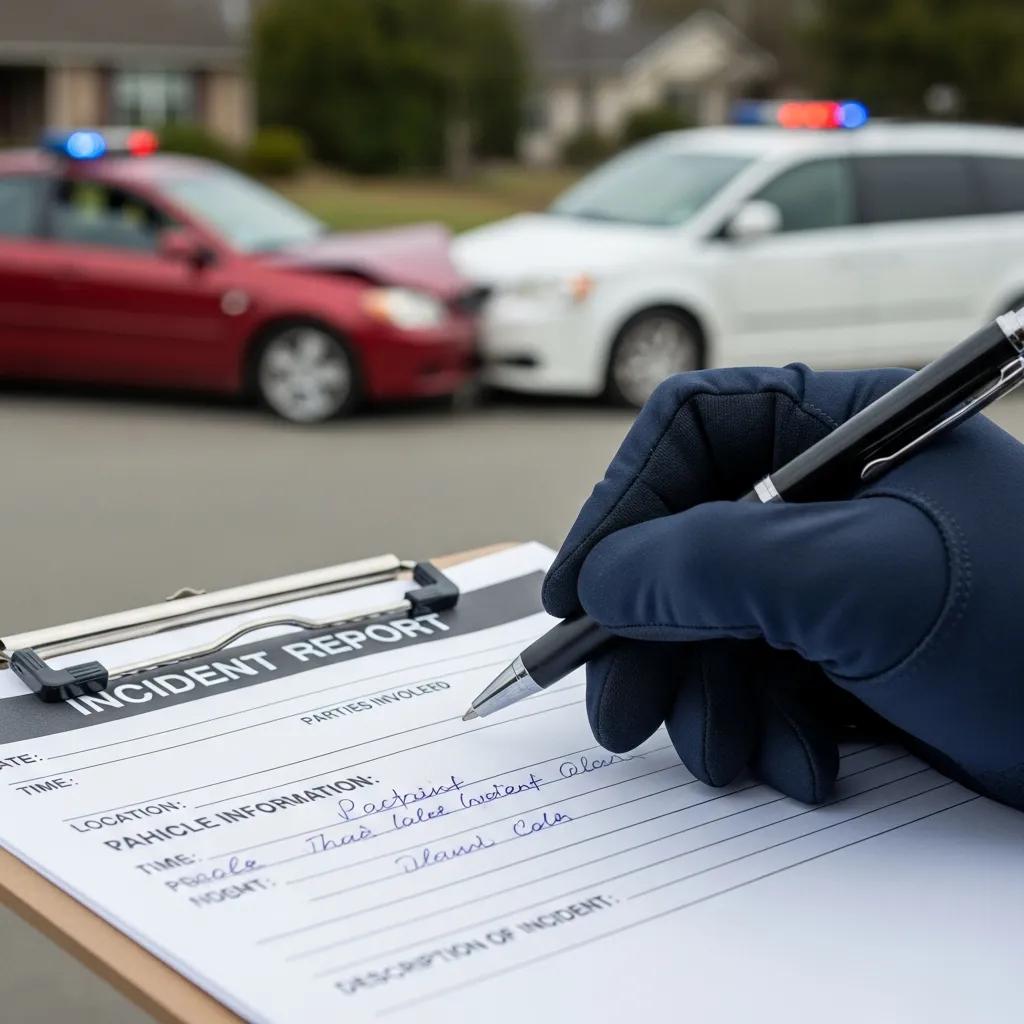
A police report does more than satisfy legal rules—it creates an independent, timestamped record that supports insurance claims, notes visible and hidden damage, and protects you from false or conflicting accounts. Reports usually include an officer’s narrative, contact details for involved parties, witness statements, and diagrams or photos. Even when damage or injuries seem minor, symptoms and latent structural issues can appear later; a contemporaneous report reduces friction during claim adjustment and strengthens requests for OEM-authorized repairs or parts. Below are the key benefits and a short example of why a police report is a smart safeguard.
This brief list highlights the main reasons to get a police report after a collision.
- Insurance documentation: An official report gives adjusters objective facts that speed claim opening and fault determination.
- Protection for delayed injuries: Time-stamped records support medical claims that appear after the crash.
- Liability defense: Reports deter false claims and clarify the sequence of events.
Next, we explain how insurers use police reports when processing claims and approving repairs.
How Does a Police Report Support Your Insurance Claim?
Insurers use police reports to verify statements, establish proximate cause, and cut down on disputes about fault or timing. An officer’s narrative, witness contacts, and evidence notes shorten investigation time and help adjusters make informed decisions. When reports include witness names and photographs, carriers can independently confirm facts instead of relying only on the drivers’ accounts, which helps speed settlements and repair approvals. In hit-and-run or suspected impairment cases, the police report is critical for subrogation and criminal work—so cooperating with law enforcement helps protect your recovery. Understanding how a report enters the insurer’s file shows why it can be decisive if repair scope or causation is later contested.
Overall, police reports make claims cleaner and can reduce delays around OEM parts authorization and certified repair procedures.
What Are the Risks of Not Reporting Minor Vehicle Damage or Injuries?
Skipping a police report can create several problems: insurers may question when or how damage occurred, delayed injuries become harder to prove, and conflicting accounts from others can complicate liability. Without an officer’s contemporaneous record, your version of events may carry less weight with adjusters or in court, possibly leading to claim denials or reduced payouts. Lack of formal documentation can also make it harder to get approval for OEM-certified repairs if a carrier disputes that the damage resulted from the incident, which can affect vehicle safety and resale value. To protect yourself, file a police report when practical and document the scene thoroughly even if officers don’t respond right away.
If you can’t report at the scene, the next section explains how to secure evidence and the steps to take when police do—or don’t—respond.
What Steps Should You Take When Police Arrive or Decline to Respond?
On scene, put safety and medical needs first, then preserve evidence and follow standard information-exchange steps that help later reporting and claims. Move vehicles only if it’s safe, call 911 for injuries or hazards, and photograph vehicle positions, damage, skid marks, and the surroundings. Exchange names, insurance information, license plates, and vehicle details with the other driver, and collect witness contacts. If officers arrive, get the responding officer’s name and the report number. If they decline because the crash seems minor, document everything carefully and find out how to file a delayed report through a non-emergency line or online system so you still have a formal record for insurers.
Here’s a simple, actionable checklist to follow after a crash to protect safety and preserve evidence.
- Ensure safety: Move to a safe spot if vehicles are drivable and check for injuries that need immediate care.
- Call 911 for injuries or hazards: Report injuries, fire, or dangerous hazards so responders and police can prioritize the scene.
- Exchange information: Collect names, phone numbers, insurance companies and policy numbers, license plates, and vehicle descriptions.
- Document the scene: Photograph every vehicle angle, interior damage, license plates, road conditions, and any visible injuries.
- Collect witness details: Ask witnesses for names and the best way to reach them and note what they observed.
Each step helps preserve facts that insurers and courts rely on—so follow the checklist before filing a report or claim.
If police don’t come to the scene, immediate self-documentation and timely filing with local law enforcement or the DMV are essential; the next subsection explains delayed reporting and what to include.
How to Secure the Scene and Exchange Information Safely
Securing the scene starts with spotting hazards and moving people out of traffic while trying to preserve evidence. Keep injured people stable and wait for EMS when needed; if you must move vehicles for safety, photograph their original positions first. When exchanging information, stay calm and share only essential details (name, vehicle registration, insurance)—don’t admit fault. With permission, photograph driver licenses and insurance cards, take both wide and close-up shots of damage, and ask witnesses to write or record what they saw so you have their account for your claim.
Good documentation protects your safety and creates a reliable record to support a police or insurance investigation, which leads into the filing steps if officers don’t respond at the scene.
What to Do If Police Do Not Come to the Accident Scene
If officers decline to respond because the crash looks minor, file a report promptly via the local non-emergency line, an online reporting portal, or at the police station so you have an official record for insurance and legal purposes. Put together a packet with the photos you took, witness statements, a written incident summary, and any medical notes, and submit those with your delayed report while details are fresh. Tell your insurer right away and give them the documentation and a copy of the police report once it’s available—timely notice is often critical to preserving coverage. If the other party disputes details or injuries appear later, use your report and documentation to support your claim; if needed, seek legal advice to protect your rights.
Filing a delayed report and notifying your insurer preserves options and prepares you for repair authorization and liability follow-up—see the next section for how police reports feed into collision repair workflows.
How Does a Police Report Facilitate the Collision Repair and Insurance Process?
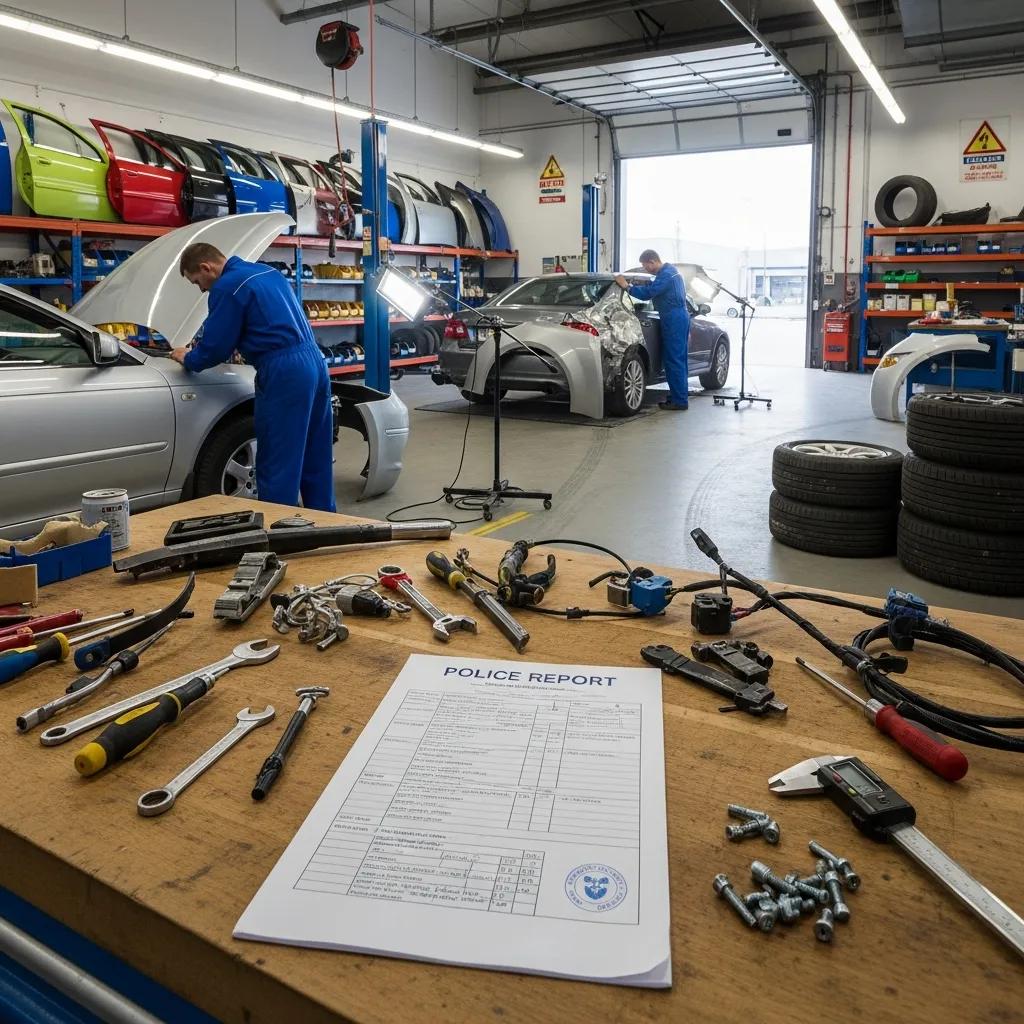
A police report links the incident to the repair process by giving insurers objective evidence that supports liability decisions and repair scope. Insurers use report elements—like the report number, officer narrative, diagram, and witness contacts—to open a claim, assign an adjuster, and authorize estimates. Clear causation in the report reduces back-and-forth and speeds approval of OEM parts and certified procedures. If you want OEM-certified repairs, an unambiguous police record helps justify factory parts and factory-method repairs by showing the damage came from the documented crash and indicating fault or contributing factors. The table below maps common police-report elements to the practical benefits they provide during claims and repair authorizations.
This table connects specific police-report pieces to the advantages they deliver in the insurance and repair process, so you can see how each item helps.
| Report Element | Attribute | Benefit |
|---|---|---|
| Report number | Unique incident identifier | Makes it faster for insurers to look up and cross-reference the claim |
| Officer narrative | Observed damage and circumstances | Helps establish causation and liability quickly |
| Witness statements | Third-party accounts | Corroborates events and reduces disputes |
| Photographic attachments | Scene and vehicle images | Supports accurate damage appraisal and OEM part needs |
This mapping shows how structured police-report elements cut uncertainty for adjusters and repair shops, enabling faster claims handling and clearer authorization for OEM parts and certified repairs.
Why Is an Official Police Report Important for OEM Certified Repairs?
OEM-certified repairs often require proof that damage came from a specific incident and that repairs follow manufacturer methods. A police report provides the neutral documentation insurers and OEM-authorized shops use to verify that requirement. Reports that note impact points, vehicle positions, and officer observations reduce disputes over whether safety-related parts were affected, which helps secure approval for factory-spec parts and procedures that protect safety and resale value. When insurers see a clear, contemporaneous police record, they’re more likely to accept estimates calling for OEM parts and certified techniques instead of aftermarket substitutions—so repairs happen faster and restore the vehicle to factory standards where it matters most.
A clear police report thus lowers the chance of insurer pushback and smooths the path to OEM-authorized repairs—helping ensure your vehicle is restored safely.
How Can Prime Time Collision Center Assist with Insurance Claims and Repairs?
Prime Time Collision Center helps you translate a police report into a claim-ready packet, coordinates paperwork with adjusters, and guides repairs toward OEM-certified outcomes performed by certified technicians. As a local repair facility focused on factory-quality work, we work with all major insurers to speed approvals and offer practical services—like free 24/7 towing and free estimates—to remove logistical barriers after a crash. Our I-CAR Platinum Certified Technicians and commitment to OEM repair methods protect vehicle safety and resale value, and our lifetime warranty gives owners added confidence in the work. If you have a police report, bringing it to a shop like Prime Time Collision Center helps turn documented facts into accurate repair scopes and clearer insurer communication.
By coordinating with your insurer and using police documentation, we act as a practical partner to move your claim from report to completed OEM-grade repair with fewer administrative delays and stronger technical justification.
What Are the Consequences of Not Reporting a Car Accident to Police?
Not reporting a crash can make insurance claims harder, raise your liability exposure, and in some places lead to fines if reporting duties are ignored. Without a police report, proving when and how damage or injuries occurred depends on private records that can be disputed, which may slow claims or lead to denials if an insurer can’t verify causation. Legally, failing to report when required—especially in injury, death, or hit-and-run cases—can result in penalties under state law. The list below summarizes the main insurance and legal consequences so you can weigh the risks of not filing.
- Claim challenges: Insurers may dispute cause or timing, complicating settlements.
- Liability exposure: Without authoritative documentation, defending against third-party claims is harder.
- Legal penalties: Serious incidents that should be reported can carry fines or citations if ignored.
The next subsection explains how insurers typically respond and what to do if you didn’t file a report right away.
How Can Failure to Report Affect Your Insurance and Legal Liability?
Insurers usually expect timely notice and documentation to evaluate claims; delaying or skipping a report can give them reason to question causation, potentially resulting in partial or full denials and greater difficulty getting reimbursed for repairs or medical bills. Without an officer’s contemporaneous observations, proving the timing and extent of injuries or structural damage relies on medical records and private photos, which can be less persuasive. Some policies also include cooperation clauses that require policyholders to assist investigations, and failing to report might be treated as non-cooperation in disputed cases. Notifying your insurer promptly and providing any self-generated documentation and witness information reduces these risks, though a police report remains the strongest neutral evidence in many situations.
Quick reporting and full cooperation with law enforcement and your insurer lower the chance of disputes and protect you legally and financially after a crash.
What Are Potential Penalties Under State Law for Not Reporting?
Penalties for failing to report vary by state and depend on how serious the crash was. Consequences can range from administrative fines to more severe penalties if the omission involves hit-and-run, injury, or death. Because state vehicle codes and reporting thresholds differ, check local DMV or law enforcement guidance to understand the rules where you live or where the crash happened. If you realize a report should have been filed, submitting a delayed police report and notifying your insurer promptly can reduce legal exposure and show good-faith compliance. When unsure about penalties or whether to get legal advice, contact local authorities or an attorney to make sure you meet your duties and protect your rights.
Filing a delayed report and documenting the steps you took provides evidence of reasonable action, which can matter if enforcement questions arise later.
How Long Do You Have to Report a Car Accident to Police?
Deadlines for reporting vary by state and by the type of incident. Many jurisdictions require immediate on-scene reporting for injury or fatal crashes, while property-damage-only incidents often allow a 24–72 hour window or have separate DMV filing rules. The practical rule: report as soon as reasonably possible—ideally within 24 hours—so evidence stays fresh and insurers get timely notice. If you miss an initial response, many departments let you file online or in person later, and DMV sites usually list statutory deadlines and procedures. Always notify your insurer promptly, since many policies condition benefits on timely notice and cooperation.
The next subsection gives examples of typical deadline ranges and tips for filing late reports to protect claims and comply with local rules.
What Are Typical State Law Deadlines for Accident Reporting?
Exact deadlines differ, but most states expect immediate reporting for injury or fatal crashes (call 911 or local police at the scene). Property-damage-only incidents commonly have a 24–72 hour window or require filing with the DMV within a set number of days. Filing within 24 hours when possible avoids confusion and strengthens your position with insurers and investigators. Always check local law enforcement or DMV resources for the exact deadlines that apply where the crash occurred; using official portals reduces mistakes and ensures your report is on record. If you can’t file right away, note the reason for the delay and keep your insurer informed to preserve your claim rights.
Saving copies of submission confirmations and filing promptly lowers dispute risk and speeds claim processing and repair approvals.
How to File a Police Report If You Miss the Initial Response
If officers didn’t respond to the scene, you can usually file a delayed report by calling the local non-emergency number, using an online reporting portal if available, or going to the station to submit a written statement and evidence packet. Gather photographs, witness contacts, a written incident summary, and any medical records before filing to give police a full account. After you file, request a copy or report number to share with your insurer and the repair shop handling your vehicle—this helps adjusters and technicians align the incident with estimates and repair scope. Keep a paper or digital folder of all filings, insurer communications, and repair estimates to protect your rights and simplify follow-up.
If you’d like help turning a police report into an insurer-ready claim packet or coordinating towing and estimates, consider contacting a reputable OEM-focused collision repair center that works with insurers to speed approvals and repairs.
Frequently Asked Questions
What should I do immediately after a car accident?
Right after a crash, make sure everyone is safe and move to a secure location if possible. Check for injuries and call 911 for medical help or hazards. Exchange information with the other driver—names, insurance, and vehicle details—and photograph vehicle damage, positions, and any visible injuries. Collect witness names and contact info. These steps protect safety and preserve evidence for insurance claims.
How can I file a police report if the police did not respond to the scene?
If police didn’t respond, you can file a delayed report by calling the local non-emergency number, using an online reporting system, or visiting the station. Prepare photos, witness statements, and a written incident summary before submitting. Filing promptly creates an official record that helps with insurance and protects your rights in case of later disputes.
What information is typically included in a police report?
A police report usually lists the date, time, and location of the crash; involved parties’ names and contact info; vehicle details; and insurance information. It also contains the officer’s narrative, witness statements, diagrams, and any attached photos. This documentation provides an objective account that’s important for determining liability and handling claims.
Can I still file a police report after a long delay?
Yes—many jurisdictions allow delayed reporting, though it’s best to file as soon as you can. Contact your local police department to learn their process for late reports and gather any available evidence to support your account. The sooner you file, the better your chances of preserving details that help insurance or legal matters.
What are the potential legal consequences of not reporting an accident?
Failing to report when required can lead to fines or penalties, especially if the crash involved injuries or deaths. Not having a police report can also complicate insurance claims because carriers may question your account. Check local reporting rules to avoid legal trouble and protect your claim rights.
How does a police report affect my insurance claim?
A police report gives insurers an objective, official record of the crash. Carriers use it to verify facts, determine fault, and speed the claims process. Officer narratives and witness statements reduce disputes and support your case for compensation and timely repair approvals—especially when OEM parts or certified methods are needed.
What should I do if I suspect the other driver is lying about the accident?
If you think the other driver is lying, stay calm and avoid confrontation. Gather as much evidence as possible—photos of the scene and damage, road conditions, and witness statements. File a police report and give the evidence to your insurer so they can investigate. If the dispute escalates, consider legal advice to protect your interests.
Conclusion
Knowing when to call the police after a car accident protects your safety, legal rights, and insurance options. A police report is a neutral, time-stamped record that helps resolve disputes and supports proper repairs. Follow the steps here to preserve evidence and file the right reports, and consider reaching out to a local collision repair center—like Prime Time Collision Center—if you need help navigating claims or getting OEM-quality repairs.