
How to Re-register Your Vehicle in California After a Crash
Dealing with a collision is stressful enough—getting your vehicle legally back on the road doesn’t have to add to it. In California, the path from reporting a crash to repairing and re-registering a vehicle follows a clear set of reports, inspections, and forms. This guide walks you through the essentials: filing the SR-1 accident report, handling salvage or rebuilt title rules, completing any required smog checks after repairs, knowing which registration fees or penalties might apply, and transferring title when insurance or liens are involved. You’ll learn what the DMV and the Bureau of Automotive Repair expect, which vehicle conditions trigger extra checks, and practical steps to speed the process so you’re back behind the wheel sooner. Throughout, we give straightforward checklists, helpful comparisons, and action-focused tips to reduce fees, avoid common mistakes, and align repair documentation with DMV and BAR expectations.
How do I report a car accident to the California DMV with the SR-1 form?
The SR-1 is the form California uses to create an official accident record when a crash meets certain thresholds. Filing it puts the DMV on notice for incidents involving injury, death, or property damage above the state’s reporting limit—and it helps keep insurance and title actions moving smoothly. Below are the immediate steps to get your SR-1 ready and what to expect when you file, plus how the SR-1 fits into your insurance claim and repair timeline.
When and why must I file the SR-1 accident report?
File an SR-1 any time a collision causes injury, death, or property damage that reaches the DMV’s reporting threshold. California requires the SR-1 within 10 days of the crash when those conditions apply. Missing the deadline can complicate records and slow title or registration actions later. Typical situations needing an SR-1 include crashes with visible injuries, multi-vehicle collisions, or damage that clearly exceeds the dollar threshold. The form records drivers, vehicles, insurance, and details of the incident—so it’s usually completed by the driver involved. Filling it out accurately helps prevent delays if the car later needs salvage or rebuilt-title processing after repairs.
What information do I need to complete the SR-1 form?
The SR-1 asks for basic incident and party details plus vehicle and insurance information. You’ll need names and addresses for drivers and owners, the vehicle’s year/make/model and VIN, insurance companies and policy numbers, a clear description of where and how the crash happened, and an estimate of injuries and property damage. Common errors—like incomplete VINs, wrong policy numbers, or vague descriptions—slow down insurers and the DMV. Having photos, repair estimates, and a police report handy when you file links the SR-1 to later title or registration work.
Key SR-1 items to gather before you file:
- Full names and addresses for drivers and vehicle owners.
- Vehicle details including year, make, model, VIN, and plate.
- Insurance carriers and policy numbers for everyone involved.
- A clear account of injuries, damage, location, and date/time.
Putting these details together before you submit reduces DMV or insurer follow-ups and keeps your file clear for inspections or title actions.
Many owners find it helpful to get assistance collecting paperwork and coordinating with insurers. Prime Time Collision Center can help gather repair orders, photos, and insurer communications so your SR-1 record matches repair and registration timelines.
What are the steps to register a vehicle with a salvage or rebuilt title in California?

When a vehicle has a salvage certificate or rebuilt title, registration requires a documented chain of evidence: obtain the salvage paperwork, complete the necessary repairs, pass required inspections (VIN verification and BAR checks), and submit a rebuilt title application before the DMV will issue a normal registration. The rebuilt process focuses on safety and accurate VIN and repair records so DMV staff can confirm the car is roadworthy and properly identified. Below is a concise checklist, followed by a table that shows who provides each document to make preparing your packet easier.
- Make and document repairs to return the vehicle to safe, roadworthy condition.
- Obtain the signed salvage certificate (REG 488C) or salvage documentation from the insurer.
- Schedule VIN verification and any required mechanical inspections with an authorized station.
- Collect repair invoices, parts receipts, and proof of OEM or qualified repairs.
- Submit the rebuilt title application and supporting documents to the DMV, then finish registration.
Before a rebuilt title is accepted, inspectors will check VIN records, safety repairs, and emissions compliance. Complete, clear documentation helps prevent delays or rejection.
The table below links required items to who provides them and how to get them—use it to prepare your packet before you visit the DMV.
| Document / Inspection | Who Provides / How to Obtain | Notes |
|---|---|---|
| Salvage Certificate (REG 488C) | Issued by the insurer or obtained through the DMV | Shows the vehicle was declared salvage |
| Repair Invoices & Parts Receipts | Provided by the repair shop or parts supplier | Itemized; note OEM or equivalent parts |
| VIN Verification | Completed by an authorized VIN verification station or the DMV | Confirms the vehicle’s identity |
| BAR Inspection / Smog Certification | Performed at a BAR or STAR smog station | May be required before rebuilt title issuance |
What is a salvage title and how does it affect registration?
A salvage title is issued when a vehicle is declared a total loss or damaged enough that repair costs exceed set thresholds. That designation prevents normal registration until the vehicle is inspected and cleared. A salvage title lowers resale value, can affect insurance options, and requires documented repairs and inspections before a rebuilt title and regular registration are issued. Follow the DMV rebuilt-title steps closely so you know how much time and paperwork to expect when re-registering a repaired car.
How do OEM-certified repairs help with rebuilt title approval?
OEM-quality repairs and clear documentation speed the rebuilt-title approval process because inspectors and insurers want proof that safety and structural work met manufacturer standards. Useful documentation includes detailed repair orders, parts invoices showing OEM or equivalent part numbers, technician certifications, and an inspection checklist verifying safety systems (brakes, airbags, lights, structural work). Shops with certifications like I-CAR Platinum or OEM-specific credentials can provide attestation letters that help DMV and insurer reviews. If you’re pursuing a rebuilt title, assemble a repair packet that ties each repair to the VIN and affected safety systems to reduce extra inspections and speed approval.
OEM repair documentation checklist:
- Itemized repair order with the vehicle VIN and technician notes.
- Parts invoices showing OEM or equivalent part numbers.
- A certification statement from the repair facility about repair standards followed.
- Before-and-after photographs of the repairs.
Shops that deliver OEM-quality work and organized documentation make rebuilt-title submissions more credible. Prime Time Collision Center emphasizes OEM repairs, certified technicians, and detailed repair packets that meet rebuilt-title expectations—and can provide inspection-ready documentation and estimates on request.
When is a smog check required after collision repairs?
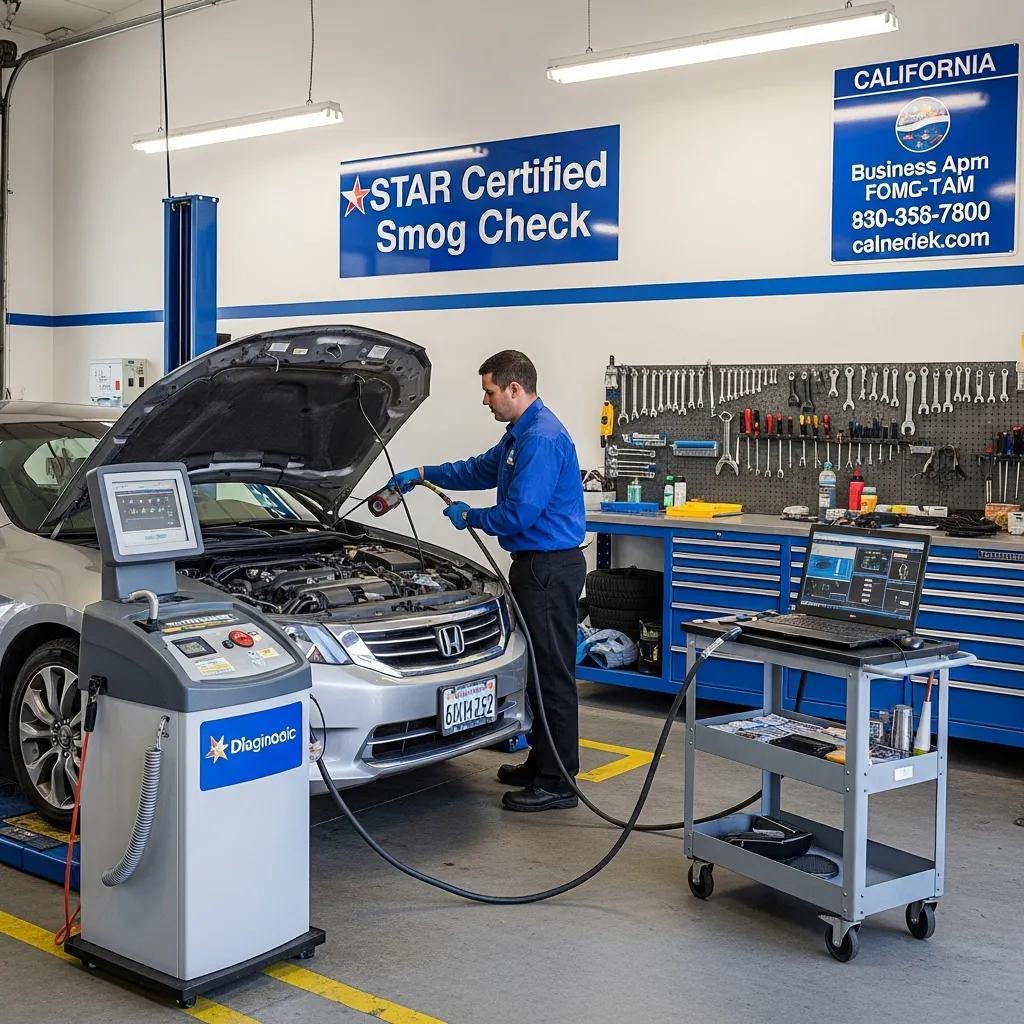
Many California vehicles need a smog check before registration—especially when repairs affect emissions systems, when the vehicle’s model year falls under BAR testing, or when a rebuilt title is part of the process. The Bureau of Automotive Repair and the DMV use smog checks to make sure emissions controls are working after repairs. Certain vehicle types and age brackets trigger testing, while some exemptions apply. The quick-reference table below shows common scenarios that usually require a post-repair smog check, plus tips for finding STAR stations near Glendale for certified testing.
California’s smog rules exist to confirm exhaust and evaporative systems meet standards after structural or engine repairs. Failing a required smog test can block registration until the vehicle passes.
| Vehicle Type / Condition | Smog Requirement | Exceptions / Notes |
|---|---|---|
| Gasoline vehicles (model years subject to BAR) | Yes — smog required | Some model years and hybrids have different rules |
| Vehicles with replaced engine or major emissions parts | Yes — post-repair smog check required | Ensures emissions controls are functioning |
| Electric vehicles | No — smog not required | Electric vehicles are typically exempt |
| Out-of-state transfers | Often required | BAR may require smog for registration transfers |
Which vehicles need a smog check to re-register in California?
Typically, gasoline-powered vehicles in model years that BAR tests need a smog check, as do cars that had major engine or emissions work and out-of-state vehicles coming into California. Electric vehicles and some very new models may be exempt. The smog test verifies catalytic converters, oxygen sensors, and evaporative systems are working after repair—inspectors take special care when engines, fuel systems, or exhaust components were replaced. Always check BAR guidance for model-year specifics before assuming an exemption. Planning your repairs around testing can prevent multiple tests and delays.
Where can I find a STAR smog check station near Glendale, CA?
Use the state BAR station locator to find STAR-certified smog stations near Glendale, and when you book, ask for a post-repair inspection that documents the VIN and which emissions components were tested. When scheduling, give the VIN, explain what emissions-related repairs were done, and bring repair invoices and your rebuilt-title application if applicable—this helps the station document results the DMV will accept. Collision centers and shops that coordinate VIN verification and smog checks can save time by bundling inspections with repair completion; always confirm the station is STAR-certified for rebuilt-title or registration testing.
If you want help coordinating repairs and smog testing, Prime Time Collision Center can schedule VIN verification, book STAR smog appointments, and prepare repair documentation to accompany the emissions test results.
What fees and penalties apply to vehicle registration after an accident in California?
Registering a repaired vehicle can come with several fees—Vehicle License Fee (VLF), registration fees, county or district add-ons, and possible late penalties if filings are delayed. Knowing how each is calculated helps you estimate costs and avoid surprises. Late penalties increase over time and are added to base fees. Vehicles moving from salvage to rebuilt title may face extra administrative and inspection costs. The table below breaks down common fee types, typical bases, and when they apply so you can plan ahead.
| Fee Type | Typical Range / Basis | When Applied |
|---|---|---|
| Vehicle License Fee (VLF) | Based on vehicle value | Charged annually at registration |
| Registration Fee | Flat fee plus county/district add-ons | Charged at initial registration or renewal |
| Late Registration Penalty | Percent or flat amount that increases over time | Applied when registration is late |
| Rebuilt / Salvage Processing | Administrative fees and inspection costs | Applied during salvage-to-rebuilt conversion |
How are vehicle license fees and late penalties calculated?
The Vehicle License Fee is usually a percentage of the vehicle’s value and is charged at registration. Late penalties are added when registration or required filings aren’t completed on time and can grow in tiers or fixed amounts. For example, delaying registration for months can bring both late fees and additional penalties, possibly compounded by county charges. Insurance payouts can also affect registration costs if an insurer retains title or settlements change the owner-of-record. Submitting smog certificates, repair documentation, and rebuilt-title forms promptly reduces the chance of late fees.
How can I avoid late fees when registering a repaired vehicle?
Timely action prevents most late fees: file the SR-1 if required, schedule VIN verification and smog checks as soon as repairs finish, and submit the rebuilt-title application and registration within DMV timeframes. Temporary operating permits or interim documentation can help while paperwork is processed. Practical steps include collecting repair invoices and parts receipts right away, coordinating with your insurer on title handling, and arranging VIN verification promptly. Repair shops that provide organized documentation packets and help with insurer communication can speed the process. Prime Time Collision Center offers free estimates, insurance-claims coordination, and help preparing repair documentation to reduce delays and avoid late fees.
How do I transfer vehicle ownership and registration after an accident in California?
Transferring title and registration after a crash can follow different paths—private sale after repair, insurer-retained total loss, or lienholder involvement—and each has specific document requirements. The core goal is establishing a clear chain of title, confirmed VIN verification, proof of repairs and safety compliance, and any lien release or insurer documentation needed to change the owner of record. The checklist below and the table after it show common documents and how they fit into different transfer scenarios.
- Gather the signed title (if available), bill of sale, and odometer disclosure.
- Include smog certificate and repair documentation if the DMV or BAR requires them.
- Get a lien release or insurer documentation if the vehicle was part of a total-loss settlement.
- Complete transfer forms and submit them to the DMV with the applicable fees.
| Transfer Scenario | Key Documents Needed | Who Provides / Notes |
|---|---|---|
| Private sale after repair | Signed title, bill of sale, smog certificate, repair records | Seller and buyer complete the title transfer |
| Insurance total loss | Insurer retains title or issues salvage documents | Contact the insurer for title release instructions |
| Vehicle with lien | Lien release or payoff statement | Lienholder provides release once paid off |
What documents are needed to transfer a title after collision repairs?
To transfer title after repairs you generally need a properly signed title, a bill of sale documenting the transaction, odometer disclosure when required, a smog certificate if the model year needs it, and repair records showing the vehicle is roadworthy. If the vehicle had salvage status, include rebuilt-title approval paperwork and any BAR inspection reports; if there was a lien, get a lien release or payoff letter to clear the title. Each document moves you to the next step—the signed title starts the transfer, smog and inspections clear emissions and safety checks, and repair records back up the vehicle’s condition for the DMV.
How does an insurance payout affect title transfer and registration?
Insurance outcomes change the title process in predictable ways. In a total-loss settlement, the insurer often takes the title and issues salvage paperwork. For partial repairs, the owner usually keeps title but will need to coordinate payment and lienholder involvement if the vehicle is financed. If the insurer retains the title during settlement, registration timing can be affected. Knowing how your insurer handles titles and payouts helps you plan next steps—coordinate closely with the insurer, any lienholder, and your repair shop so paperwork lines up and registration proceeds without unnecessary delay.
If title transfer or registration is complicated by insurance settlements, salvage designations, or lien releases, Prime Time Collision Center can help prepare repair packets, communicate with insurers, and ensure documentation meets DMV expectations so transfers move forward smoothly.
Frequently Asked Questions
What should I do if I miss the 10-day deadline to file the SR-1 report?
If you miss the 10-day SR-1 deadline, file it as soon as possible to limit penalties and document why you were late. The DMV may assess administrative penalties for late filing, which can complicate future registration or title transfers. Contact the DMV for next steps and have all supporting documents ready—photos, police reports, and repair estimates—so you can correct the record quickly.
Can I register a vehicle with a salvage title without repairs?
No. A salvage title indicates the vehicle was declared a total loss or damaged past a set threshold. You must make the required repairs and pass inspections before applying for a rebuilt title and registering the vehicle. This process protects safety and emissions standards before the car is allowed back on the road.
What happens if my vehicle fails the smog check after repairs?
If your vehicle fails a smog check after repairs, the test report will list the problems. You’ll need to fix those issues—often through further repair work or adjustments to emissions controls—and then retest. Failing to resolve smog failures will delay registration until the vehicle meets California’s emissions standards.
Are there any exemptions for smog checks for older vehicles?
Yes. Certain older vehicles are exempt—for example, many model-year 1975 and older cars are not subject to smog checks. Some hybrid and electric vehicles may also be exempt. Regulations can change, so check the Bureau of Automotive Repair (BAR) for the most current exemption rules for your vehicle’s model year and type.
How can I expedite the vehicle registration process after an accident?
To speed registration, gather all required documents before your DMV visit: the SR-1 (if needed), repair invoices, smog certificates, and inspection reports. Book VIN verification and smog appointments in advance, and work with a repair shop that helps assemble documentation and coordinate with insurers. That preparation cuts down on repeated trips and paperwork delays.
What should I do if my insurance company retains the title after a total loss?
If the insurer keeps the title after a total loss, contact them to learn the salvage and title-release steps. The insurer typically issues a salvage certificate the owner needs if they plan to repair and re-register the vehicle. Make sure you get any lien releases or settlement paperwork you need to complete rebuilt-title or registration steps.
Conclusion
Re-registering a vehicle in California after an accident is manageable when you know the steps: timely SR-1 filing (when required), clear repair documentation, the right inspections, and correct title paperwork. Following the checklist in this guide keeps the process moving and reduces surprises. If you want hands-on help, Prime Time Collision Center can prepare inspection-ready repair packets, coordinate with insurers, and guide you through rebuilt-title and registration requirements. Reach out and let us help get you back on the road with confidence.