
Your Post-Repair Vehicle Inspection Checklist — Confirm Safety, Quality, and Value After Collision Repairs
A post-repair vehicle inspection is a focused safety and quality check performed after collision repairs to make sure structural, mechanical, electronic, and cosmetic work meets safety and manufacturer standards. This guide breaks down what a post-repair inspection covers, why it protects safety, warranty, and resale value, and how to run a practical checklist step by step. You’ll learn what to look for on the exterior (paint, panel fit, lights), inside the cabin (safety systems, controls, trim), and under the hood (brakes, suspension, fluids, ADAS). We also explain how to document issues and work with your shop or insurer if you find problems. Each H2 section includes clear actions and checklists so you can inspect your vehicle confidently and know when to rely on certified shops and OEM procedures.
What Is a Post-Repair Vehicle Inspection and Why Is It Essential?
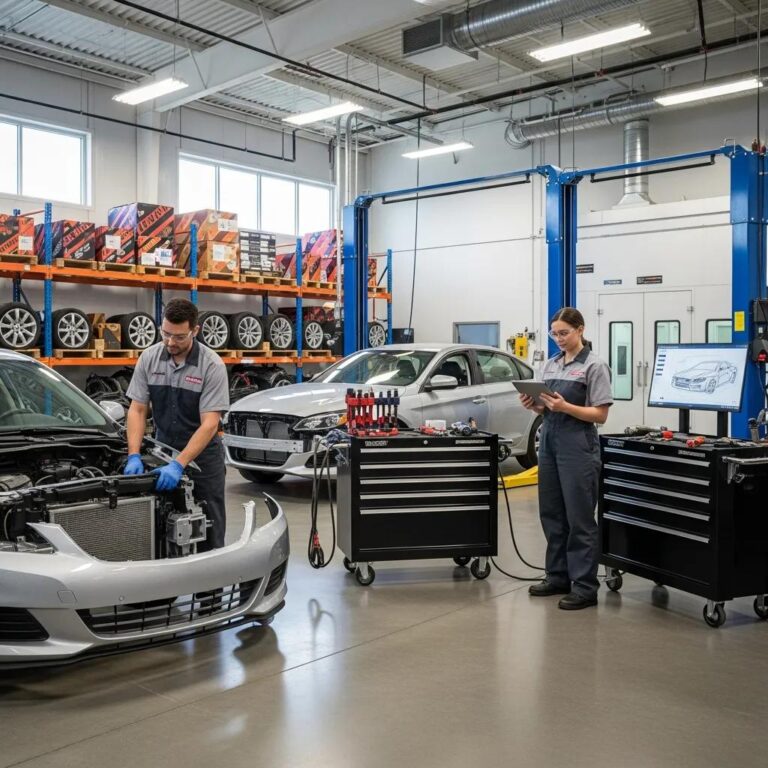
A post-repair vehicle inspection is a systematic check done after bodywork or mechanical repairs to confirm the vehicle is safe, roadworthy, and returned to expected quality. The inspection looks at structural alignment, restored safety systems, electronic diagnostics, fluid condition, and cosmetic finish to spot both obvious defects and hidden damage. The main goals are occupant safety, protecting warranty and resale value, and creating documentation if disputes or diminished-value claims arise. Professionals use calibrated measurements, diagnostic scans, and test drives to find issues owners might miss on a quick visual walkaround. Below are the top benefits so you can prioritize which checks matter most for safety and long-term value.
Post-repair inspections deliver three core benefits:
- Improved Safety: Verifies structural alignment and that safety systems — airbags, seatbelts, anchors — are correctly restored.
- Warranty & Documentation: Builds a clear paper trail to support warranty claims and protect resale value.
- Hidden Damage Detection: Catches mechanical or electronic problems that don’t always show up in repair photos.
Those benefits are why a formal checklist matters after collision repairs. Next we’ll cover the practical exterior checks you can do yourself.
How Does a Post-Repair Inspection Ensure Vehicle Safety and Roadworthiness?
A post-repair inspection verifies repairs on three levels: structural alignment, safety-system function, and electronic diagnostics. Inspectors measure frames and panel fit to find residual distortions, check airbag connections and seatbelt anchors for correct reinstallation, and run OBD-II scans to surface lingering fault codes from sensors or control modules. By combining visual checks, diagnostics, and functional tests (including a short road test), inspections catch faults that could weaken crash performance or cause failures while driving. Finding problems early prevents cascade failures, reduces accident risk, and shows what rework or recalibration is required.
Knowing how inspections protect safety helps explain why skipping them is risky — see the next section for the consequences.
What Are the Risks of Skipping a Post-Collision Repair Inspection?
Skipping a post-repair inspection brings safety, financial, and legal risks. Undetected frame or suspension damage can change handling, improper reinstallation of safety systems can stop airbags or seatbelts from working correctly, and missed electronic faults can trigger failures on the road. Financially, unresolved defects can complicate warranty claims, lower resale value, and make insurance disputes harder. Without documented verification, proving you tried to confirm repairs is more difficult if issues appear later. That’s why a structured checklist is important — the next section shows exterior checks you can do right away.
How to Perform a Comprehensive Exterior Vehicle Inspection After Repair?

An exterior inspection focuses on paint, panel alignment, lights, glass, tires, and wheels to confirm cosmetic and structural repair quality and to spot signs of hidden damage. Start with a walkaround in good light to spot color mismatches, overspray, or texture differences. Check panel gaps visually and by feel for consistent spacing and flushness. Operate lights to confirm fit and function, inspect glass for chips or seal issues, and look over tires and wheels for sidewall damage or rim issues. A short, low-speed test drive will help reveal alignment or balance problems.
At Prime Time Collision, our exterior checks include a professional free estimate and documented paint-match and panel-alignment verification. Our lifetime warranty shows how shops stand behind these checks — use the same checklist steps when you inspect your vehicle after repair.
Exterior inspection checklist (quick scan):
- Paint & Finish: Check color consistency, texture, and edge blending in natural light.
- Panel Alignment: Look for even gaps, smooth seams, and doors/trunk that open and close without binding.
- Lights & Glass: Turn on all lights, examine lens fit, and inspect glass for chips or sealing problems.
- Tires & Wheels: Scan for visible damage, check tire pressures, and note any pulling or vibration during a short drive.
Use this slow walkaround to flag items needing immediate attention before moving on to deeper mechanical checks below.
Inspect exterior items with measurable pass/fail criteria using this comparison table:
| Inspection Item | What to Look For | Acceptable vs. Red-Flag Examples |
|---|---|---|
| Paint Quality | Color match, texture, edge finish | Acceptable: consistent color and texture; Red-flag: visible haze or color shift at different angles |
| Panel Alignment | Gap uniformity, flushness, hinge function | Acceptable: even gaps and smooth doors; Red-flag: uneven gaps, rubbing, misaligned seams |
| Headlights/Taillights | Secure fit, beam alignment, lens clarity | Acceptable: secure, steady light output; Red-flag: loose housings, dim or misaligned beams |
| Windshield/Glass | Chips, cracks, seal integrity | Acceptable: no stress cracks, good seal; Red-flag: hairline cracks or separation at edges |
| Wheels/Tires | Cracks, sidewall damage, tread wear | Acceptable: no structural damage; Red-flag: bent rim, bulging sidewall, uneven wear |
What Should You Check Regarding Paint Quality and Panel Alignment?
Assess paint under diffuse daylight and from several angles to catch color shifts, texture changes, or overspray on adjacent trim. Run your fingertips along repair edges to feel for rough transitions or feathering that suggest rushed blending. Open and close doors to check for binding or uneven movement — uneven panel gaps or inconsistent flushness are red flags for poor fitment or underlying frame issues. If you find mismatched finish or large gap variances, photograph the area and ask for rework or a third-party measurement.
Those paint and fit checks naturally lead to inspecting lights, glass, tires, and wheels since poor fitment often shows up in misaligned lighting or stressed seals.
How to Inspect Lights, Glass, Tires, and Wheels for Post-Repair Issues?
Turn on all exterior lights to confirm operation, then check headlight beam alignment during a short low-speed drive or by aiming beams at a wall. Look for cracks in lenses and verify housing seals are intact to prevent moisture from damaging electronics. Inspect windshield and side glass for chips or stress patterns near repaired seams and listen for wind noise that signals a poor seal. For tires and wheels, look for scratches, bent rims, bulges, or uneven treadwear. A pull while driving or vibration at speed often indicates alignment or balance issues that need professional correction.
If you find lighting or glass problems, call them out specifically when requesting rework so the shop addresses sealing and alignment as part of the repair validation.
What Are the Key Interior Vehicle Inspection Points After Collision Repair?

Interior inspection verifies electrical systems, occupant safety features, and reassembly quality so the cabin is safe and comfortable. Watch dashboard lights at startup for persistent fault codes; test HVAC, infotainment, and steering-wheel controls for proper operation. Check seatbelt retraction and latching, and inspect airbag covers for secure fit and no visible tampering. Finally, look over upholstery and trim for gaps, loose clips, or rough edges that could hide misrouted wiring.
These interior checks lead into diagnostic steps for dashboard warnings and electronic faults and help you decide whether an OBD-II scan or technician attention is needed.
How to Identify Dashboard Warnings and Electronic Control Malfunctions?
During startup, brief system-check lights are normal; however, any light that stays on means a fault that needs attention. Use a basic OBD-II scan to capture diagnostic trouble codes when a warning persists — codes will point to modules or sensors that may need recalibration or repair after the collision. Common post-repair electronic issues include disconnected sensors, unprogrammed control modules, or loose airbag wiring. If codes appear, note them and request a post-repair diagnostic from your shop so they can confirm corrective actions.
Understanding these steps helps you follow up on ADAS recalibration and sensor checks discussed in the mechanical systems section.
Why Inspect Upholstery, Trim, and Safety Features Like Airbags and Seatbelts?
Interior reassembly affects comfort and safety. Misrouted wiring or poorly seated trim can interfere with airbag deployment or seatbelt function. Check seatbelt webbing for frays, confirm smooth retraction and proper locking under a sharp pull, and inspect anchor points for firmness. Ensure airbag covers sit flush and connectors look intact where visible — signs of forced closure or damage should prompt an immediate reinspection by the shop. Rattling or gaps in trim may hide wiring faults or misaligned sensors.
These tactile and visual checks tell you whether to escalate concerns to the repair facility or request a certified reinspection.
Which Mechanical and Safety Systems Should Be Checked Post-Repair?
Mechanical and safety systems — brakes, suspension, steering, fluids, engine/transmission, and ADAS — need visual inspection and functional checks to confirm repairs restored intended performance. Check brake pads and rotors for even wear, test pedal feel during a low-speed stop, and note any pulsing or grabbing. Inspect suspension components for damaged bushings or bent parts and watch steering for pull or play during a test drive. Verify fluid levels and look under the vehicle for leaks, and make sure the engine starts smoothly with no unusual noises. Finally, confirm ADAS sensors were recalibrated after body or glass work since misaligned sensors can cause false alerts or reduced safety performance.
That overview leads into simple owner-level checks for brakes, suspension, and fluids so you can prioritize professional follow-up.
Perform these quick system checks:
- Brakes: Check pad thickness and rotor condition, and test pedal firmness for grinding or pulsing during braking.
- Suspension & Steering: Drive slowly to detect pulling, clunks, or excessive play.
- Fluids: Check dipsticks and visible reservoirs for correct levels and clean appearance.
- Engine/Transmission: Note startup behavior and any drivetrain-related warning lights.
These checks help you prioritize items that need immediate technician attention and feed into the comparison table below for common post-repair problems.
Use this table to compare systems and typical post-repair faults:
| System | Inspection Attribute | Common Post-Repair Problems |
|---|---|---|
| Brakes | Pad thickness, rotor condition, pedal feel | Uneven pad wear, warped rotors, low hydraulic pressure |
| Suspension/Steering | Bushings, tie rods, alignment, road feel | Bent components, sagging springs, pull or vibration |
| Fluids | Level, color, presence of leaks | Low levels, contamination, loose connections |
| ADAS | Sensor alignment, camera calibration, alerts | Miscalibration, false positives, missed lane markers |
How to Verify Brakes, Suspension, Steering, and Fluid Levels?
Visually check brake pad thickness and rotor condition, then perform a controlled low-speed brake test to assess pedal firmness and stopping behavior. For suspension and steering, take a straight, slow road to check for pulling or vibration and listen for clunks over bumps that often signal damaged mounts or bushings. Inspect fluid reservoirs (brake, coolant, oil, transmission) for correct levels and clean appearance — dark or milky fluids can indicate contamination or internal leaks. Any abnormal feel, noise, or fluid discrepancy should be documented and brought back to the repair shop for immediate inspection.
These owner-level checks catch obvious faults; ADAS recalibration, however, requires specialist equipment — explained next.
What Is ADAS Recalibration and Why Is It Vital After Collision Repairs?
ADAS (Advanced Driver Assistance Systems) includes lane-keeping assist, automatic emergency braking, adaptive cruise, and camera- or radar-based sensors that must be precisely aligned to work safely. Recalibration resets sensor positions and software parameters after bodywork or windshield replacement so the vehicle can correctly read road markings and distances. Improper calibration can cause false alarms, weaker lane-keeping performance, or reduced automatic braking effectiveness, increasing safety risk. Recalibration is done via static (target-based) or dynamic (road-based) methods; verification includes checking sensor data, a road-test validation, and reviewing the shop’s calibration report.
Knowing ADAS basics helps you confirm whether the shop completed recalibration and what signs to watch for if calibration was missed — important when deciding on OEM-certified repairs.
How Do OEM Certifications Impact Your Post-Repair Inspection and Vehicle Warranty?
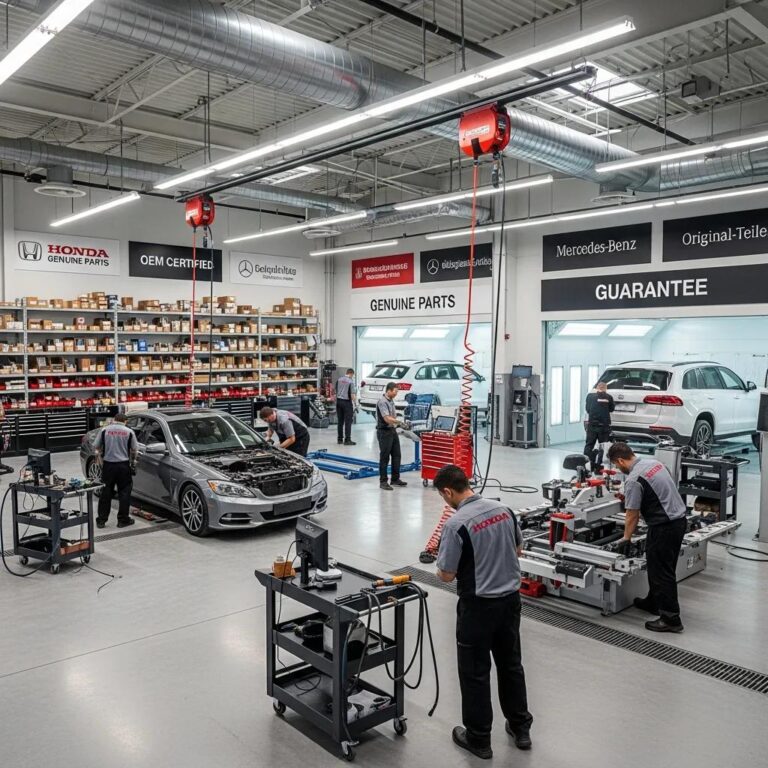
OEM certification means the repair facility follows manufacturer procedures, uses approved parts, and employs trained technicians — all of which influence inspection expectations and warranty outcomes. Certified repairs generally include documented structural measurements, specified torque values, and mandated ADAS recalibration steps that a post-repair inspection can verify. The value is consistent safety outcomes, clearer warranty support, and stronger resale trust because repairs follow the vehicle maker’s standards. Knowing how OEM-certified approaches differ from generic repairs makes inspection documentation and parts provenance easier to evaluate when considering repair quality and future claims.
Below is a comparison of repair approaches with attributes and value differences to help decide between certified and non-certified options.
| Repair Approach | Attribute (Parts, Training, Procedure) | Value (Warranty, Safety, Resale) |
|---|---|---|
| OEM Certified Repair | Genuine parts, manufacturer procedures, trained technicians | Preserves warranty, higher safety assurance, better resale value |
| Independent Repair (Certified) | Aftermarket/OEM mix, trained technicians, shop procedures | Variable warranty coverage, depends on parts used, moderate resale impact |
| Non-Certified Repair | Aftermarket parts, informal procedures, limited documentation | Potential warranty disputes, safety inconsistencies, lower resale value |
What Are the Benefits of OEM Certified Repairs for Safety and Resale Value?
OEM-certified repairs reduce risk by following manufacturer torque specs, alignment tolerances, and required recalibration steps that directly affect crash performance and electronic safety features. Documented OEM procedures create a paper trail that supports warranty claims and gives future buyers confidence, which can preserve resale value. Certified repairs typically call for genuine parts and thorough calibration, lowering the chance of repeat failures or sensor misalignment. When a post-repair inspection confirms OEM-aligned procedures were followed, owners can be confident the vehicle meets its original safety intent.
Understanding these benefits leads into how certified technicians and genuine parts protect your warranty.
How Do Certified Technicians and Genuine Parts Protect Your Vehicle Warranty?
Certified technicians bring documented training and access to manufacturer procedures, which reduces the risk of incorrect repairs that could affect warranty coverage. Genuine parts match the fit, material properties, and electronic compatibility expected by the maker, lowering failure risk and preventing mismatches that cause disputes. To protect your warranty, ask for documentation of parts used and certifications performed and keep those records with your post-repair inspection notes. That evidence supports claims and shows the repair met recognized standards.
These warranty-protecting practices connect directly to the insurance and documentation steps covered next when post-repair issues appear.
How to Navigate Insurance Claims and Documentation After Your Vehicle Repair?
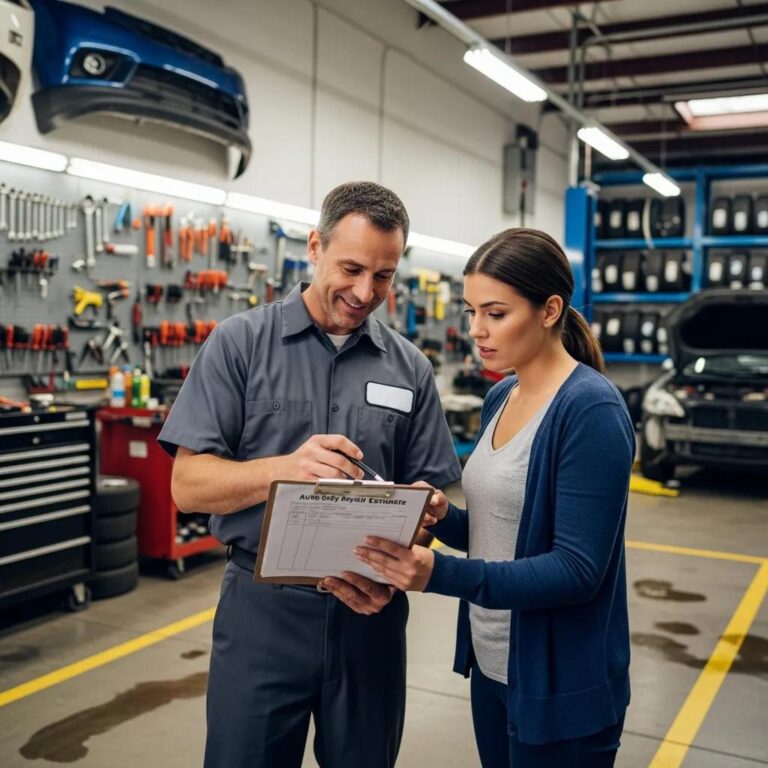
Handling insurance and repair documentation means carefully reviewing estimates, parts, and post-repair evidence to protect your rights and vehicle value. Start by comparing the repair estimate and final invoice to confirm listed parts (OEM vs. aftermarket), labor items, and procedures such as ADAS recalibration. Collect pre- and post-repair photos, calibration reports, and inspection notes to support diminished value claims or dispute unresolved defects. If you find issues, contact the repair shop with documented evidence, request a reinspection, and if needed, involve your insurer or a third-party inspector for an independent assessment.
Following these steps reduces friction during disputes and makes escalation clearer when necessary.
What Should You Review in Repair Estimates and Diminished Value Documentation?
When reviewing estimates, verify OEM part numbers or explicit OEM part usage, specified procedures (structural measurements, calibration), and any extra charges for towing or diagnostics. For diminished value claims, gather pre-accident condition photos, post-repair photos, invoices, and appraisals that quantify market impact — organized documentation improves the chance an insurer accepts the claim. Ask for written clarification on any ambiguous items and keep everything in one folder to streamline conversations with adjusters.
Confirming these elements prepares you to take the next steps if post-repair issues surface, described in the final checklist below.
What Steps Should You Take If Post-Repair Issues Are Found?
If you find defects after repair, follow a clear escalation path: document the issue with photos and notes, contact the repair shop promptly with your evidence and request a documented reinspection, and if needed, involve your insurer or a third-party certified inspector for mediation. Keep a timeline of communications and ask for written confirmation of any promised rework or parts replacement. If the shop can’t resolve safety-critical problems, escalate to the insurer for arbitration or seek OEM-authorized verification to protect warranty and resale value.
This action plan helps make sure defects are addressed efficiently and preserves documentation for diminished value claims or warranty disputes.
For immediate action, use this short remediation checklist:
- Photograph and record the issue, including date and driving conditions.
- Request a timely reinspection and keep copies of the repair estimate and final invoice.
- If unresolved, ask your insurer for a third-party inspection or mediation.
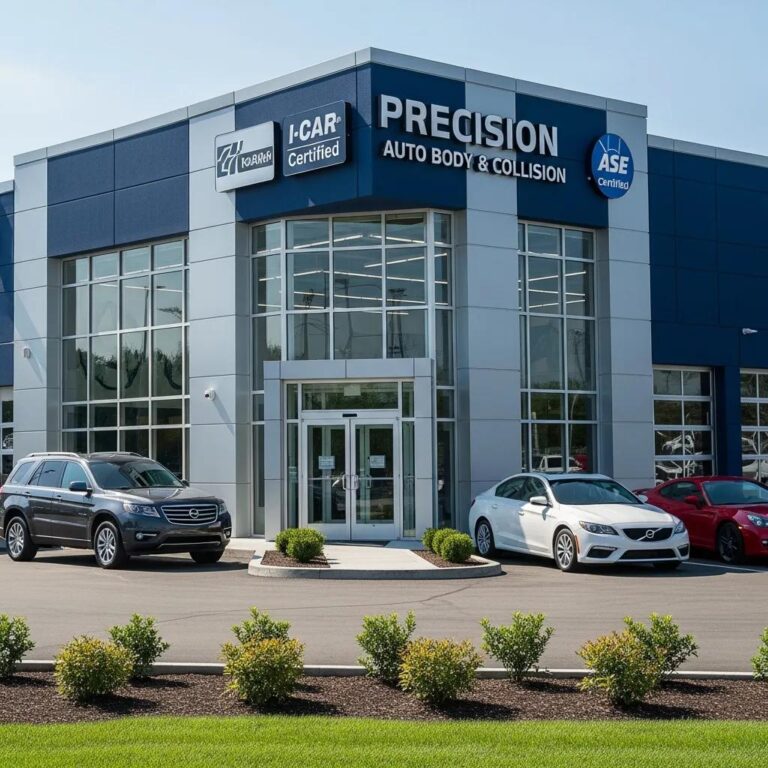
Prime Time Collision can help with post-repair reinspections, free estimates, and 24/7 towing if needed. We work with all major insurance companies and employ I-CAR Platinum certified technicians who follow OEM-aligned procedures and back repairs with a lifetime warranty. If you need documented verification or help with insurer discussions, this level of shop documentation simplifies escalation and protects warranty and resale value.
Call (818) 396-4997 to schedule a documented post-repair inspection or request a free estimate and towing. When you call, mention that you need ADAS recalibration verification and a written repair report to support any warranty or diminished value follow-up.
Frequently Asked Questions
What is the difference between OEM certified repairs and non-certified repairs?
OEM certified repairs follow manufacturer procedures, use genuine parts, and are completed by trained technicians — delivering consistent safety and clear documentation. Non-certified repairs may use aftermarket parts and informal processes, which can lead to safety inconsistencies and potential warranty disputes. OEM documentation provides a stronger paper trail for warranty claims and resale confidence.
How often should I perform a post-repair vehicle inspection?
Do a post-repair inspection immediately after repairs are finished and then periodically — especially before long trips or after heavy use. Regular checks help catch emerging issues early. If you notice odd sounds, handling changes, or warning lights, get an inspection promptly.
What should I do if I find issues during my post-repair inspection?
Document issues with photos and notes, contact the repair shop right away, and request a documented reinspection. If the shop can’t resolve the problem, involve your insurer or a third-party inspector for mediation. Keep detailed records of every communication and action.
Are there specific tools I need for a thorough post-repair inspection?
Many checks are visual, but a few tools can help: a digital tire pressure gauge, an OBD-II scanner for electronic diagnostics, and a tape measure for panel gaps are useful. A flashlight helps inspect tight areas, and a paint thickness gauge can assist with paint assessments.
How can I ensure that my vehicle’s ADAS systems are functioning correctly after repairs?
Confirm the shop performed ADAS recalibration after body or windshield work. Watch for dashboard warning lights related to ADAS and test systems during a safe drive. If you notice irregular behavior, request a diagnostic check and a copy of the calibration report from the repair facility.
What documentation should I keep after a vehicle repair?
Keep the repair estimate, final invoice, parts list (OEM vs. aftermarket), and any calibration or inspection reports. Also save pre- and post-repair photos and correspondence with the shop or insurer. These documents are essential for warranty claims, diminished value disputes, or future inspections.
Conclusion
A complete post-repair vehicle inspection protects safety, preserves warranty, and helps maintain resale value. Follow a structured checklist and document any concerns so you can confirm repairs meet industry standards or get the rework you need. Don’t leave your vehicle’s safety to chance — take a few proactive steps and, if you’d like help, schedule a documented post-repair inspection with us today to ensure your vehicle is roadworthy and safe.